King Charles convenes AI executives at Dumfries House to address existential risks
The British monarch hosted leaders from Nvidia, Google DeepMind, OpenAI, and Anthropic in Scotland, urging the industry to prioritise safety before the technology develops "darker capacities."
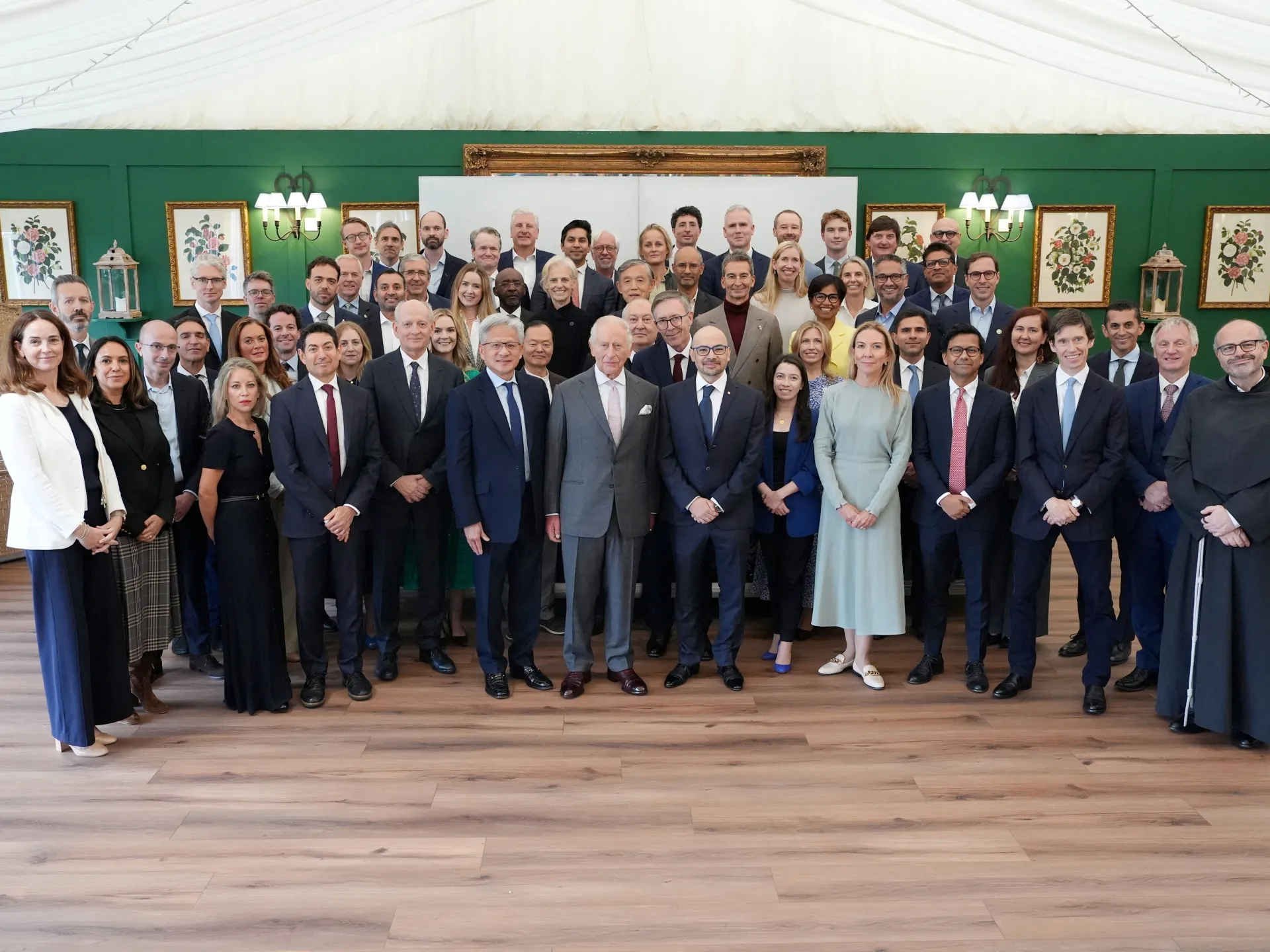
King Charles has convened a private summit at his Dumfries House estate in Scotland, bringing together senior executives from major artificial intelligence firms to discuss the governing challenges posed by the technology. The gathering, held on Thursday, included the cofounders of Nvidia and Google DeepMind, alongside leaders from OpenAI and Anthropic. The primary objective of the meeting was to address safety concerns before it became too late to rein in the rapidly evolving sector.
The monarch framed the discussion around the concept of "existential dangers," warning that the technology could be used in potentially catastrophic ways if it falls into the wrong hands. In his opening address to the industry leaders, Charles noted that those who value humanity and its moral component are anxiously seeking reassurance that society will not lose control of its destiny. He emphasised the urgency of adequately considering these risks to prevent the technology from being misused.
The King highlighted the dual nature of AI, describing its development as both intriguing and deeply concerning in equal measure. He stated that those who created these technologies are increasingly warning that AI risks developing "darker capacities," perhaps even to the point of taking life. This assessment underscores a shift in institutional discourse, moving from purely technical considerations to broader questions of governance and moral stewardship.
The summit adds a new dimension to the ongoing global debate regarding whether the AI industry should self-regulate or submit to government guidelines. The event is not expected to produce binding agreements, serving primarily as a forum for high-level discussion rather than a legislative outcome. This lack of formal deliverables highlights the current gap between executive influence and statutory oversight in the sector.
Contextualising the King’s remarks, recent statements from international figures have illustrated the polarisation of opinion on AI regulation. In May, Pope Leo XIV stated that the world does not need an artificial intelligence that diminishes humanity and that the technology must be "disarmed." Conversely, US President Donald Trump has recently dismissed concerns about the technology as a "hoax," reflecting a divergent approach to the same set of risks.
The urgency of the debate was further intensified last week when two Anthropic researchers warned that rapidly advancing AI could lead to human extinction in the not-too-distant future. Anthropic Chief Executive Dario Amodei has also called for companies to slow the pace of development, a move that has prompted international debate about whether executives are attempting to get ahead of potential government backlash to maintain a competitive lead.
Despite these pressures, Charles urged the assembled leaders to harness the technology "with safety at its heart." He called for the industry to ensure that AI remains firmly in the service of humanity, community, and the natural world. The summit thus serves as a significant, if non-binding, intervention in the policy landscape, placing the burden of safety squarely on the shoulders of the sector’s most influential players.