Roebuck Bay’s extreme tides and seasonal shifts shape Kimberley landscape
A new report details the 9-metre tidal range, mangrove expansion, and biodiversity that define this crescent-shaped bay in Western Australia’s Kimberley region.
NASA’s Earth Observatory has published a detailed analysis of Roebuck Bay in Western Australia’s Kimberley region, examining how extreme tidal ranges and seasonal monsoonal rains shape the local landscape. The report highlights that the bay’s wide, shallow continental shelf amplifies tidal forces, exposing extensive mudflats and mangrove forests that support significant biodiversity.
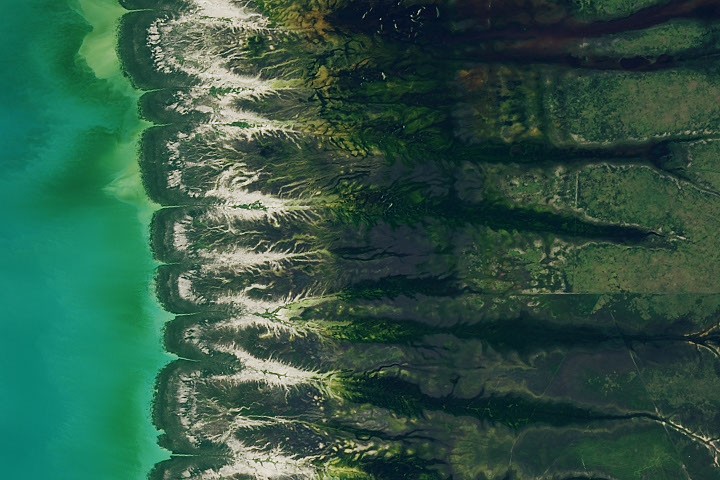
Tides are among the clearest signs of the Moon’s pull on Earth, with gravity distorting oceans and the solid crust into bulges. While many parts of Australia experience tidal ranges of 2 metres or less, Roebuck Bay’s range can reach a remarkable 9 metres. Rising and falling tides repeatedly inundate and expose expansive mudflats, flood broad mangrove forests and salt marshes, and feed branching networks of tidal drainage channels.
The analysis, which incorporates Landsat data from the U.S. Geological Survey, notes that mangrove forests in the bay are expanding westward by nearly 2 metres per year due to sediment accumulation from eastern waterways. Imagery captured on March 18, 2026, shows high water levels with green mangrove forests growing thickly along the shoreline and lining the mouths of evenly spaced, linear tidal creeks.
Monsoonal rains, typically falling between December and March, transform the landscape into lush grasslands and seasonal wetlands. As the rains fade in May and June and the dry season takes hold, these ephemeral ecosystems die back, turning the landscape shades of gold and brown. The consistent spacing of the tidal creeks is likely influenced by the regular spacing of linear dunes in the broader region, rather than tidal effects alone.
The bay’s dramatic changes support a bounty of life, serving as nurseries for crustaceans and fish. The mudflats teem with invertebrates, including snails, worms, crabs, clams, and cockles. Shells and snails can reach an abundance of 2,500 per square metre, according to the Australian government. This marine life attracts hundreds of thousands of migratory birds, including plovers, godwits, and knots, making the bay a key stop on the East Asian-Australasian Flyway.