Religious Identity Takes Centre Stage in Bengal Politics Across India and Bangladesh
Political narratives on both sides of the border are increasingly framing identity in religious terms, sidelining language and heritage in a move reminiscent of British colonial tactics.
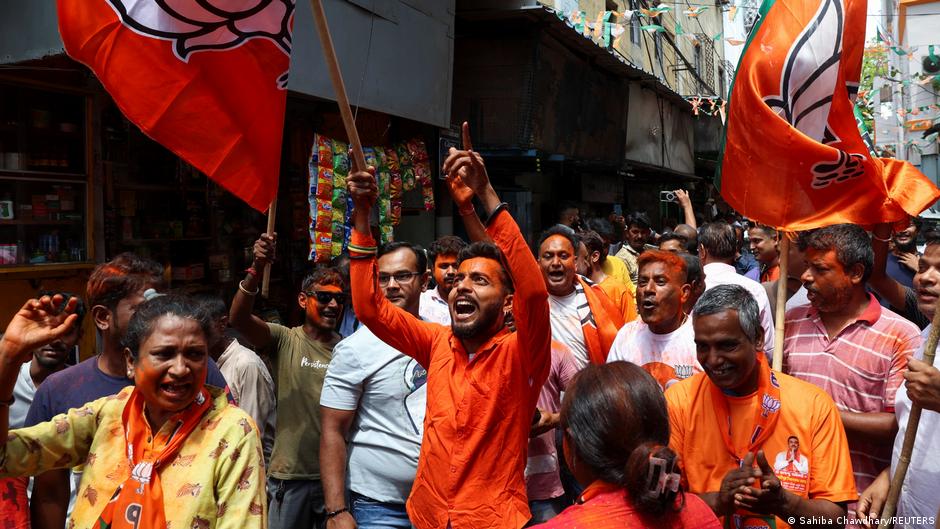
Religious and ethnic divisions are deepening across the Bengal region, straddling India and Bangladesh, as political forces on both sides of the border seek to capitalise on religious sentiment. In Bangladesh, the February parliamentary elections marked a significant turning point for Islamist politics, with the Jamaat-e-Islami party securing nearly one-third of the national vote. Simultaneously, in India's West Bengal, the Hindu nationalist BJP surged its vote share from approximately 10 per cent in 2016 to nearly 46 per cent, winning 207 of the 294 assembly seats.
Experts warn that these electoral outcomes reflect a broader trend where political narratives are increasingly framing identity in religious terms, effectively sidelining language, culture, and heritage. Bangladeshi anthropologist Rezwana Karim Snigdha describes this shift as "ill-motivated," noting that the region once boasted a shared identity that allowed individuals to be both Bengali and Hindu, or Bengali and Muslim. She argues that current political rhetoric is moving away from this inclusive identity towards divisions that echo historical British "divide and rule" strategies introduced by Viceroy Lord Curzon in 1905.
The historical context of these divisions remains potent in the region. While the 1905 partition was reversed in 1911, the underlying fractures resurfaced in 1947 when Bengal was permanently split between Hindu-majority India and Muslim-majority East Pakistan. Following the war of independence in 1971, which established Bangladesh, founding leader Sheikh Mujibur Rahman enshrined secularism in the constitution. However, subsequent regimes, particularly after his assassination in 1975, gradually shifted towards recognising Islam as the state religion and boosting religious narratives over secular ones.
In the wake of the 2024 Gen Z-led uprising that ousted Sheikh Hasina, the new Bangladeshi government has made concessions to religious forces. These measures include expanding madrassas, removing secular content from textbooks under Islamist pressure, and constructing hundreds of mosques. Conversely, in West Bengal, the BJP's landslide victory is viewed by some analysts, such as Abhra Ghosh, as a rejection of the previous Trinamool Congress leadership rather than pure ideological support for Hindutva. Nevertheless, concerns remain that religious rhetoric could take root if the party remains in power.
Critics have also accused the outgoing Trinamool Congress leadership of pursuing what they term "appeasement policies" to maintain support among diverse communities. This includes backing projects such as the Digha Jagannath Temple to appeal to Hindu voters while maintaining a secular stance to retain Muslim support. Indian historian Dipesh Chakrabarty suggests that while the BJP has largely avoided open hatred since its victory, there are early signs of a shift in West Bengal that could gradually take root.
Legendary Bengali thinkers like Rabindranath Tagore and Lalon, who championed unity across religions, are now under pressure as politics grows more divisive. The search for a secular identity compatible with Islam continues, yet attempts to reshape cultural identity for political gain risk backfiring. As the region navigates these complex shifts, the challenge lies in preserving a cultural identity that cuts across borders and challenges the political narratives built on religious divisions.