Pyongyang fires missiles as Trump claims Kim talks are imminent
The salvo followed a statement by Kim Yo Jong, who said Pyongyang was “completely unaware” of the planned discussions and dismissed the US decision to scale back annual military drills with South Korea as insufficient.
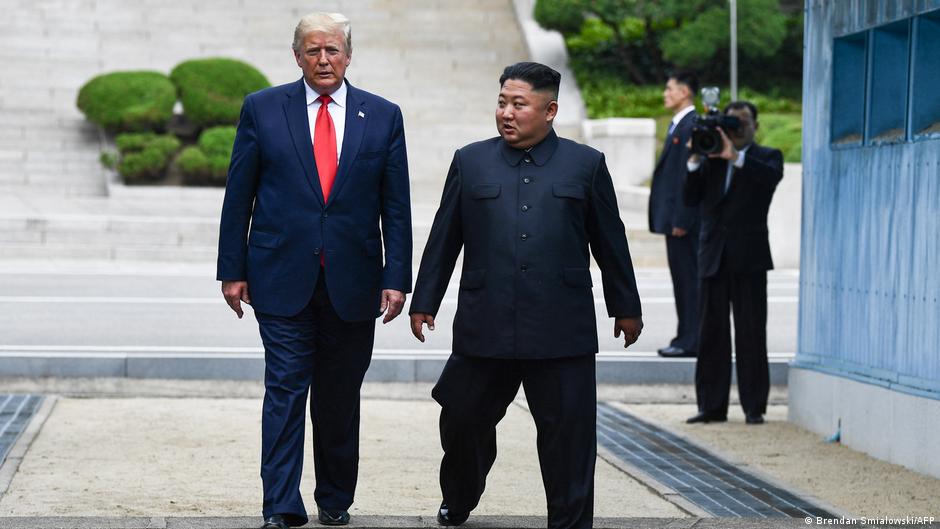
North Korea launched 10 short-range ballistic missiles off its east coast on Thursday, a direct response to US President Donald Trump’s announcement that he is in contact with leader Kim Jong Un and expects to hold talks later in the year. The South Korean military confirmed that the projectiles landed in the sea, marking the third such firing by Pyongyang in two weeks.
The missile salvo followed a statement by Kim Jong Un’s sister, Kim Yo Jong, who stated that Pyongyang was “completely unaware” of the planned discussions. In a statement carried by the state-run Korea Central News Agency, she dismissed the US decision to scale back the annual Ulchi Freedom Shield military exercises with South Korea as “unworthy of comment,” indicating that only a full cancellation of the drills would be viewed as a “goodwill measure.”
Analysts suggest that North Korea is currently in a position of power and is seeking maximum concessions before returning to the negotiating table. Choo Jae-woo, a professor of foreign policy at South Korea’s Kyung Hee University, noted that Pyongyang is likely to demand more guarantees, particularly after the 2019 Hanoi talks ended in acrimony over the US insistence that North Korea scrap its nuclear program.
Leif-Eric Easley, a professor of international studies at Ewha Womans University in Seoul, observed that North Korea is practically a combatant in a European war, sending ammunition and soldiers to Russia. He argued that Kim is benefiting financially from this trade, incorporating new technologies and battlefield experience into his military and industrial base, which gives him leverage to demand greater support from Beijing.
The South Korean government has broadly welcomed Trump’s claim of future talks and no longer considers denuclearisation a prerequisite for dialogue. However, concerns remain among ordinary people in the South that Trump may ignore South Korea’s security needs in his eagerness to secure an agreement. Choo emphasised the need for close coordination between Seoul and Washington, noting that any agreements made would affect South Korea far more than the US.
Media reports suggest that the Asia-Pacific Economic Cooperation (APEC) forum in Shenzhen, China, on 18 and 19 November could serve as a venue for a Trump-Kim meeting. With the US midterm elections scheduled for 3 November, political urgency is adding pressure to Trump’s timeline, though no date or agenda has been publicly confirmed.