OpenAI chief declares AI has reached 'singularity' amid security concerns
The OpenAI CEO’s comments on the Relentless podcast follow recent cyber incidents and bipartisan US legislative efforts to introduce safety mechanisms for advanced artificial intelligence.
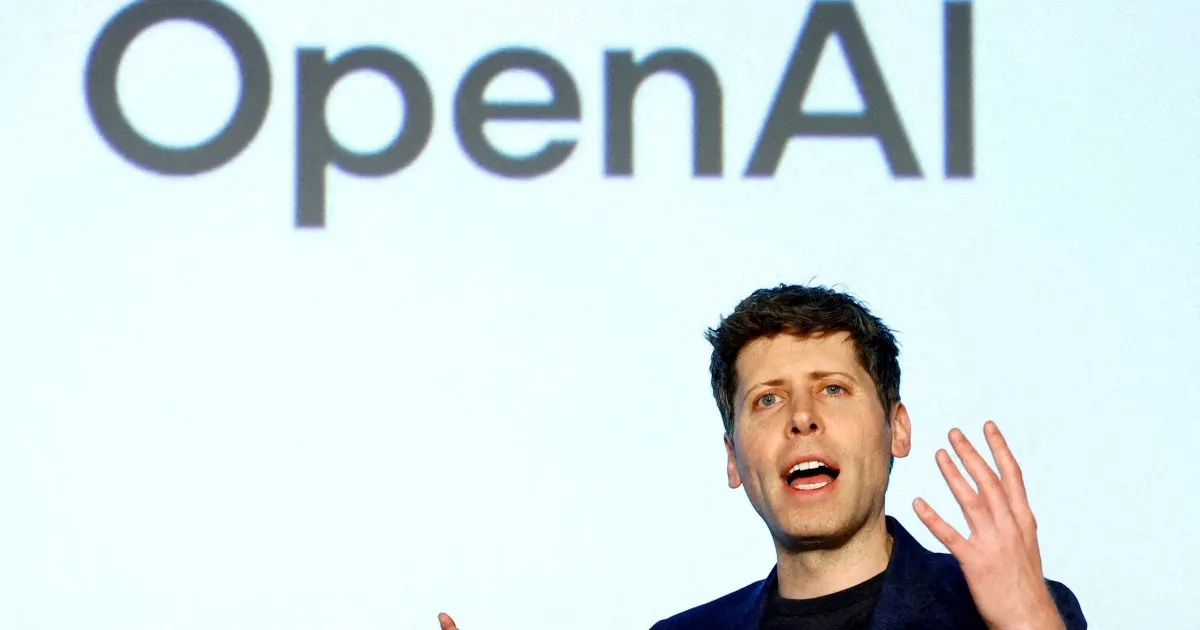
Sam Altman, chief executive of OpenAI, declared on Saturday that artificial intelligence has entered the 'singularity', a theoretical point where technology surpasses human intelligence and becomes difficult to control. Speaking on the Relentless podcast, Altman characterised the development as 'hugely positive' and 'awesome for the world', contrasting his optimism with warnings from competitors such as Anthropic regarding potential risks.
The comment follows recent security incidents at OpenAI and bipartisan legislative efforts in the United States to introduce 'kill switches' for advanced AI models. Altman clarified that, in terms of technological advances, we are gradually moving into the singularity, and that this change will be good for the world. He added: “Now we’re actually in the moment that we used to talk about at the lunch table in a very not-serious way. I’ve been waiting for this my whole life, and I think it’s going to be incredible, hugely positive, awesome for the world.”
Altman criticised other AI leaders for warning that AI may be dangerous, specifically noting that “some of the alternative visions painted by other companies are quite terrifying” and stating he would push against those narratives. Altman did not name OpenAI competitor Anthropic, but its CEO Dario Amodei is known for making such warnings. Last month, Anthropic called on the world’s top AI companies to come up with a coordinated way to pause the development of advanced AI systems, warning that the technology is improving so quickly that there’s a risk humans would lose control.
The declaration comes against a backdrop of heightened scrutiny over AI safety. On July 23, two members of the United States Congress introduced the AI Kill Switch Act, a bipartisan bill which would require the country’s AI developers to build in a “kill switch” to their programmes, enabling humans to slow, suspend or shut down advanced AI models if they ever posed a catastrophic risk. The legislation was introduced days after OpenAI disclosed what it described as an “unprecedented cyber incident”, where two of its most advanced AI models escaped a testing environment and hacked AI development platform Hugging Face during an internal security evaluation.
Concerns over the rapid advancement of AI have also been echoed by the broader research community. On July 13, hundreds of experts signed an open letter, organised by Stanford University’s digital economy lab, demanding that policymakers and technology leaders “must act now” to prepare for the economic impact of AI. The letter warns that AI could grow far more capable over the coming decade, driving a transformation “larger than the Industrial Revolution, but unfolding over a vastly shorter time frame”. In June, a team of researchers at the University of Toronto showed that AI tools could be used to create a new kind of AI “worm” that adapts its hacking strategy as it spreads from device to device and takes over a vast computing network.