North Macedonia marks 25 years since Ohrid Framework Agreement as ethnic tensions resurface
As the conservative VMRO-DPMNE party solidifies its hold on government, opposition figures and peacebuilders caution that minority rights are eroding and inter-ethnic distance is widening, threatening the stability secured a quarter-century ago.
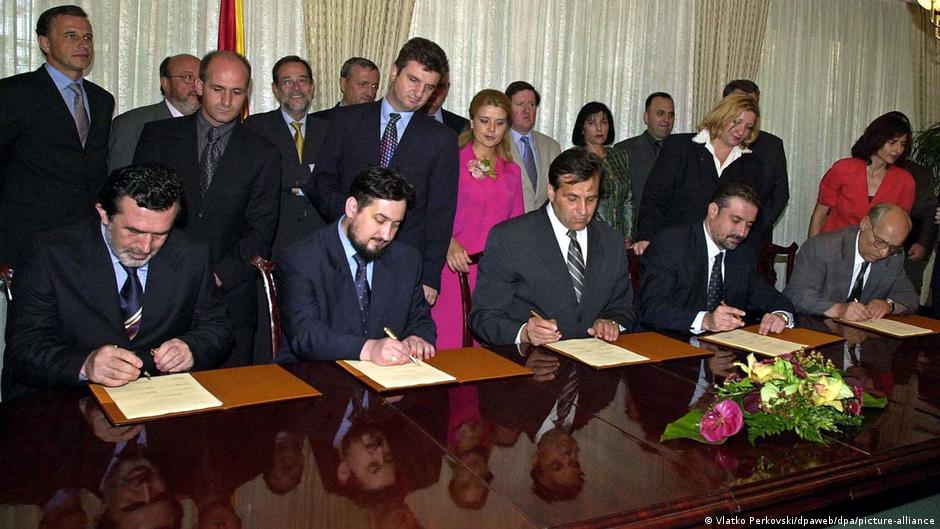
North Macedonia is marking the 25th anniversary of the Ohrid Framework Agreement, the political compromise that ended the six-month ethnic conflict of 2001. While the agreement successfully contained what was described as the final chapter of former Yugoslavia’s violent breakup, analysts and political figures warn that genuine reconciliation between ethnic Macedonians and Albanians remains elusive. The peace established by the accord has held, but concerns are mounting over the erosion of minority rights and increasing ethnic distance under the current administration.
The political landscape shifted significantly two years ago when the conservative VMRO-DPMNE party returned to power, ending two decades of governing influence for the Democratic Union for Integration (DUI), the primary ethnic Albanian party. Ali Ahmeti, a former leader of the National Liberation Army who transitioned into high-level politics, argues that ethnic relations have deteriorated under the new government. In a statement marking the national holiday on 2 August, Ahmeti cited attacks on the official use of the Albanian language and the weakening of mechanisms designed to prevent majoritarian rule as serious signals of the country’s direction.
Bujar Osmani, a senior DUI official and former foreign minister, contends that the focus must now shift from implementation to preservation. He warned that the gains which have kept North Macedonia stable for 25 years are at risk of being dismantled. Osmani rejected narratives of reverse discrimination, arguing that recent government policies have quietly weakened protections for Albanians that were introduced after the conflict, replacing them with technical explanations and claims of system modernisation.
The Ohrid Framework Agreement reshaped the nation’s political system by introducing power-sharing mechanisms requiring minority support for laws affecting language, education, and national symbols. However, Harald Schenker of the German peacebuilding organisation Pro Peace notes that while institutions were transformed, social cohesion has not followed. He observes that the education system remains segregated and ethnic distance is increasing, with each community maintaining its own interpretation of the 2001 events without adequate platforms for open dialogue.
Compounding these domestic tensions is the prolonged stalemate in North Macedonia’s EU integration process. Although the country became an EU candidate in 2005, formal negotiations have not begun, hindered by new obstacles stemming from Bulgaria’s demands regarding history, language, and national identity. This diplomatic friction has removed one of the few unifying projects shared by both communities, further deepening inter-ethnic tensions and fueling uncertainty about the nation’s future as it approaches the 35th anniversary of its independence from the former Yugoslavia.