NASA’s TESS Mission Identifies ‘Puffiest’ Planets Ever Discovered
New research led by the University of Oxford reveals two low-density exoplanets with masses as little as 3 per cent of Jupiter’s, offering rare insight into how giant planets evolve.
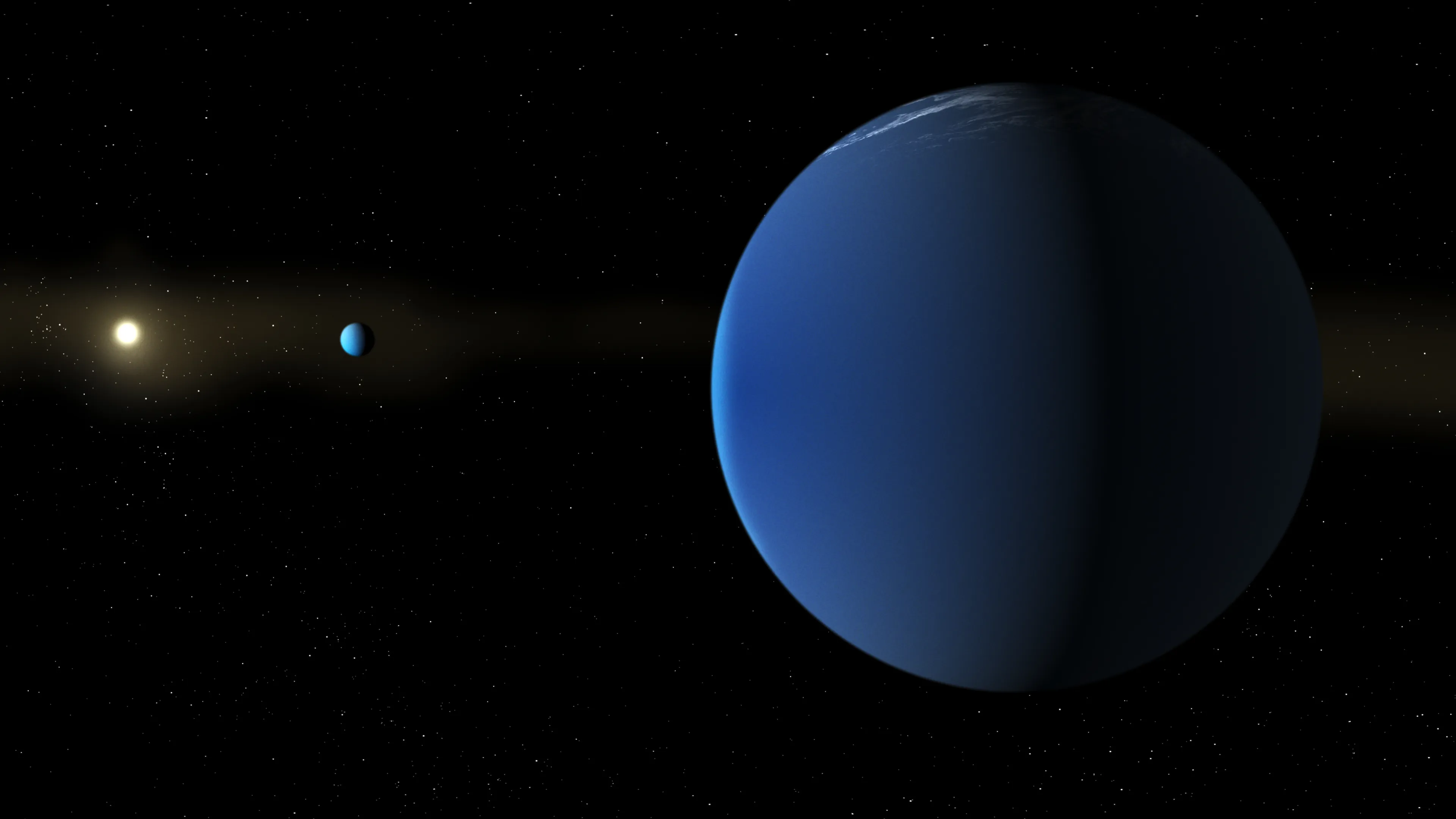
NASA’s Transiting Exoplanet Survey Satellite (TESS) has identified two new exoplanets described as the “puffiest” worlds ever found. The planets, designated TOI-791 b and TOI-791 c, are Jupiter-sized but possess densities comparable to cotton candy. They orbit a Sun-like star named TOI-791, located approximately 1,113 light years from Earth.
TOI-791 b is nearly the same size as Jupiter but contains only 3.0 per cent of its mass. TOI-791 c is even larger than Jupiter yet contains just 5.9 per cent of Jupiter’s mass. These extreme low-density characteristics classify them as “super-puffs,” a rare class of giant planets that present a puzzle for astronomers regarding how such worlds form.
The planets have unusually long orbital periods, taking 139 and 232 days respectively to circle their host star. Detecting such long-orbit planets typically requires extended observation periods. TESS gathered 1,122 days of data on the system over seven years, providing the research team with sufficient information to confirm the planets’ attributes.
Scientists determined the masses of the planets by observing their gravitational interaction. The two worlds are locked in an orbital pattern where they tug on each other, causing variations in the timing of their transits across the host star. This gravitational dance allowed researchers to calculate their masses with precision, cementing their status as low-density super-puffs.
The study, led by the University of Oxford and published in the Monthly Notices of the Royal Astronomical Society, highlights the rarity of finding two such planets in the same system. Lead author George Dansfield of Oxford University’s Department of Physics noted that while only a handful of super-puffy planets are known, finding two in one system is exceptionally uncommon.
Further analysis aims to understand the chemical makeup of the planets’ atmospheres and how their spin and tilt affect their shape. Researchers hope these findings will provide insight into planetary migration and evolution, as large planet formation is believed to drive the development of planetary systems. The study was conducted in collaboration with Université Côte d’Azur/Observatoire de la Côte d’Azur and the University of Birmingham.