NASA’s Jim Irons awarded William T. Pecora Award for Landsat leadership
Jim Irons, emeritus scientist at NASA Goddard Space Flight Center, receives the prestigious William T. Pecora Award for his pivotal role in shaping the Landsat programme and his leadership during global disruptions.
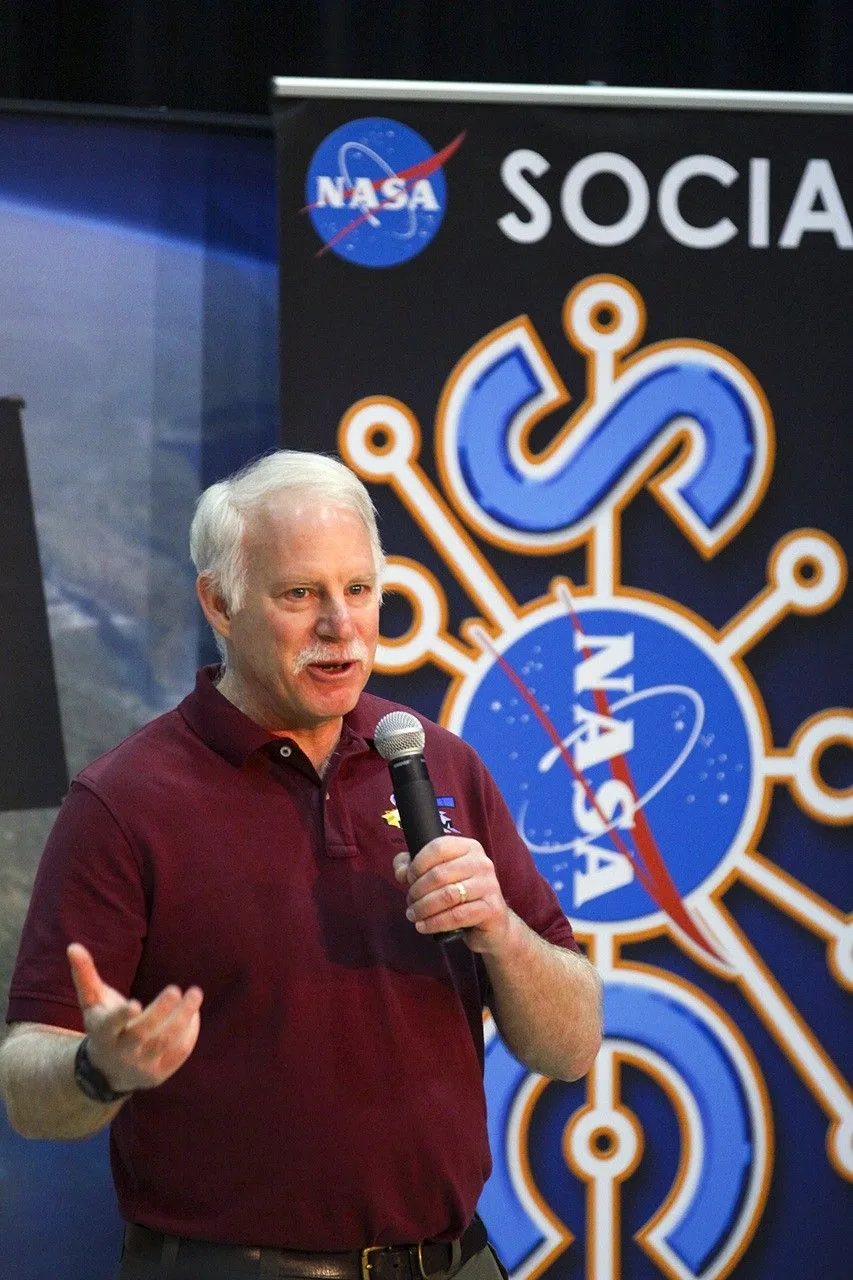
Jim Irons, former Landsat Project Scientist and emeritus scientist at NASA Goddard Space Flight Center, has been awarded the William T. Pecora Award. The honour recognises his integral role in shaping the Landsat programme, particularly his tenure as deputy project scientist for Landsat 7 and project scientist for Landsat 8. Irons is credited with championing rigorous calibration standards and successfully advocating for the retention of the thermal band on Landsat 8, despite initial budget and schedule pressures.
Irons served as director of NASA Goddard’s Earth Science Division during the early stages of the COVID-19 pandemic. He prioritised staff support and maintained productivity during government shutdowns and global disruption. His leadership ensured that the division remained functional amidst significant operational challenges, including the longest government shutdown in US history.
The award highlights the critical importance of data continuity for monitoring multi-decadal climate change and land surface impacts. Irons emphasised that a well-calibrated, continuous data record is essential for characterising changes on the Earth’s surface. He noted that researchers must be confident that observed changes are occurring on the Earth, rather than resulting from variations in sensor performance.
Early in his career, Irons faced resistance from NASA Headquarters regarding radiometric gain adjustments for the Thematic Mapper Simulator. He insisted that inconsistent calibration would prevent valid comparisons with actual Thematic Mappers. This stance established his commitment to calibration integrity, which later influenced his advocacy for ground system components at the USGS EROS Center to perform calibration for Landsat 4 and 5.
Irons also reflected on the complex history of Landsat 8’s development. Initial attempts at commercial data buys and integration with the NPOESS platform failed. The programme eventually settled on a free-flyer design after direction from the Office of Science and Technology Policy. Irons credited the success to persistence through failed attempts to reformulate the program and overcoming schedule challenges.
The thermal data from Landsat is now considered essential for estimating evapotranspiration rates, monitoring agricultural water use, and adjudicating water rights in the western United States. Irons noted that while the thermal capability was initially deemed not to provide a return on investment, methodologies for using thermal data for water consumption monitoring were developed by researchers at the USDA and the University of Idaho.
Looking forward, Irons identified emerging capabilities for Landsat, including combined use with ESA’s Sentinel-2, LIDAR, and radar for 3D forest mapping. He also highlighted applications in water quality assessment, tracking glacial retreat, and monitoring population displacement in conflict regions. He stressed that persistence in pursuing scientific interests is critical for mission success.