NASA’s AstroPix Gamma-Ray Sensor to Fly on Robotic Servicing Mission
The upcoming late-2027 mission will utilise a robotic arm from Rocket Lab Robotics to reposition the AstroPix payload, bridging a gap in gamma-ray detection sensitivity while validating critical servicing technologies.
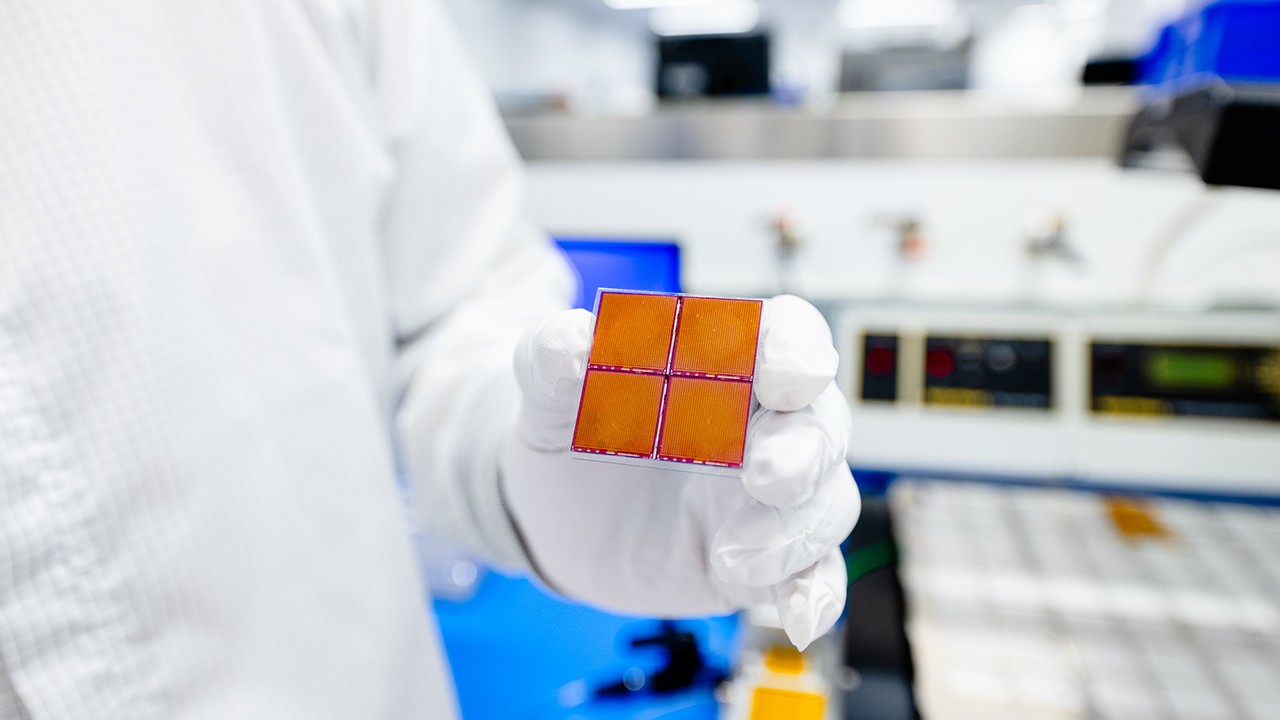
NASA’s AstroPix gamma-ray sensor technology demonstration is scheduled to fly aboard the agency’s Fly Foundational Robots mission, with a launch targeted for late 2027. The mission will utilise a robotic arm provided by Rocket Lab Robotics to reposition the AstroPix payload, housed within an Orbital Replacement Unit, to test in-orbit servicing and payload changeout capabilities. The AstroPix detectors are designed to measure gamma rays between 20,000 and 700,000 electron volts, a range where existing detectors are less sensitive.
The AstroPix payload will be integrated into the Fly Foundational Robots mission’s Orbital Replacement Unit, which was originally designed to be repositioned without a payload but has been adapted to support the additional technology demonstration. Astro Digital will provide the spacecraft hosting the mission. The AstroPix team is working to deliver their hardware in September, ahead of final integration onto the spacecraft.
The mission is funded through NASA’s Space Technology Mission Directorate’s In-space Servicing, Assembly, and Manufacturing (ISAM) portfolio. Rocket Lab Robotics is supplying the robotic arm system through a NASA Small Business Innovation Research Phase III award. Astro Digital is hosting the orbital flight test through NASA’s Flight Opportunities program, managed at NASA’s Armstrong Flight Research Center. AstroPix development was supported by NASA’s Astrophysics Division and funded through the Nancy Grace Roman Technology Fellowship.
Gamma rays are the highest-energy form of light, observed from events such as lightning, solar flares, and cosmic collisions. Current NASA missions, including the Fermi Gamma-ray Space Telescope and the Neil Gehrels Swift Observatory, observe gamma rays, including those with higher energies than AstroPix’s target range. The energy range between 500,000 and 1 million electron volts is where many gamma-ray bursts shine brightest and where astronomers expect strong glows from massive, distant active galaxies powered by black holes. AstroPix chips function similarly to cell phone camera sensors, with each chip containing four silicon pixel gamma-ray detectors, each incorporating 1,225 pixels. Comparable technologies have previously flown on scientific balloon missions and are planned for sounding rocket payloads, though these only reach near space.