NASA uses soccer ball physics to teach mass distribution
A new NASA publication explains how mass distribution affects motion, stability, and design, using a 2019 collaboration with Adidas as a case study.
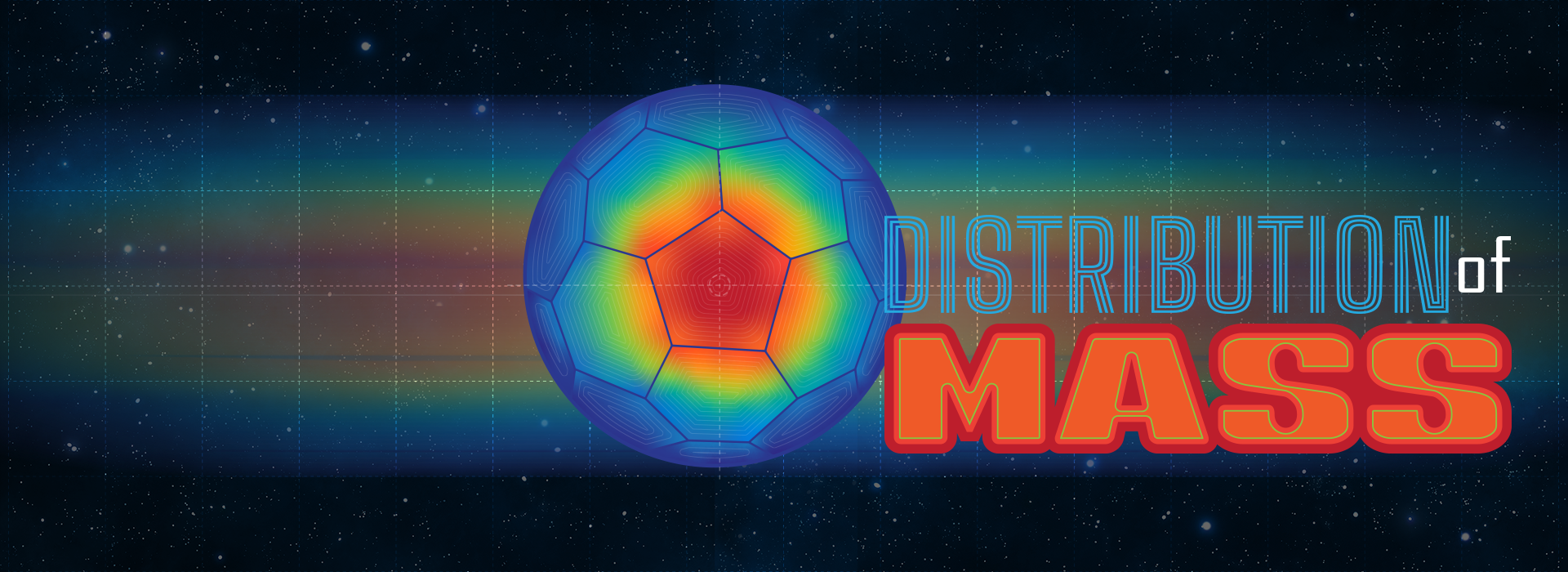
NASA has released an educational resource titled "NASA Knows: What Is Mass Distribution?" designed for students in grades 5 to 8. The publication uses the example of a soccer ball to explain fundamental physics concepts, including mass distribution, centre of mass, and dynamic balance. It highlights how the internal arrangement of mass affects an object's motion and stability, a principle that applies to everything from galaxy shapes to aircraft design.
The resource details a 2019 collaboration between NASA and Adidas, during which soccer balls were sent to the International Space Station for microgravity testing. On Earth, gravity can obscure certain details of object motion, making it difficult to observe how mass distribution affects flight paths. In the microgravity environment of the space station, astronauts were able to conduct experiments that allowed engineers to confirm designs and understand ball motion in ways not possible on Earth.
According to the publication, the results from these space station experiments have helped improve the accuracy and consistency of modern soccer balls. Engineers strive for dynamic balance, where an object travels smoothly without unexpected movements, by ensuring its mass is evenly balanced in all areas. If the center of mass is not precisely balanced, the ball will not move smoothly, regardless of its external geometric pattern.
The educational material also outlines specific career pathways related to the field, noting the educational requirements for each role. These include Computer-Aided Design (CAD) Technician/Drafter, which typically requires a two-year associate degree; Computational Fluid Dynamics Engineer, who uses computer simulations to model fluid behavior; and Physicist, a role that usually demands an advanced college degree and strong mathematical skills.
The resource encourages students to explore these concepts through simple experiments, such as determining which balls are well balanced. It serves as an introduction to the scientific and engineering principles that govern how objects move through space, bridging the gap between everyday experiences and complex aerospace applications.