NASA to broadcast live coverage of SpaceX Dragon departure from International Space Station
The spacecraft is scheduled to undock on Tuesday, 16 June, before re-entering Earth’s atmosphere and splashing down off the coast of California on Wednesday morning.
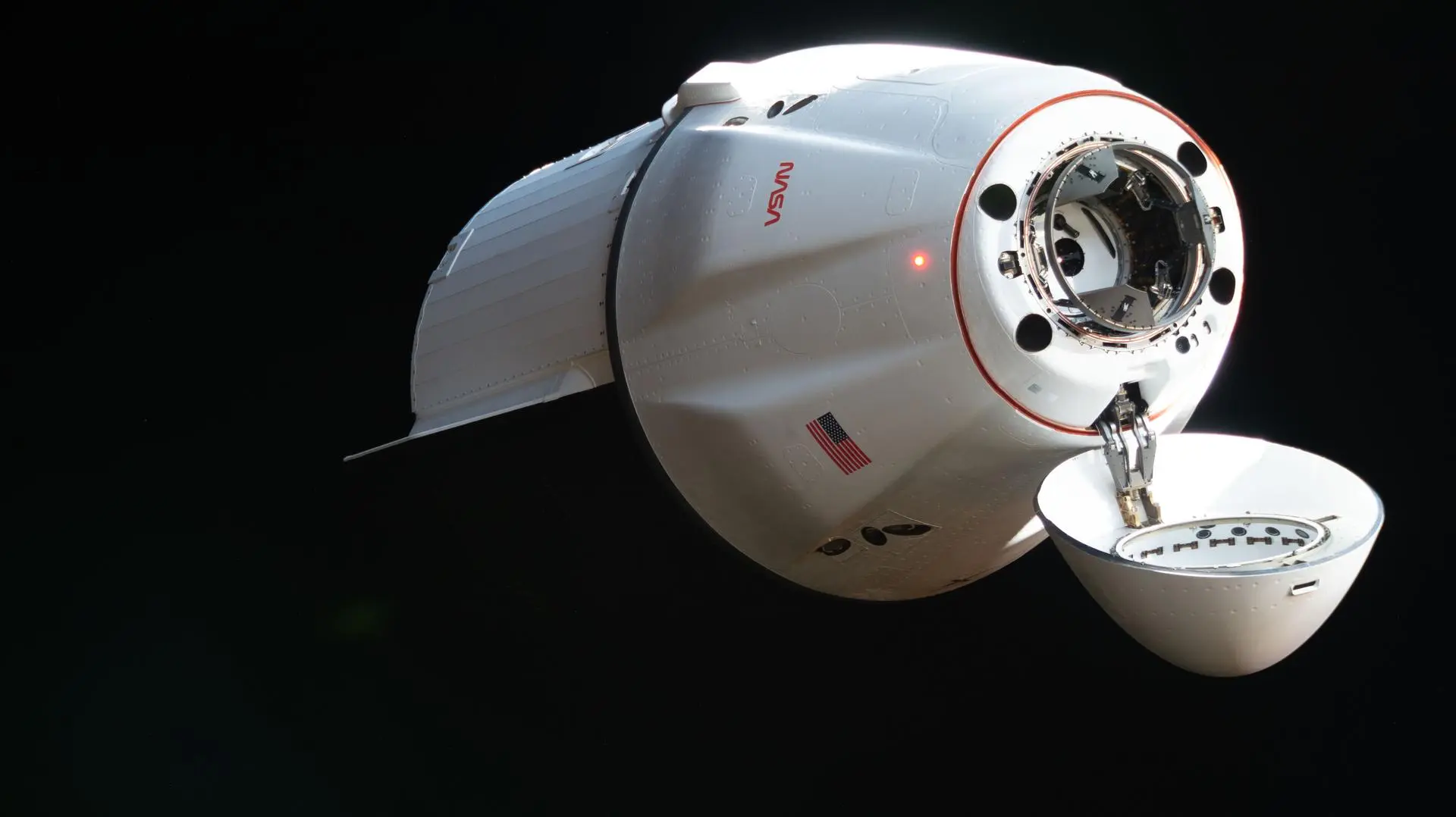
NASA and its international partners are preparing to receive scientific research samples and hardware as the SpaceX Dragon spacecraft departs the International Space Station on Tuesday, 16 June. The departure marks the conclusion of the 34th SpaceX resupply mission to the orbiting laboratory, returning critical data that supports both current operations and future deep-space exploration.
The Dragon spacecraft is scheduled to undock from the forward port of the Harmony module at approximately 12:05 p.m. EDT. This action follows a command from SpaceX ground controllers, after which the spacecraft will fire its thrusters to move safely away from the station. NASA will provide live coverage of the undocking beginning at 11:45 a.m. EDT on NASA+, Amazon Prime, and the agency’s YouTube channel.
The spacecraft will re-enter Earth’s atmosphere on Wednesday, 17 June, before splashing down off the coast of California at approximately 5:08 a.m. PDT. While NASA will not stream the splashdown event, updates regarding the landing will be posted on the agency’s space station blog.
Dragon returns with nearly 6,500 pounds of cargo, including research samples that could shape future space exploration and applications on Earth. Returning scientific materials include bioprinted organ and cartilage tissue, data on improving cryogenic fuel storage for future missions, and DNA-inspired materials aimed at developing new cancer treatments.
The hardware returning to Earth includes an ocular imaging device used to monitor crew members’ eye health, an absorbent bed that filters trace contaminants from cabin air, and a separator pump from the waste and hygiene compartment. These items were part of the nearly 6,500 pounds of crew cargo and science experiments loaded onto the Dragon.
The spacecraft arrived at the station on 17 May after launching two days earlier on a Falcon 9 rocket from Space Launch Complex 40 at Cape Canaveral Space Force Station in Florida. For more than 25 years, people have lived and worked continuously aboard the International Space Station, advancing scientific knowledge and making research breakthroughs not possible on Earth.
The space station helps NASA understand and overcome the challenges of human spaceflight, expand commercial opportunities in low Earth orbit, and build on the foundation for long-duration missions to the Moon as part of the Artemis program, and to Mars.