NASA ISS crew tests soccer ball motion in microgravity
Findings from March 2026 experiments aim to clarify how space-derived discoveries can benefit athletes and fans on Earth.
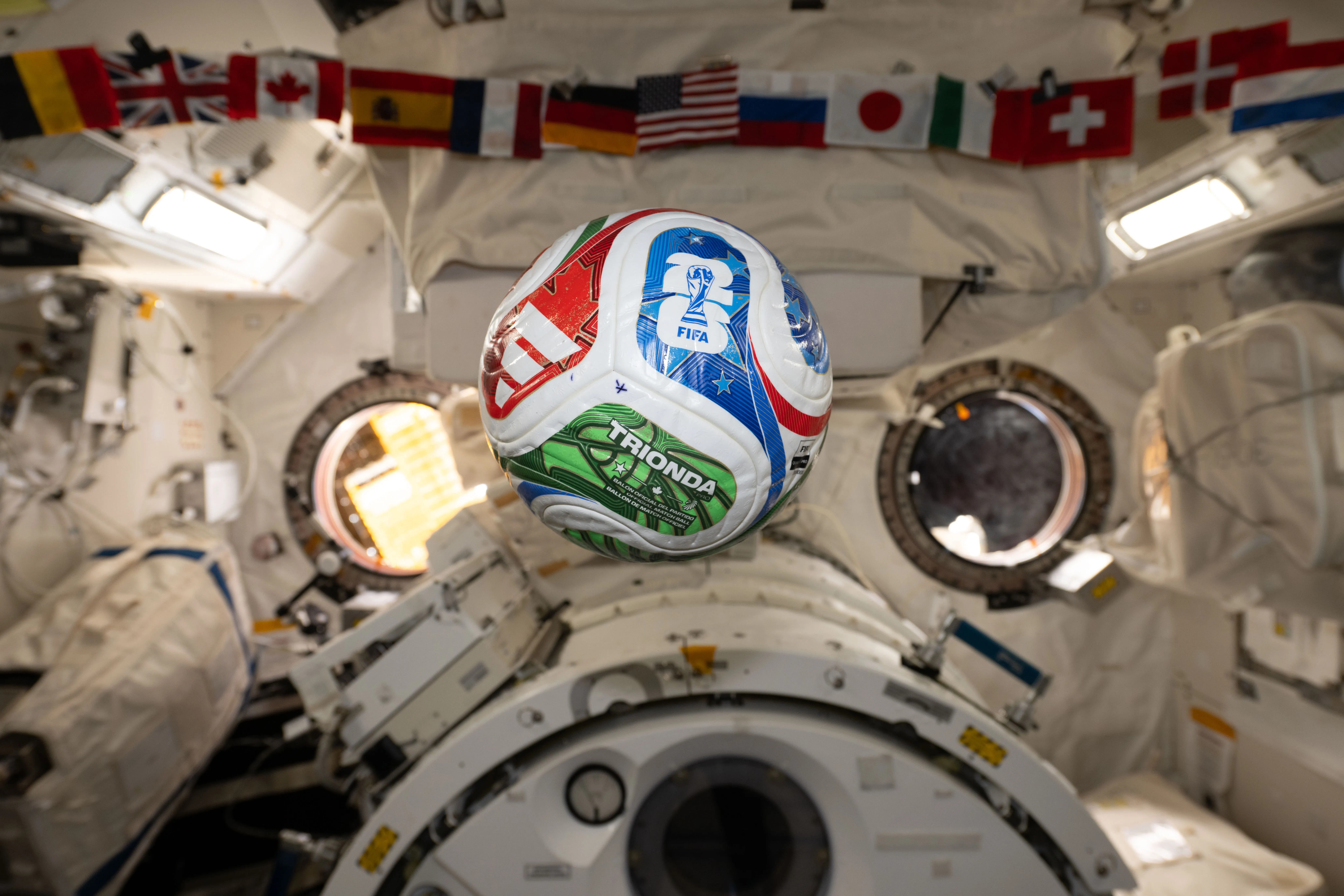
Astronauts aboard the International Space Station conducted tests on soccer balls on 2 March 2026 to examine how internal mass influences motion and stability within a microgravity environment. The experiments were designed to observe the unique physics of the sport in orbit, where traditional gravitational forces do not apply.
The research specifically investigated the impact of embedded technologies, such as match-ball sensors, on performance metrics. By analysing how these internal components affect the ball's behaviour in space, the crew gathered data on the interaction between physical structure and technological integration during play.
NASA stated that the findings improve the understanding of how space-derived discoveries can benefit athletes and fans on Earth. The agency highlighted the work as part of its broader effort to demonstrate how technologies developed for space exploration can have practical terrestrial applications, particularly in the realm of sports science.
The results contribute to ongoing efforts to adapt space exploration technologies for consumer and commercial use. This approach aligns with the agency’s long-standing focus on identifying spinoff benefits, where innovations created for the rigours of space travel are refined for everyday use on the ground.
NASA released a photograph of a soccer ball floating in microgravity on 11 June 2026, dated to the 2 March 2026 experiment. The image serves as a visual record of the tests, illustrating the conditions under which the crew studied the ball's motion and the influence of its embedded sensor technology.