NASA facility simulates lunar dust to prepare Artemis hardware
The Lunar Development and Test Facility at Johnson Space Center is evaluating how abrasive lunar dust affects equipment and astronaut health ahead of future Moon missions.
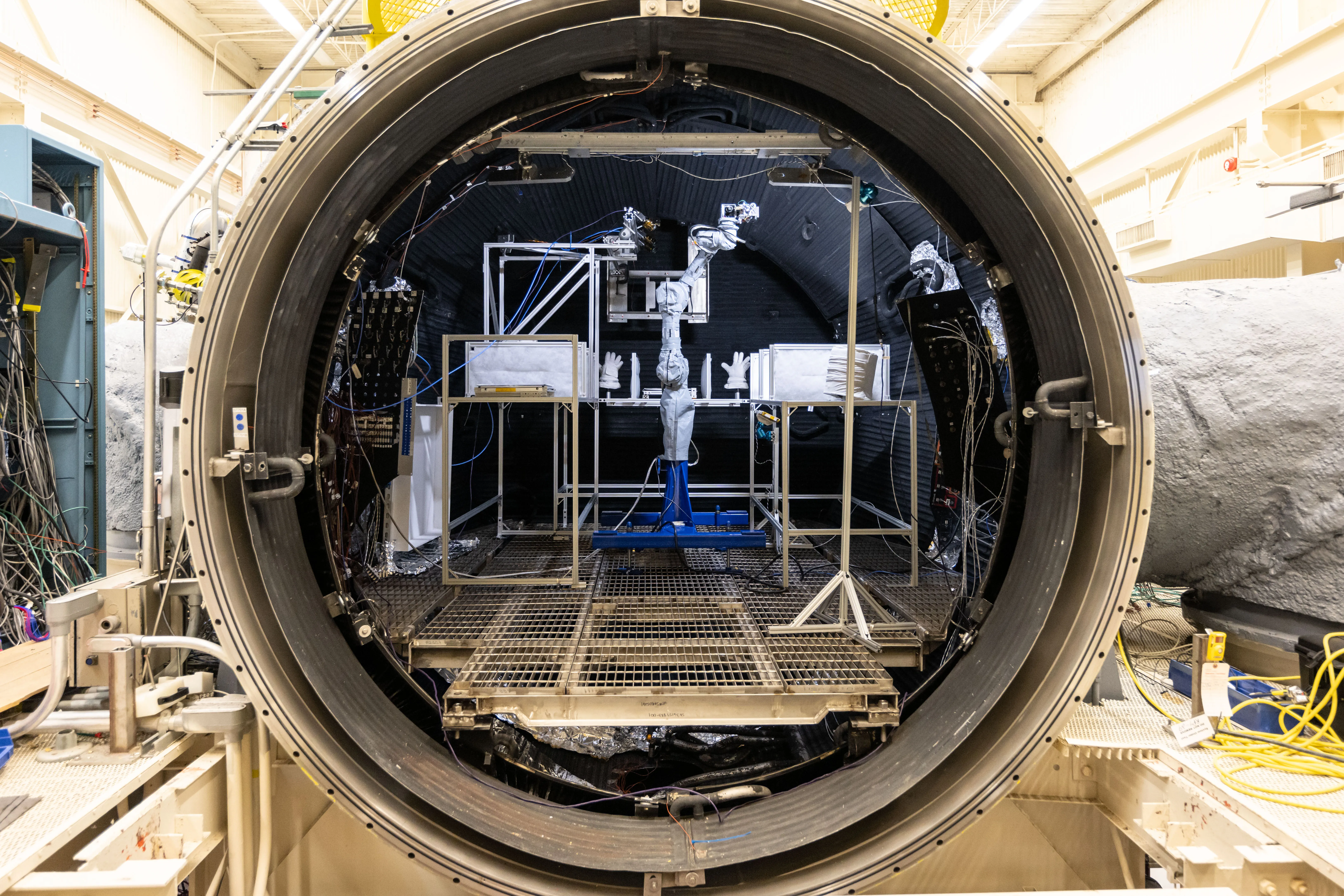
Engineers at NASA’s Johnson Space Center in Houston are utilising the Lunar Development and Test Facility to simulate the harsh lunar environment and test hardware for the Artemis programme. The facility employs vacuum chambers and lunar regolith simulant to evaluate the performance of spacesuits, spacecraft components, and moving mechanisms against abrasive lunar dust. Testing aims to mitigate risks of equipment damage and health hazards to astronauts, while advancing techniques for extracting resources such as oxygen from lunar regolith.
Located within the Energy Systems Test Area and managed by NASA engineers, the facility supports the development and testing of hardware in simulated lunar conditions. The Propulsion and Power Division at NASA Johnson developed the specialized systems enabling the facility’s lunar simulations. The facility includes a dust containment and preparation laboratory for ambient testing, a 3-foot cube vacuum chamber, and a 15-foot thermal vacuum chamber.
Inside the chambers, engineers test hardware under realistic lunar conditions using lunar regolith simulant. A closed-loop nitrogen system is used inside the chambers to recreate the harsh lunar environment. This testing is essential as astronauts prepare to live and work on the surface of the Moon, where lunar dust is distinct from Earth sand; it is sharp, abrasive, and clings to surfaces, posing risks to equipment and human health.
Mike Salinas, branch deputy chief of the Propulsion and Power Division, stated that the facility helps develop technologies for long-duration lunar exploration. He noted that engineers are advancing techniques to extract resources from lunar regolith, which can be turned into oxygen for astronauts and liquid oxygen for rocket propellant.
The spirit of exploration extends beyond the facility’s walls. Its exterior features a large-scale mural depicting astronauts exploring the lunar surface beneath a view of the cosmos. Completed in 2024 by artist Sebastian Boileau, the artwork celebrates the innovation, ingenuity, and discovery happening inside the building every day.
Now, anyone can step inside the facility from anywhere. Explore NASA’s new 3D virtual tour of the Lunar Development and Test Facility to see where engineers are helping prepare the technologies that support this Golden Age of exploration and innovation.