NASA details technical specifications for Flight Dynamics Research Facility
Newly published data reveals the capabilities of the large vertical test section, including wind speeds up to 117 mph and active cooling systems, supporting critical flight dynamics research.
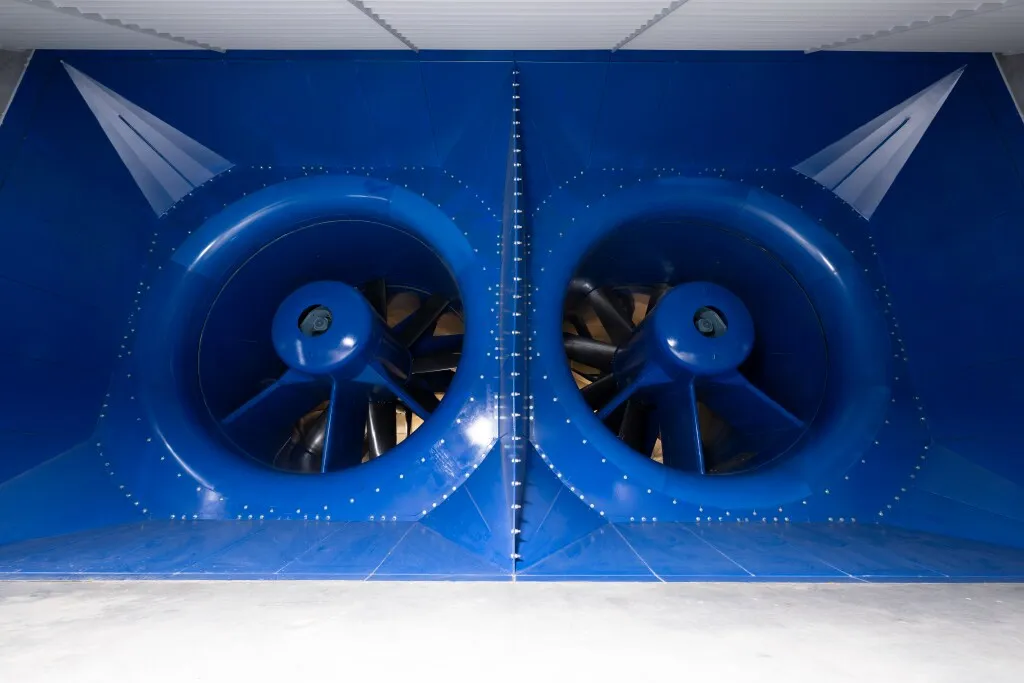
NASA has published technical specifications for the Flight Dynamics Research Facility (FDRF), a large subsonic wind tunnel located at its Armstrong Flight Research Center. The facility features a vertical test section specifically designed for flight dynamics research, focusing on stability, controllability, free-fall, and aircraft spin testing for atmospheric vehicles.
The FDRF is a component of NASA’s Aerosciences Evaluation and Test Capabilities. Its test section measures 20 feet in diameter by 24 feet high, providing substantial space for model testing. The facility can generate wind speeds ranging from 0 to 172 feet per second, which equates to 0 to 117 miles per hour.
Operational parameters for the tunnel include a dynamic pressure capability between 0 and 35 pounds per square foot. The Reynolds number ranges from 0 to 1.10×10^6 per foot. The facility operates at atmospheric pressure, utilizing air as the test gas.
To ensure consistent testing conditions, the FDRF employs active cooling to maintain the test section temperature at 79 degrees Fahrenheit. The total height of the facility structure is 131 feet.
The details were published on June 9, 2026, by Lillian Gipson, with contact information provided for Jim Banke. The release accompanies broader coverage of aerospace research capabilities at the centre, including related work on aircraft icing and pressure-sensitive paint technologies.