NASA confirms Artemis III crew and mission profile for 2027 lunar test flight
The European Space Agency astronaut Luca Parmitano joins the crew as NASA outlines complex low-Earth orbit operations involving Blue Origin and SpaceX systems.
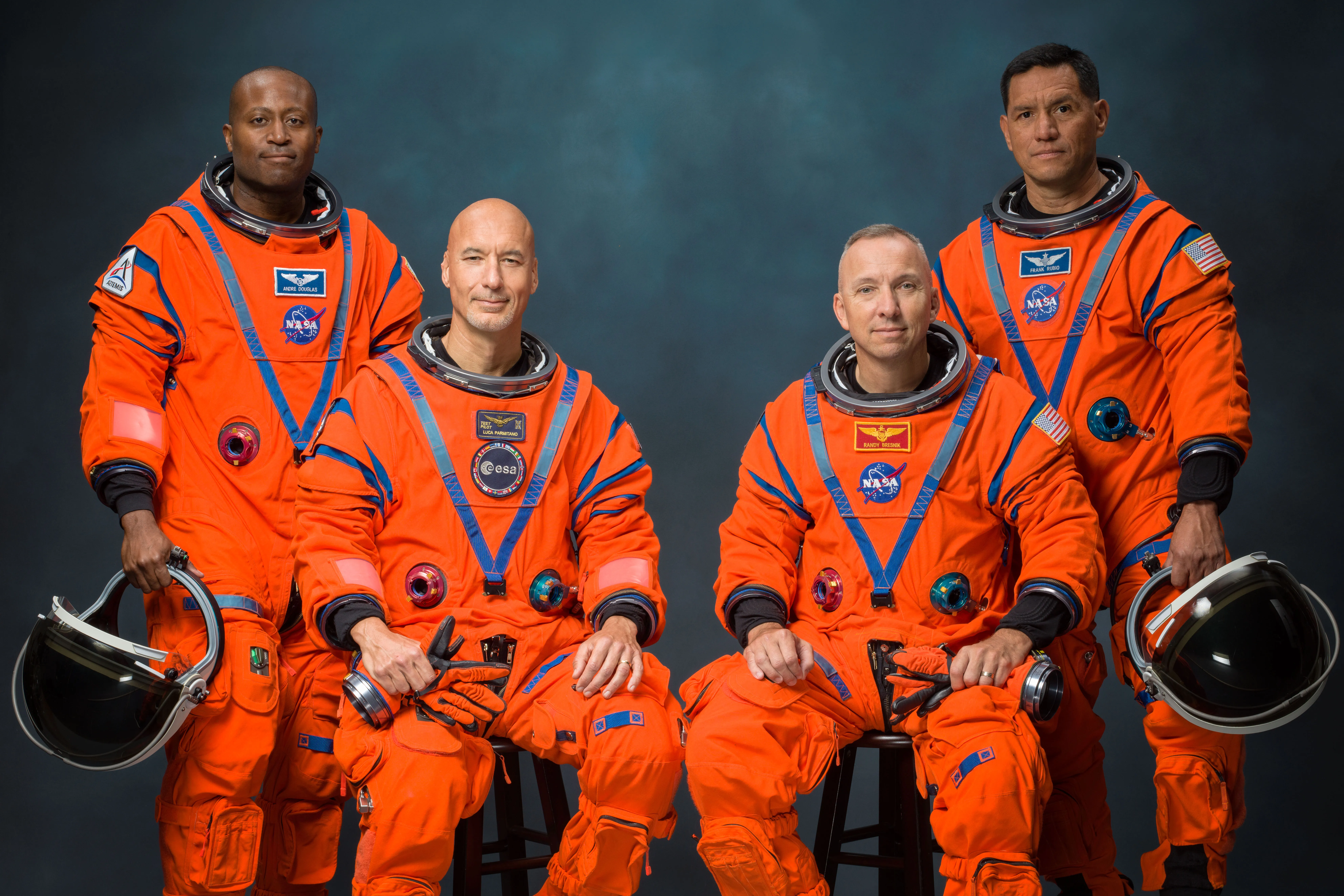
NASA has confirmed the crew and operational plan for the Artemis III mission, scheduled for 2027. This critical test flight will validate rendezvous and docking capabilities with commercial human landing systems developed by Blue Origin and SpaceX in low Earth orbit. The mission serves as a precursor to Artemis IV, the first crewed mission to the lunar South Pole planned for 2028. The primary crew comprises NASA astronauts Randy Bresnik, Frank Rubio, and Andre Douglas, alongside ESA astronaut Luca Parmitano, who is the first European Space Agency astronaut assigned to an Artemis mission. NASA astronaut Bob Hines has been named the backup crew member.
The mission profile involves launching the Orion spacecraft via the Space Launch System (SLS) rocket from Kennedy Space Center. Orion will first rendezvous and dock with a Blue Origin test lander for approximately two days, followed by a rendezvous with a SpaceX Starship test lander for approximately one day. The total mission duration is expected to be around two weeks, ending with a splashdown in the Pacific Ocean. Engineering teams are currently integrating the Orion crew and service modules, with thermal shield testing and rocket processing underway. Both Blue Origin and SpaceX are building test units for their respective landers to support this mission.
NASA Administrator Jared Isaacman stated that the mission builds on the success of Artemis II, which completed its flight in April. He described Artemis III as a demonstration of American innovation and international collaboration. The European Space Agency (ESA) provides the Service Module for Orion, highlighting international collaboration. ESA Director General Josef Aschbacher noted that Parmitano’s assignment reflects European expertise in high-pressure operations and underscores the Agency’s role in the Artemis programme.
Previous Artemis missions have laid the groundwork for establishing a permanent human presence on the Moon. The commercial lander systems are being developed under NASA’s Commercial Lunar Payload Services or similar partnerships to reduce costs and increase cadence. Artemis III aims to validate technologies and operations necessary for future crewed missions to Mars. The mission will require the coordination of multiple heavy-lift rocket launches, a complexity Isaacman described as unprecedented in history.
The crew members bring diverse experience to the test flight. Bresnik and Parmitano are each undertaking their third spaceflight, while Rubio is on his second. Douglas is making his first journey to space. Hines, the backup, previously served as a pilot on the SpaceX Crew-4 mission to the International Space Station. The team will begin training immediately on Orion systems and the commercial lander prototypes.