NASA Artemis II lessons shape future Moon to Mars path
Branelle Rodriguez outlines how data from humanity’s first crewed lunar flyby since the Apollo era is informing the agency’s next steps.
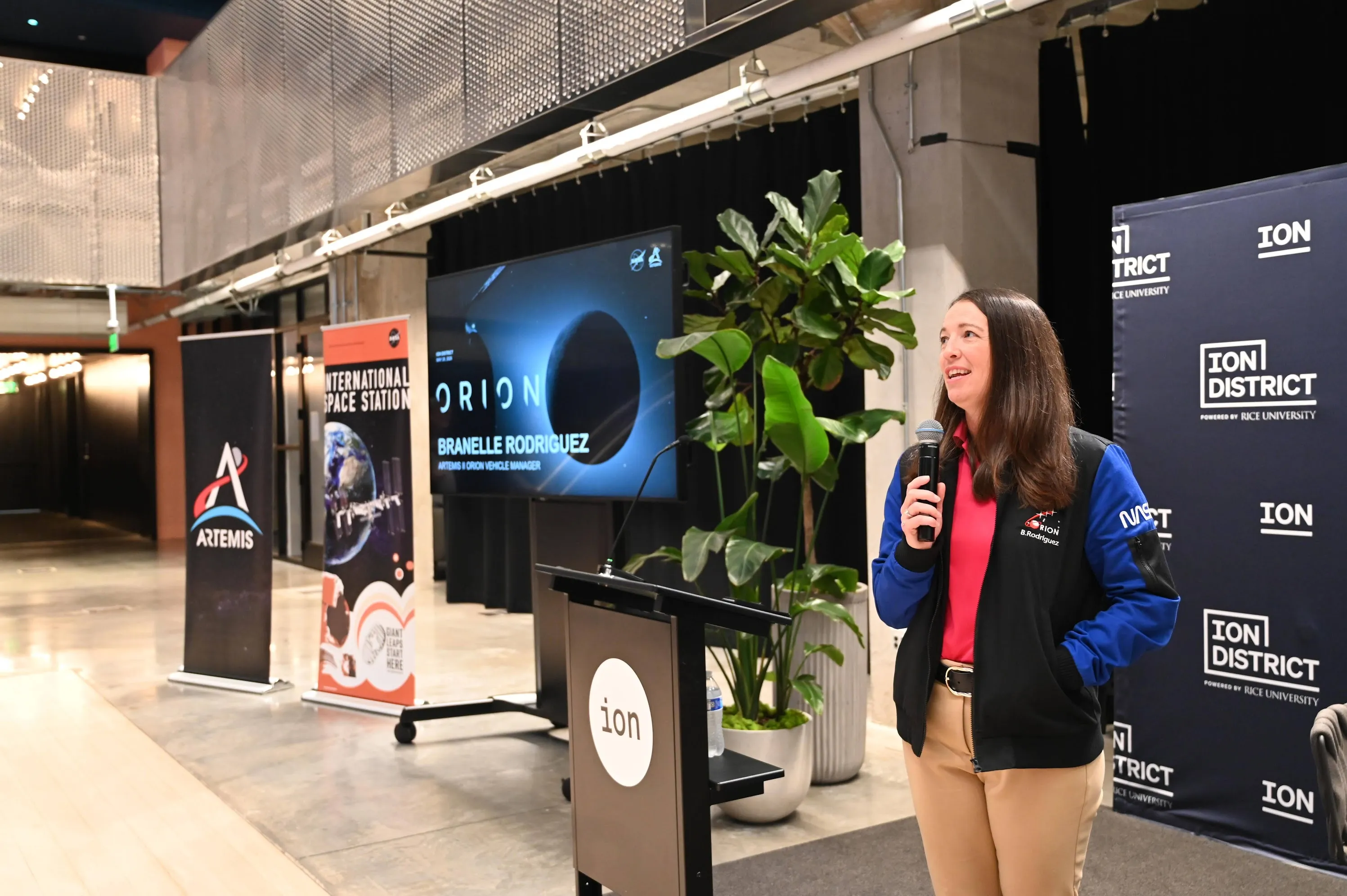
Seven weeks after the Orion spacecraft returned four astronauts from humanity’s first crewed journey around the Moon since the Apollo era, NASA officials are using the mission’s data to refine the agency’s path toward the lunar surface and eventual trips to Mars. Branelle Rodriguez, the Orion vehicle manager, presented these insights on May 28 at the Ion, an innovation hub in Houston, as part of the NASA Stories at the Ion speaker series.
Rodriguez detailed the Artemis II mission’s achievements, which began with the launch on April 1 aboard the Space Launch System rocket. The mission carried NASA astronauts Reid Wiseman, Victor Glover, and Christina Koch, alongside Canadian Space Agency astronaut Jeremy Hansen, on a 10-day voyage. Key milestones included operations in high-Earth orbit, a lunar flyby, and the spacecraft’s return to Earth, during which the crew captured imagery of an Earthrise, the lunar surface, and a solar eclipse from deep space.
The mission served as a critical test for Orion’s systems, providing data for upcoming Artemis missions. The crew evaluated the spacecraft’s life support, navigation, and reentry systems, while also completing a manual piloting demonstration. This exercise assessed Orion’s handling and proximity operations, informing future rendezvous and docking activities required for subsequent lunar landings.
Rodriguez highlighted the role of international collaboration, specifically the European Service Module provided by the European Space Agency. This component supplies Orion with power, propulsion, oxygen, and water. Support for the mission came from more than 300 people in the Orion Mission Evaluation Room at Johnson Space Center, who monitored systems in real time.
Among the mission’s personal touches was Rise, a zero-gravity plushie created by a student. It carried a memory card with over 5.6 million names from the “Send Your Name with Artemis” effort. The crew also designed the mission patch with a hidden detail that reads “all” when viewed from a distance, paying tribute to the collective effort behind the mission.
Preparations for Artemis III are now underway, focusing on testing rendezvous and docking capabilities between Orion and commercial human landing systems. NASA announced the Artemis III crew on June 9 at Johnson Space Center, while hardware for future missions is currently in production at Kennedy Space Center in Florida.
Rodriguez described Artemis II as the result of global teamwork across NASA centres, industry partners, and international agencies. She noted that the mission demonstrated what is possible when thousands of people work toward a common goal, supporting NASA’s vision of a sustained presence at the Moon and human missions to Mars.