NASA and NOAA to showcase commercial satellite data at 2027 AMS meeting
Abstracts are now being accepted for a collaborative session hosted by NASA’s Commercial Satellite Data Acquisition program and NOAA’s Commercial Data Program at the American Meteorological Society’s annual gathering in Denver.
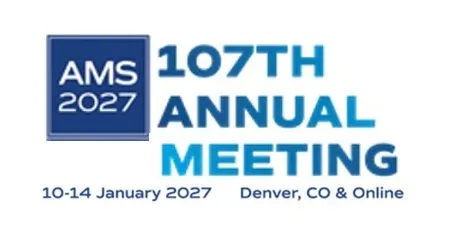
NASA and the National Oceanic and Atmospheric Administration (NOAA) will host a joint session titled “Advancing Weather and Environmental Science Through NASA and NOAA Commercial Satellite Data Programs” at the 23rd Symposium on Operational Environmental Satellite Systems. The event is scheduled to take place as part of the 2027 American Meteorological Society (AMS) Annual Meeting in Denver, Colorado, from January 10 to 14.
The session will examine the expanding capabilities of commercial Earth observation providers and how these entities are creating new opportunities for weather research, operational forecasting, and environmental science applications. Abstracts are currently being accepted for participation in the session, with details regarding the submission process available on the symposium’s website.
The joint initiative is driven by the collaboration between NASA’s Commercial Satellite Data Acquisition (CSDA) program and NOAA’s National Environmental Satellite, Data, and Information Service (NESDIS) Commercial Data Program (CDP). These two programs work together to expand federal access to commercial satellite data and accelerate its utilisation in both research and operational contexts.
NASA’s CSDA program supports the scientific community by evaluating and acquiring a diverse range of commercial datasets. These include optical imagery, Synthetic Aperture Radar, Global Navigation Satellite System Radio Occultation and Reflectometry, methane detection, precipitation data, and Digital Elevation or Terrain Models. These datasets are utilised for modelling, hazard monitoring, climate studies, and applied research.
Similarly, the CDP operationalises commercial space-based environmental data, demonstrating impacts through assimilated observations in weather forecasting and space weather applications. The program also conducts pilot projects to transition piloted data into operations, thereby strengthening the nation’s weather enterprise by enabling innovative research and closing observational gaps.
Together, the CSDA and CDP aim to integrate commercial data into real-world forecasting and decision support applications. This collaborative effort seeks to enhance the capabilities of the US weather enterprise by leveraging the growing volume and variety of data provided by the commercial space sector.