NASA Advances Crew-13 Launch Date for Mid-September ISS Rotation
Jessica Watkins becomes first NASA astronaut to launch aboard a SpaceX Dragon twice as mission aims to support lunar and Mars exploration
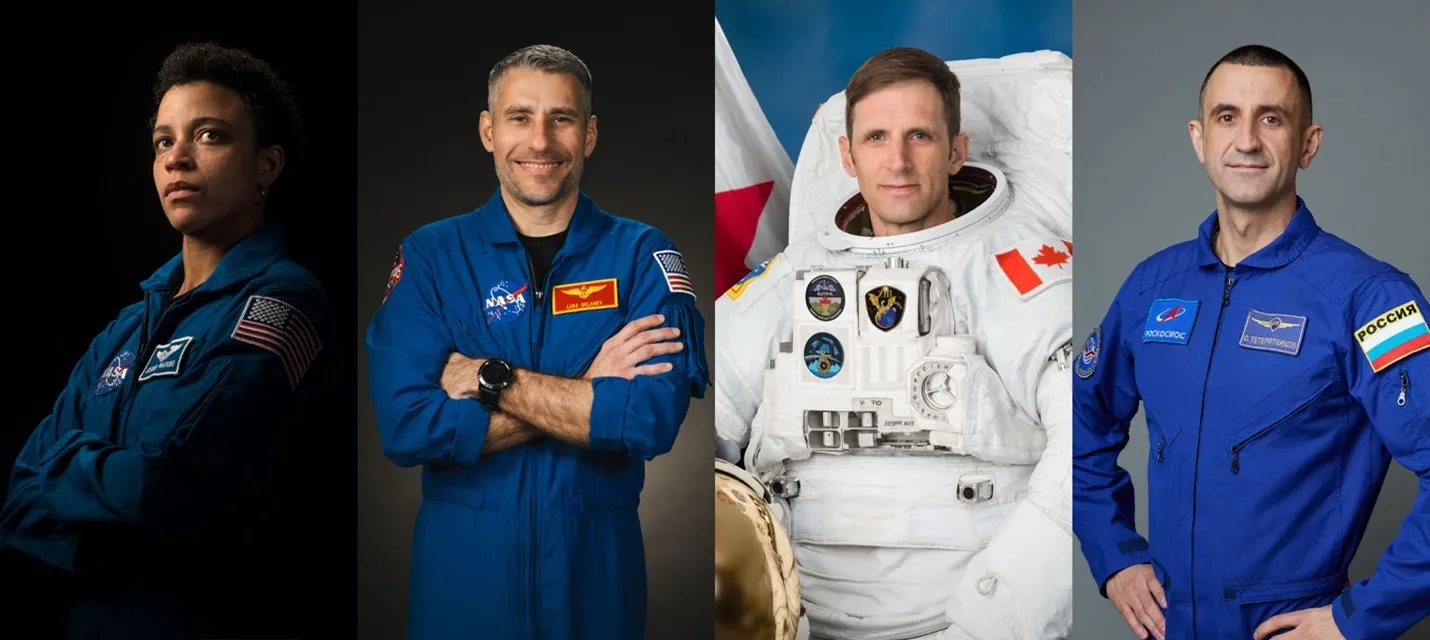
NASA has officially announced the crew assignments for the SpaceX Crew-13 mission, marking the 13th crew rotation to the International Space Station under the agency's Commercial Crew Program. The four-person team, comprising two NASA astronauts, one Canadian Space Agency astronaut, and one Roscosmos cosmonaut, is scheduled to launch no earlier than mid-September. This timeline represents a shift from the original November window, a change made to increase the frequency of United States crew rotation missions to the orbiting laboratory.
Upon arrival at the space station, the Crew-13 members will integrate into Expedition 75 to conduct a long-duration science expedition. Their primary objectives include carrying out scientific investigations and technology demonstrations designed to prepare humans for future exploration missions to the Moon and Mars, as well as benefiting research on Earth. The mission underscores the station's role in advancing knowledge of human spaceflight and expanding commercial opportunities in low Earth orbit.
Command of the spacecraft will be held by NASA astronaut Jessica Watkins, who will serve as commander, while Luke Delaney, also a NASA astronaut, will act as pilot. Joining them as mission specialists are Canadian Space Agency astronaut Joshua Kutryk and Roscosmos cosmonaut Sergey Teteryatnikov. This flight marks a historic milestone for Watkins, who will become the first NASA astronaut to launch aboard a SpaceX Dragon spacecraft twice. She previously flew to the station as a crew member aboard the SpaceX Crew-4 mission in 2022.
The roster includes three individuals making their first trip to the orbiting laboratory. Luke Delaney, a distinguished naval aviator and test pilot from Florida, brings experience in evaluating developmental aircraft systems and supporting airborne science missions. Joshua Kutryk, a native of Alberta, served as a CF-18 fighter pilot and worked as an experimental test pilot before his selection as a CSA astronaut. Sergey Teteryatnikov, a graduate of the Naval Academy in St. Petersburg, Russia, has served as a test cosmonaut since 2023 following his selection for the Gagarin Research and Test Cosmonaut Training Center.
The crew's diverse backgrounds reflect the international nature of modern space exploration. Watkins, a geologist who studied the Martian surface and served on the Curiosity rover science team, will bring her expertise in planetary science to the station. Her previous flight lasted 170 days across Expeditions 67 and 68. Meanwhile, Delaney's background in mechanical and aerospace engineering, combined with his flight test experience, complements the mission's technical goals.
As the launch window opens for mid-September, the focus remains on the continuous presence of humans aboard the International Space Station. For more than 25 years, the station has served as a platform for research that is not possible on Earth, building the foundation for long-duration missions to the Moon as part of the Artemis program and eventually to Mars. The Crew-13 mission continues this legacy of innovation and cooperation among space agencies worldwide.