MLS Disciplinary Committee probes Messi after alleged neck contact
The Major League Soccer regulatory body has opened a formal inquiry into Inter Miami forward Lionel Messi following a late-match altercation with Philadelphia Union defender Quinn Sullivan.
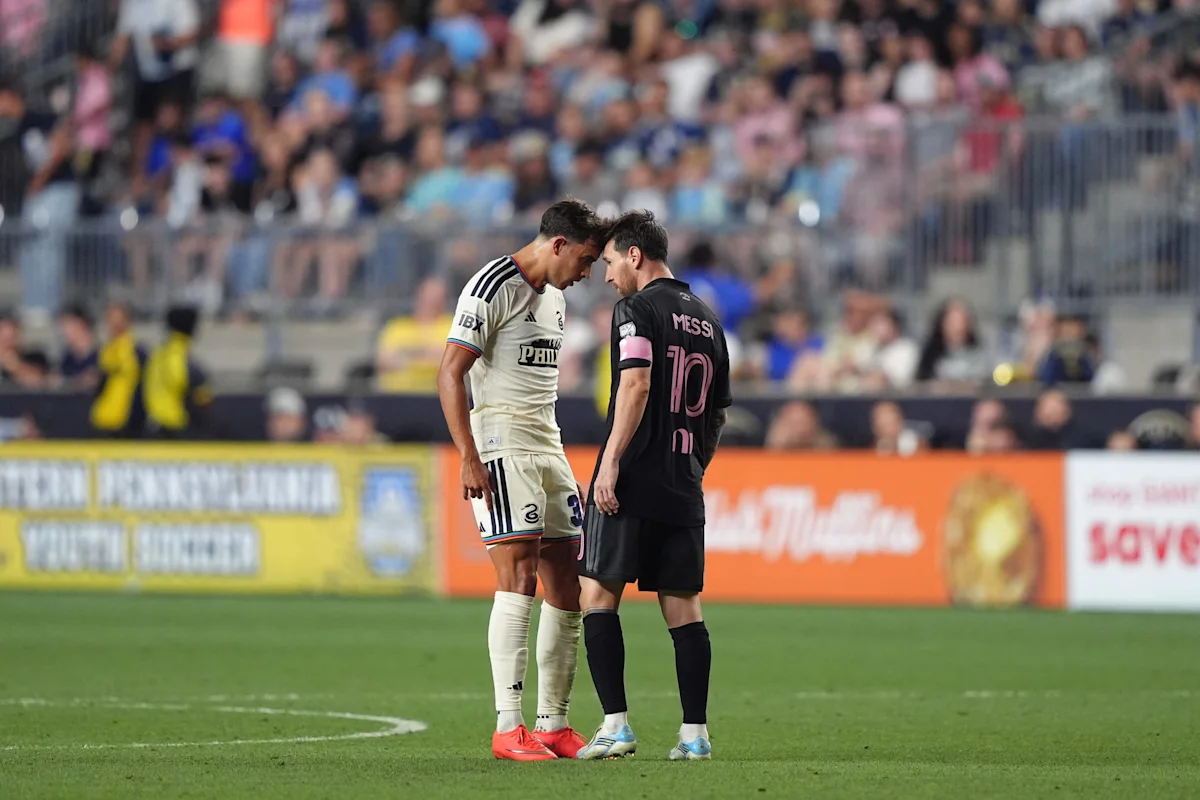
The Major League Soccer Disciplinary Committee has initiated an investigation into the conduct of Inter Miami forward Lionel Messi. The inquiry follows an alleged incident during a 2-2 draw against the Philadelphia Union, where Messi was reported to have made contact with the back of the neck of Philadelphia defender Quinn Sullivan.
The incident occurred during a chaotic sequence of events near the conclusion of the match. The altercation began when Inter Miami player Ian Fray stepped over a fallen Quinn Sullivan, prompting Quinn to slam Fray to the ground. The situation escalated into a broader confrontation, resulting in red cards for Philadelphia’s Cavan Sullivan and Inter Miami’s Yannick Bright. Quinn Sullivan received a yellow card for his involvement in the skirmish.
On-field officials did not issue an immediate sanction to Messi at the time of the incident. Reports indicate that the nearest referee did not witness the specific contact but intervened to separate the players as tensions rose. Consequently, the matter has been referred to the Disciplinary Committee for further evaluation.
Under current MLS competition guidelines, players who contact an opponent’s face, head, or neck in a manner that incites or escalates an incident are subject to a minimum fine. While a suspension is a possible outcome, regulatory frameworks suggest that a financial penalty is the more probable sanction in this context.
The outcome of this investigation will directly impact Messi’s availability for Inter Miami’s upcoming fixture against Toronto FC. The club and the player await the committee’s final determination on whether the action constituted a disciplinary breach requiring suspension or a lesser penalty.
This regulatory review highlights the league’s approach to managing post-match conduct and the distinction between immediate on-field judgments and subsequent administrative reviews. The process ensures that incidents not captured by match officials are still subject to formal scrutiny under the competition rules.