Missouri ballot measure to repeal abortion rights faces scrutiny over bundled gender care ban
A new Amendment 3 places a near-total abortion ban and a constitutional prohibition on gender transition care for minors on the November ballot, prompting legal challenges over the clarity of the summary.
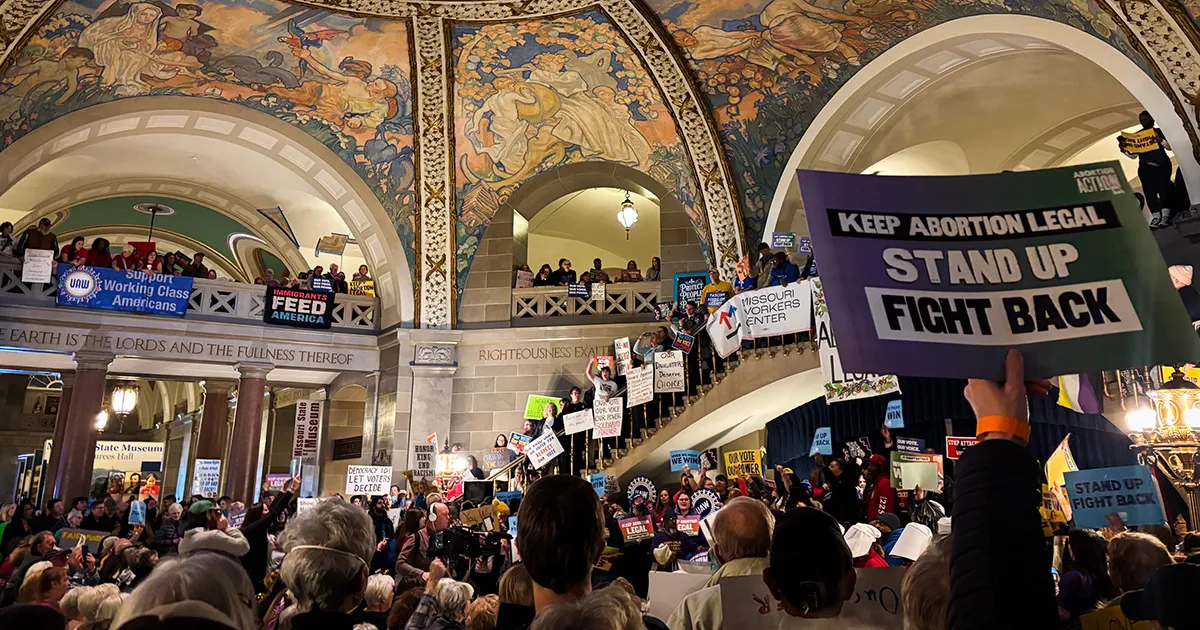
Missouri Republican leaders have placed a new Amendment 3 on the November ballot, a measure designed to repeal the state’s constitutional right to abortion, which was established by voters in 2024. The proposal would restore a near-total abortion ban with limited exceptions for rape, incest, medical emergencies, and fetal anomalies. Simultaneously, the amendment seeks to constitutionally prohibit gender transition care for minors, a restriction already largely in place via state law since August 2023.
The ballot summary has become a focal point of legal disputes. A state appeals court ordered revised language to explicitly state that the measure repeals the 2024 voter-approved reproductive rights. Previously, the summary drafted by lawmakers did not mention the repeal, instead highlighting protections for women’s safety and children from gender transition. Secretary of State Denny Hoskins, who has publicly endorsed the amendment, defended his initial use of the word “amend” rather than “repeal,” arguing it was more accurate.
Critics argue the amendment uses anti-trans sentiment as “ballot candy” to make the unpopular abortion ban more palatable. They note that state law already restricts such care for minors, meaning the constitutional provision would largely codify existing restrictions without an expiration date. The “Stop the Ban” coalition, which has raised more than $5 million to oppose the measure, includes a $1.25 million contribution from former New York City Mayor Michael Bloomberg.
Polling from the SLU/YouGov Poll indicates a complex voter landscape. While 60% of voters support legal abortion in the first eight weeks, 67% oppose gender transition medications for minors and 73% oppose surgeries. When presented with the amendment’s provisions together, voters favoured the measure 47% to 40%. Republican leaders argue that voters in 2024 did not intend to approve a nearly unlimited right to abortion, but rather sought the specific exceptions now included in the new proposal.
The procedural handling of the ballot has raised further questions about institutional conduct. Hoskins has unilaterally blocked two other citizen-led measures from the November ballot: one to restrict legislative changes to voter-approved policies and another to refer the new congressional map to a public vote. A circuit court judge ruled in favour of Hoskins in both cases, with expedited appeals expected to reach the state Supreme Court.
The new amendment carries the same name as the 2024 measure, which voters approved to protect abortion rights. In 2024, a yes vote protected those rights; in November, a yes vote will remove them. Republican leaders maintain the new amendment better reflects voter intent, while opponents describe the recycled name and bundled provisions as a strategy to obscure the repeal of reproductive rights.