Macron’s final Bastille Day parade signals European unity for Ukraine
President Emmanuel Macron uses his last Bastille Day ceremony to demonstrate European military cohesion, welcoming Ukrainian forces and 30 heads of state while forest fires disrupt traditional celebrations.
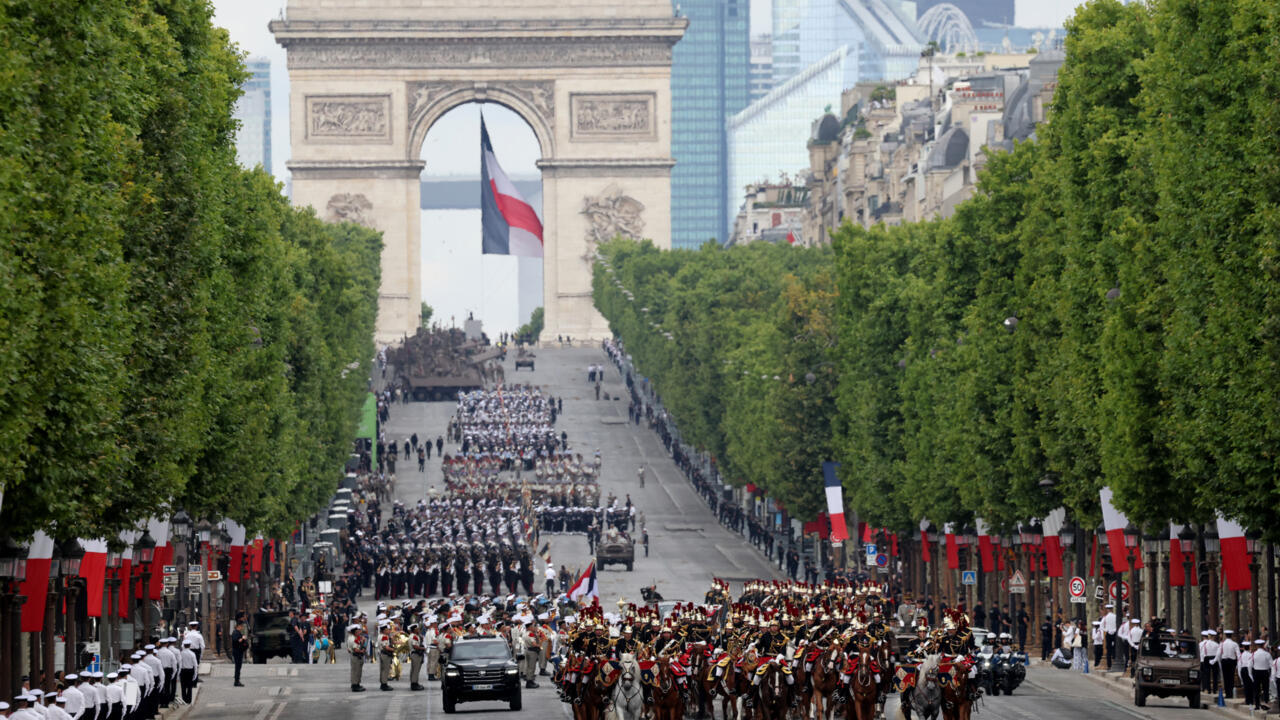
France’s annual Bastille Day military parade on July 14, 2026, has been reconfigured to serve as a prominent display of European military unity and sustained support for Ukraine. Marking President Emmanuel Macron’s final Bastille Day in office, the event features approximately 500 troops from the “Coalition of the Willing” and aircraft from 11 European nations. The gathering is explicitly framed to signal resolve to Russian President Vladimir Putin and US President Donald Trump, demonstrating that Europe is stepping up to defend itself.
Ukrainian President Volodymyr Zelensky will join Macron in the special viewing area alongside approximately 30 other heads of state or government. Ukrainian troops will march along the Champs-Élysées, while Ukrainian co-pilots trained in France will fly two Mirage 2000B fighter jets alongside French air force pilots. Macron described the participation of these partners as a “great honour” and an illustration of strategic reawakening and unity.
The aerial display includes aircraft from Germany, the United Kingdom, Croatia, Poland, Denmark, Greece, Sweden, Norway, Spain, and Italy. On the ground, the parade sets a new record with 6,800 marching troops, an increase from the 5,810 participants in 2025. The event takes place beneath the Arc de Triomphe, a traditional setting for the display of national pride that has historically been used by French presidents to vaunt the country’s accomplishments.
Concurrently, France is grappling with its third heatwave since May, with active forest fires in the Fontainebleau forest south of Paris and in southern regions. These conditions have forced the cancellation of traditional fireworks and firefighters’ balls in several areas, including the French capital. Despite these restrictions, the Eiffel Tower’s drone light show proceeded on Monday night, maintaining a visual component of the celebrations.
Bastille Day commemorates the storming of the Bastille fortress in 1789, a pivotal event in the French Revolution that led to the overthrow of the monarchy. While the day remains central to the French calendar, involving village festivals and family gatherings, the 2026 parade underscores a shift toward international security cooperation. This occurs against the backdrop of the 2026 FIFA World Cup, which is currently underway with Mexico defeating South Africa 2-0 in the opening match.