Lebanon weighs Egyptian-backed framework amid US-Iran deal pressures
As a recent US-Iran memorandum halts broader conflict, Lebanese officials consider a proposal to integrate militants into the national army and reform sectarian power-sharing, though experts remain divided on its viability.
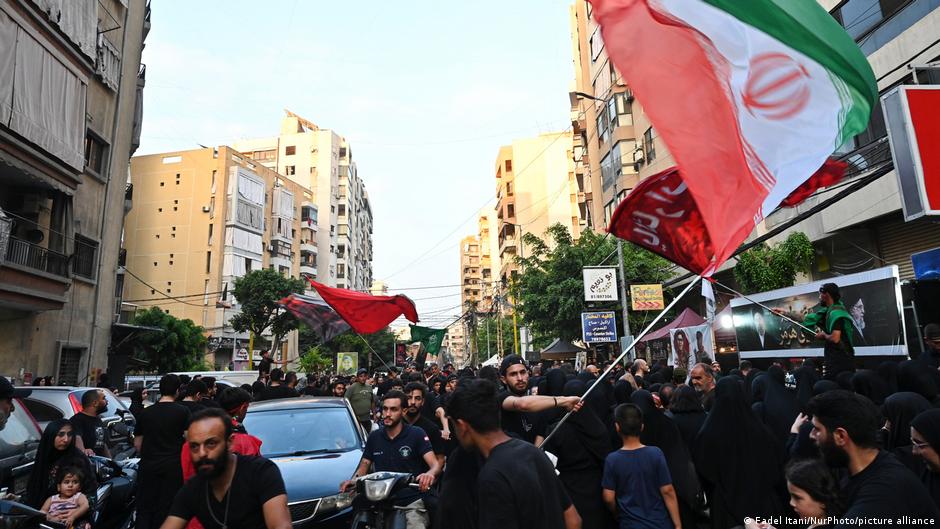
Lebanese government representatives are currently engaged in talks in Washington with Israeli counterparts to discuss the neutralisation of Hezbollah, a process occurring against the backdrop of a recent US-Iran memorandum of understanding. This agreement, signed last week, halted a broader regional conflict that began in late February, yet Lebanon views the diplomatic outcome as an infringement on its sovereignty because it was excluded from the negotiations. The country now faces significant pressure to choose between the spheres of influence of Iran and Israel, a dilemma exacerbated by a conflict that has displaced over one million people, killed thousands, and caused approximately $1.4 billion in damage.
An Egyptian-backed framework, supported by Saudi Arabia, Qatar, Turkey, and Pakistan, proposes a three-phase transition to address the crisis. The proposal outlines an organised, gradual process that would see Hezbollah fighters integrated into the Lebanese army, its social services absorbed by the state, and the group transformed into an exclusively political and civilian entity. This structural change is coupled with reforms to Lebanon’s sectarian power-sharing system, aiming to replace fixed demographic roles with a more fluid and equal distribution of political authority.
The US has backed the creation of a de-confliction cell to monitor the end of fighting in Lebanon, comprising representatives from Lebanon, the US, and Iran, but explicitly excluding Israel. While Israel insists on maintaining a security buffer zone in southern Lebanon to protect its citizens, reports indicate that Israeli soldiers have received new orders intended to lower tensions. The US-Iran memorandum explicitly made respect for Lebanese sovereignty a condition for stopping the fighting, a stance that contrasts with the direct bilateral talks currently underway in Washington between June 23 and 25.
Experts remain divided on the viability of the Egyptian proposal. Luigi Toninelli of the Italian Institute for International Political Studies noted that Iran could potentially support Hezbollah’s disarmament while preserving it as a political party, thereby securing greater influence for the Shiite community. However, Faysal Itani of the Middle East Policy Council expressed skepticism, stating that Hezbollah is unlikely to reciprocate disarmament efforts unless it is weak and desperate, and that Iran is unlikely to willingly give up strategic assets like Hezbollah.
Regional diplomatic efforts are also proceeding in parallel, including attempts to rebuild trust with Iran and discussions regarding a potential non-aggression pact. Critics of the Washington talks argue that forcing the Lebanese army to confront Hezbollah directly could spark a new civil war, leaving the nation with a difficult choice between two options that offer little chance of lasting peace or economic recovery. The success of the Egyptian framework ultimately depends on whether hegemonic actors are willing to compromise their strategic interests for a more stable regional order.