Landsat 9 captures Alaska’s Valley of Ten Thousand Smokes, a key training ground for Apollo astronauts
NASA’s Earth Observatory releases data from September 2025 showing the massive ash flow that helped prepare Apollo crews for the Moon and continues to aid modern planetary science.
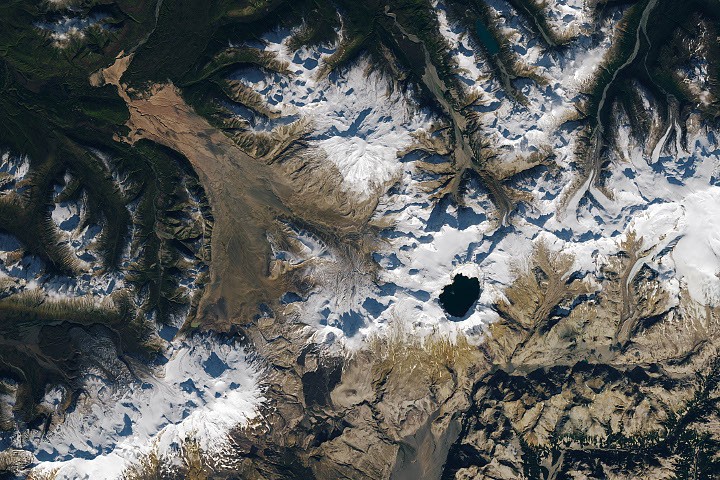
NASA’s Earth Observatory has published new imagery from the Landsat 9 satellite, acquired on 29 September 2025, depicting the Valley of Ten Thousand Smokes in Alaska’s Katmai National Park. The Operational Land Imager data highlights the extensive ash flow deposited by the 1912 Novarupta eruption, which remains a critical geological analogue for lunar and Martian surface studies.
The valley was the setting for field geology simulations conducted by Apollo astronauts during the summers of 1965 and 1966. These exercises, referred to by Apollo’s science training coordinator William Phinney as “playing the Moon game,” involved pairs of astronauts working at unfamiliar field sites to collect representative samples and practice communicating observations to scientists. The volcanic terrain provided a Moon-like environment for testing protocols before lunar missions.
The 1912 Novarupta eruption was the largest volcanic event on Earth in the 20th century. The resulting ash layer in the valley measures up to 660 feet, or 200 meters, thick and was emplaced at temperatures of 1,380 degrees Fahrenheit, equivalent to 750 degrees Celsius. The site earned its name from the abundance of fumaroles, or gas and steam-emitting vents, that filled the area for a decade following the eruption, with some persisting until the 1990s.
While the volcanic landscape in the valley is far fresher than the ancient lava flows found on the Moon, it offered Apollo crews an opportunity to view volcanic materials and landforms in nearly pristine condition. Researchers examined evidence of fumaroles and studied vertical sections of deposits where streams had eroded deep gorges, providing valuable training in identifying geological features under challenging conditions.
Modern scientific interest in the region persists. In 2024, NASA’s Goddard Instrument Field Team (GIFT) conducted an expedition to study the valley’s icy volcanic landscape, which shares similarities with Mars where glaciers and ice sheets are layered with dust and ash. The GIFT team also collected samples from rock formations comparable to the Moon’s Gruithuisen Domes, which are composed of hardened lava with a distinct composition compared to surrounding rock.