Kyiv warns of North Korean troop surge as Moscow deepens military alliance
President Volodymyr Zelenskyy has urged South Korea to enhance cooperation on air defence and drones as concerns mount over the strategic implications of the growing military cooperation between Moscow and Pyongyang.
Ukrainian President Volodymyr Zelenskyy has stated that North Korea is preparing to deploy between 30,000 and 50,000 additional troops to Russia to support its war effort in Ukraine. The announcement marks an escalation from his late July comments, which cited a figure of 30,000 additional personnel, and follows reports from Ukrainian military intelligence confirming the potential surge.
According to Kyiv, the new deployments would see North Korean forces take over duties in the Kursk, Bryansk, and Belgorod regions. This strategic shift is intended to free up Russian units for active combat on the front line, while allowing North Korean soldiers to gain valuable experience in modern warfare. Zelenskyy warned that this exchange of manpower and technology poses a significant risk, urging South Korea to enhance cooperation with Kyiv on air defence and drone capabilities.
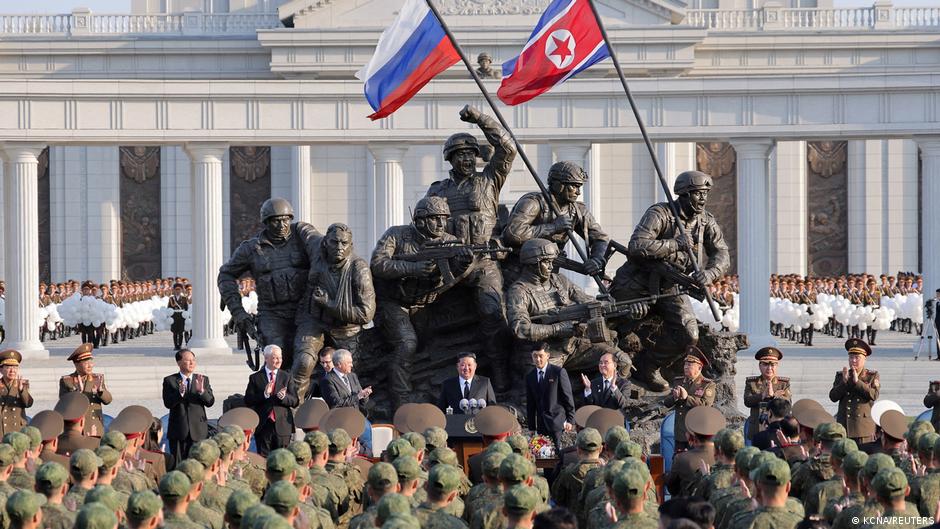
The context of this potential surge is rooted in the defence pact signed between Russia and North Korea in the summer of 2024. Initial deployments reportedly involved approximately 14,000 to 15,000 personnel, primarily in the Kursk region, along with 6,000 sappers and military construction workers. South Korean and Ukrainian authorities have also documented the supply of millions of artillery rounds and ballistic missiles from Pyongyang to Moscow, with the latter allegedly using North Korean missiles in an attack on Zaporizhzhia.
South Korean officials and experts have expressed deep concern over the deepening military cooperation. Han Ki-bum, a former deputy director of South Korea's National Intelligence Service, noted that while the initial estimate of 30,000 additional personnel was raised to 50,000 without detailed evidence, North Korea possesses sufficient manpower to execute such a deployment without weakening its own domestic defences. He suggested that North Korean infantry could guard Russian rear areas, thereby enabling a greater concentration of Russian forces at the front.
Analysts suggest the composition of such a large contingent could vary significantly. Ahn Chan-il, head of the World Institute for North Korea Studies, indicated that a 50,000-strong deployment would likely include elite special operations troops, infantry, engineers, and potentially female medical personnel. He noted that while North Korean special forces have demonstrated capabilities in reconnaissance and ambushes, a large-scale deployment could also expose young soldiers to life outside one of the world's most isolated societies, potentially creating domestic challenges for the regime if casualties rise sharply.
South Korean lawmaker Yu Yong-won, who visited Ukraine in 2025 and February of this year, confirmed hearing claims of the surge during his most recent trip. He described the military cooperation between Russia and North Korea as growing ever closer, noting that the scale of the proposed deployment would be significantly larger than the initial 20,000 troops and support forces already involved.
Intelligence estimates from South Korea suggest that around 6,000 North Korean soldiers have already been killed or wounded in the conflict, with some 2,000 possibly killed. Han Ki-bum estimated that 1,000 to 2,000 combat troops and engineers have returned home, where veterans and families of the deceased have reportedly received preferential treatment. Despite these losses, experts note that North Korean troops have become more effective as they adapted to the battlefield, with their aggressive fighting style drawing praise from Russian officials.
The strategic implications extend beyond immediate manpower. Han Ki-bum highlighted that North Korea stands to gain expertise in missile, naval, and air-defence technology through deeper cooperation with Russia. Meanwhile, Ahn Chan-il warned that surviving soldiers could bring back valuable combat knowledge, including lessons on drone warfare and reconnaissance, which could be disseminated throughout the North Korean military as junior officers or instructors.
Reports indicate that North Korean women have recently been observed heading to Russia, though their specific roles, whether in reconstruction or as medical personnel, remain unclear. The potential arrival of tens of thousands of additional troops by the end of November, as suggested by Ukrainian sources, would represent a substantial shift in the dynamics of the conflict, further entangling regional powers in the ongoing war.
As the situation develops, the focus remains on the verification of these figures and the tangible impact on the ground. The expansion of the Russia-North Korea alliance presents a complex challenge for Kyiv and its allies, particularly South Korea, which is now being called upon to bolster its defensive cooperation with Ukraine in response to the evolving threat.