Kyiv struck by hypersonic Oreshnik missile as EU condemns 'nuclear brinkmanship'
The attack, which caused at least four deaths and over 60 injuries, has triggered urgent discussions among EU foreign ministers regarding the deployment of the dual-capable ballistic weapon.
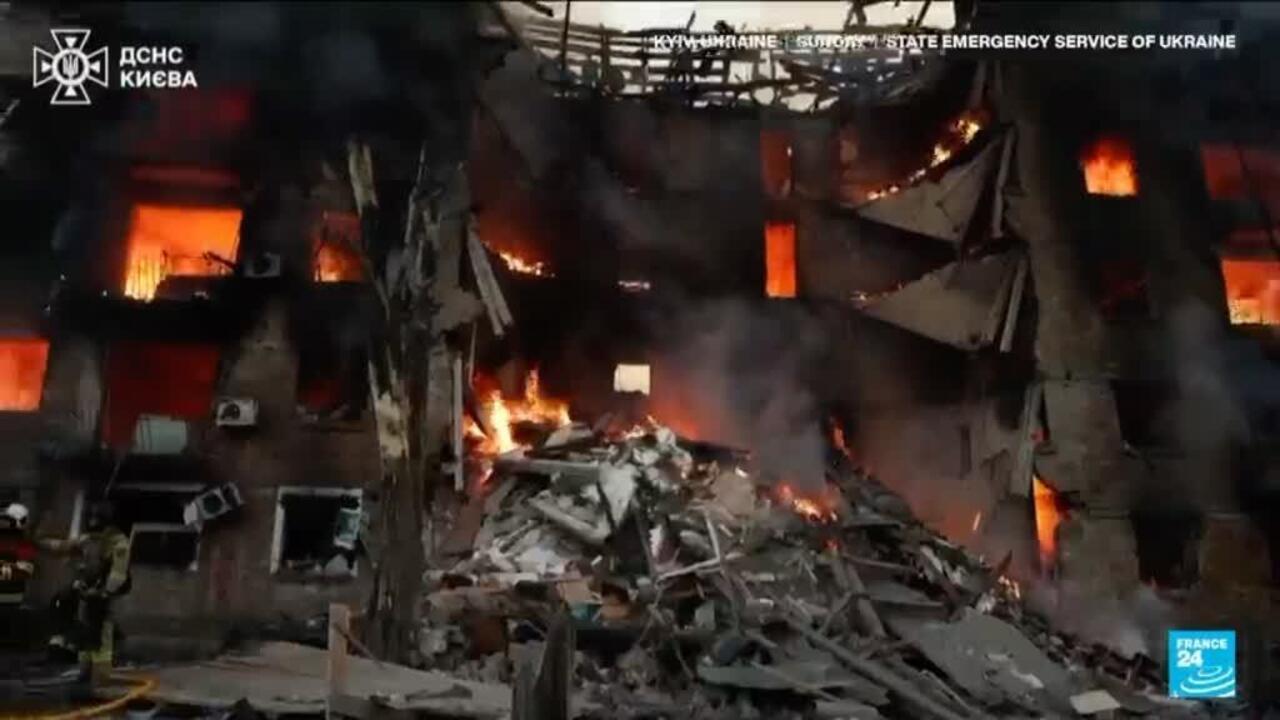
Russian forces launched a large-scale offensive against Kyiv in the early hours of Sunday, 24 May 2026, deploying the hypersonic Oreshnik ballistic missile alongside a swarm of drones and conventional projectiles. The strike resulted in at least four fatalities and more than 60 injuries, with significant damage reported to residential buildings, schools, and critical infrastructure within the Ukrainian capital.
The use of the Oreshnik system has drawn sharp condemnation from European leadership. French President Emmanuel Macron and German Chancellor Friedrich Merz issued statements denouncing the deployment of the weapon. EU foreign policy chief Kaja Kallas characterised the attack as a "political scare-tactic" and described it as "reckless nuclear brinkmanship."
Kallas noted that the Oreshnik missile is capable of carrying both conventional and nuclear warheads, a detail that has heightened concerns regarding the strategic intent behind the strike. While the immediate impact was assessed in conventional terms, the dual-capability of the system has framed the incident as a significant escalation in the ongoing conflict.
In response to the escalation, the European Union announced that its foreign ministers would convene to discuss the incident. The move signals a coordinated institutional response to the breach of security norms, with officials treating the event as a distinct challenge to regional stability rather than a routine engagement.
Assessments of the full extent of infrastructure damage and the precise number of casualties remain subject to change as emergency services continue their work. The incident underscores the evolving nature of the conflict, with Russia integrating advanced ballistic technology into its broader offensive strategy.