Japanese Prime Minister Kishida Returns to Japan Following Regional Security and Economic Outreach
Official statements confirm the return of the Japanese leadership on the evening of 5 May, following a series of high-level summits aimed at reinforcing economic security and regional stability across the Indo-Pacific.
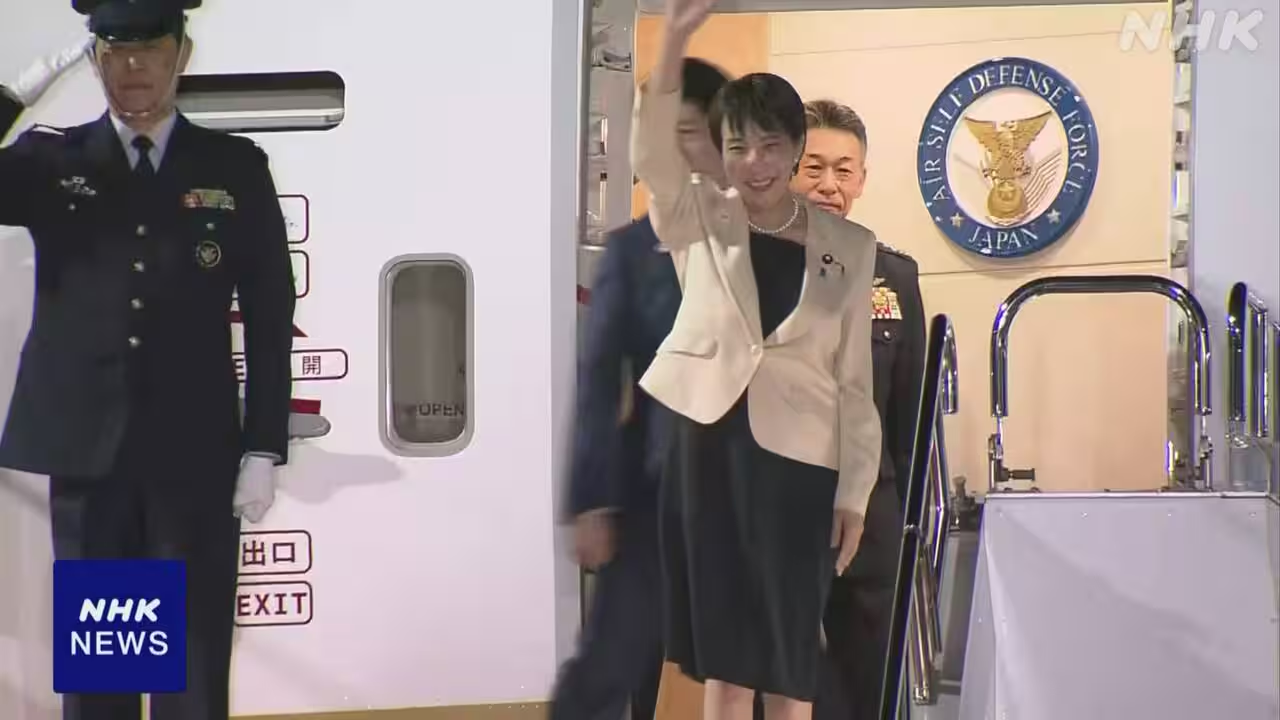
Japanese Prime Minister Kishida returned to Tokyo on the evening of 5 May 2026, bringing to a close a five-day diplomatic itinerary that commenced on 1 May. The tour encompassed high-level engagements in both Vietnam and Australia, designed to strengthen bilateral frameworks and address shared regional challenges. Upon his arrival, the Prime Minister's office indicated that the immediate priority is to formulate a response to the evolving situation in the Middle East.
The diplomatic agenda in Vietnam centred on securing long-term resource cooperation and paying tribute to national history. During talks with Vietnam's top leader, the two nations reached an agreement on collaboration regarding important minerals. Additionally, Japan and Vietnam confirmed their intent to cooperate in securing crude oil supplies specifically for medical materials, a move intended to bolster supply chain resilience. The visit also included a ceremonial tribute at the mausoleum of Ho Chi Minh, underscoring the historical weight of the bilateral relationship.
In Australia, the focus shifted towards a broader strategic alignment between Tokyo and Canberra. A joint declaration on economic security was announced following a summit between the two leaders, marking a significant step in formalising their security cooperation. The Prime Minister utilised this platform to present a diplomatic policy aimed at evolving the concept of a Free and Open Indo-Pacific, suggesting a recalibration of regional engagement strategies to meet current geopolitical demands.
While the outcomes in Vietnam and Australia emphasise tangible economic and security linkages, the Prime Minister's post-visit rhetoric suggests a pivot towards global crisis management. Reports indicate that the leadership is now directing its resources toward addressing developments in the Middle East, a region of critical interest given its impact on global energy markets and international stability. Specific details regarding the proposed response strategy have not yet been fully detailed in official communications.
The timing of the return coincides with broader regional tensions, including reports of Iranian military operations and developments in the Hormuz Strait. The Prime Minister's decision to prioritise the Middle East upon returning from the Indo-Pacific suggests an assessment that global instability requires immediate high-level attention. This shift in focus highlights the interconnected nature of regional security, where actions in the Pacific are viewed through the lens of wider global dynamics.
As the administration settles back into domestic governance, the legacy of the tour will be measured by the durability of the economic security declaration with Australia and the mineral cooperation agreements with Vietnam. These institutional arrangements are intended to provide a stable foundation for future policy, even as the government prepares to navigate the complexities of the current Middle East crisis.