Iran’s parliamentary speaker links Strait of Hormuz blockade to US rate hike
Iranian Parliament Speaker Mohammad Bagher Ghalibaf cited the Taylor equation to argue that the ongoing conflict is driving US inflation, hours before the Federal Reserve raised benchmark rates for the first time in three years.
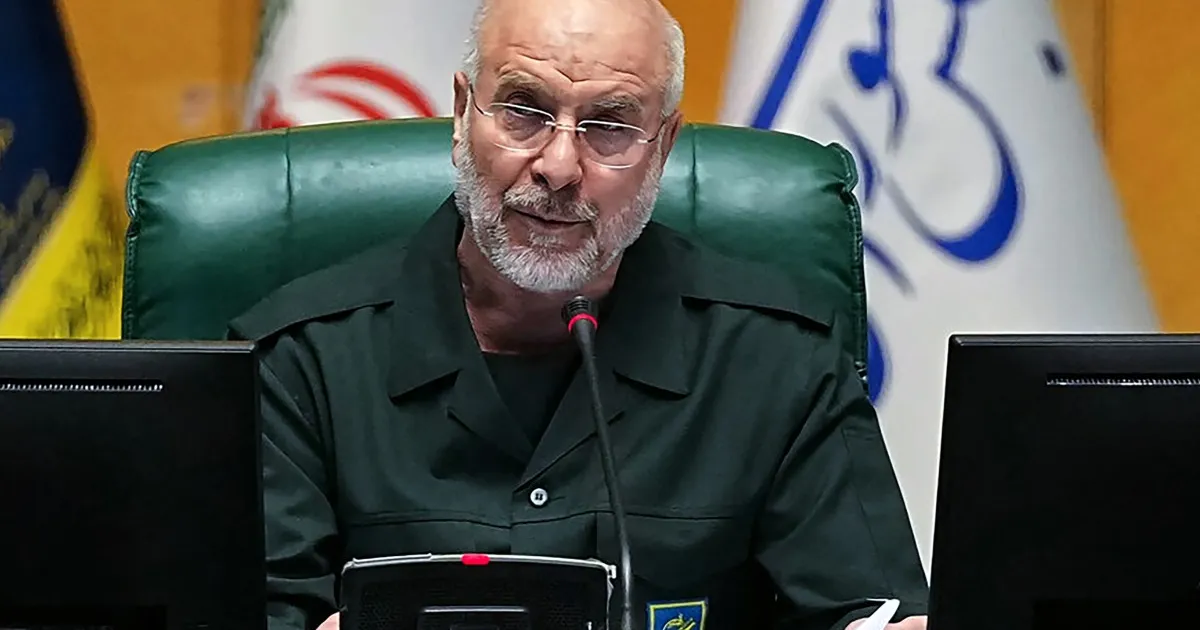
Iranian Parliament Speaker Mohammad Bagher Ghalibaf has drawn attention to the intersection of geopolitical conflict and monetary policy by citing the Taylor equation in a social media post. The move came hours before the US Federal Reserve raised its benchmark interest rate by 25 basis points, marking the first increase in three years. Ghalibaf’s intervention suggests that the blockage of the Strait of Hormuz is a primary driver of US inflation, complicating the narrative around the central bank’s decision.
In his post on X, Ghalibaf, who has served as a lead negotiator in talks between Tehran and Washington, questioned the efficacy of monetary policy in resolving an energy supply crisis. “You can’t 25bp [basis points] a chokepoint,” he wrote, referring to the Strait of Hormuz. He further asserted that the “SOH risk premium” is set by Iran, implying that the conflict directly influences global energy costs and, by extension, US economic conditions.
The Taylor equation, developed by economist John Taylor in the early 1990s, is a formula used by central banks to estimate interest rates based on inflation and the “output gap.” While it serves as a benchmark rather than a strict rule, Ghalibaf’s use of the equation highlights the argument that physical supply constraints in the Middle East are overriding traditional monetary mechanisms. The US and Israel launched a war against Iran on 28 February 2026, during which Iranian missiles and drones have downed dozens of US aircraft and damaged hundreds of US buildings in the region.
Fed Chairman Kevin Warsh acknowledged the geopolitical dimension of the decision in his post-decision speech. He stated that renewed fighting between the US and Iran, which has pushed up petrol prices, helped convince officials to support higher rates. “There’s no hiding from hot spots around the world,” Warsh said, confirming that the energy shock was a significant factor in the Federal Reserve’s calculus.
However, analysts suggest the rate hike is not solely attributable to the war. Chris Beauchamp, chief market analyst at IG Group, described Ghalibaf’s post as “spectacular agitprop,” noting that while the Iran war is a major driver of the hike, the Fed is responding to a broader set of economic conditions. Beauchamp argued that the energy spike has combined with rising yields to drive the Fed into a corner, but other factors remain in play.
Susannah Streeter, chief investment strategist at the Wealth Club, cautioned that while the Middle East conflict and rising oil prices were key issues, they were not the only factors. She noted that heavy investment associated with the artificial intelligence boom and resilient domestic demand have also added to inflationary pressures. “Iran’s actions have affected the inflation outlook, but the decision on where to set interest rates ultimately rests with the Federal Reserve,” Streeter said.
The decision to raise rates by 0.25 percentage points contradicts the preference of US President Donald Trump, who has called for an interest rate of 1 per cent or lower. Ghalibaf’s recent use of financial arguments to mock the Trump administration’s handling of the conflict continues a pattern established in March 2026, when he used social media to critique Washington’s financial manoeuvring.