Iran’s fragile peace deal masks deepening economic crisis
Washington and Tehran have signed an interim agreement lifting oil export restrictions, but Iranian officials warn that hyperinflation and household debt could trigger renewed social unrest.
The United States and Iran have signed an interim peace deal following a recent conflict involving military strikes by Washington and Israel on Iranian territory. As part of the agreement, US restrictions on Iranian oil exports have been temporarily lifted until 21 August. Additionally, the US and Qatar are exploring the release of approximately $6 billion in frozen Iranian oil revenues to assist the nation’s war-damaged economy.
US President Donald Trump stated that the released funds would be used exclusively to purchase food and medical supplies, specifically corn, wheat, and soybeans, from American farmers. Tehran has denied any obligation to purchase food from US entities. The Iranian government estimates war damages at €229 billion, with a Memorandum of Understanding mentioning a potential $300 billion reconstruction payout, though details remain unclear.
Iran’s Economy and Finance Minister, Seyed Ali Madanizedah, confirmed the government has borrowed heavily from the central bank to cover war expenses. This move is expected to boost inflation in the coming months. Madanizedah, who holds a PhD from the University of Chicago, noted that an agreement with the US would not fully normalize the Iranian economy, citing years of sanctions, mismanagement, and corruption as underlying causes.
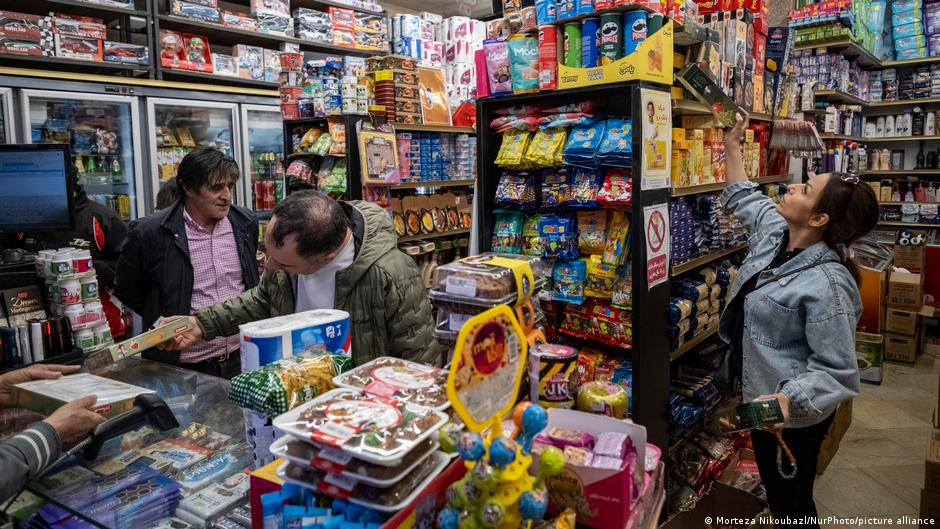
Household costs have surged sharply, with a carton of 15 eggs rising from 70,000 toman to over 200,000 toman in the past year. Although the US dollar exchange rate has dropped to approximately 150,000 toman per dollar from 190,000, this has not provided immediate relief to consumers. Rents continue to rise, forcing many families to downsize or move in with relatives.
A survey by an agency affiliated with Iran’s Interior Ministry, led by former Education Minister Mohammad Bathaei, found that 60% of participants feel they can no longer cope with the economic crisis. Iranian President Masoud Pezeshkian warned that economic strain could trigger new social unrest and protests. Sociologist Mehrdad Dabishpout noted that while the political system is under pressure, Iranian society retains resilience, citing the lasting impact of the 2022 "Woman, Life, Freedom" movement.