Havering datacentre plan reveals 1.2m tonnes of annual carbon emissions
Planning documents for the £14.7bn East Havering Data Centre Campus indicate the facility would emit 1.2m tonnes of CO2e annually, a figure the developer admits is incompatible with the UK’s net zero trajectory.
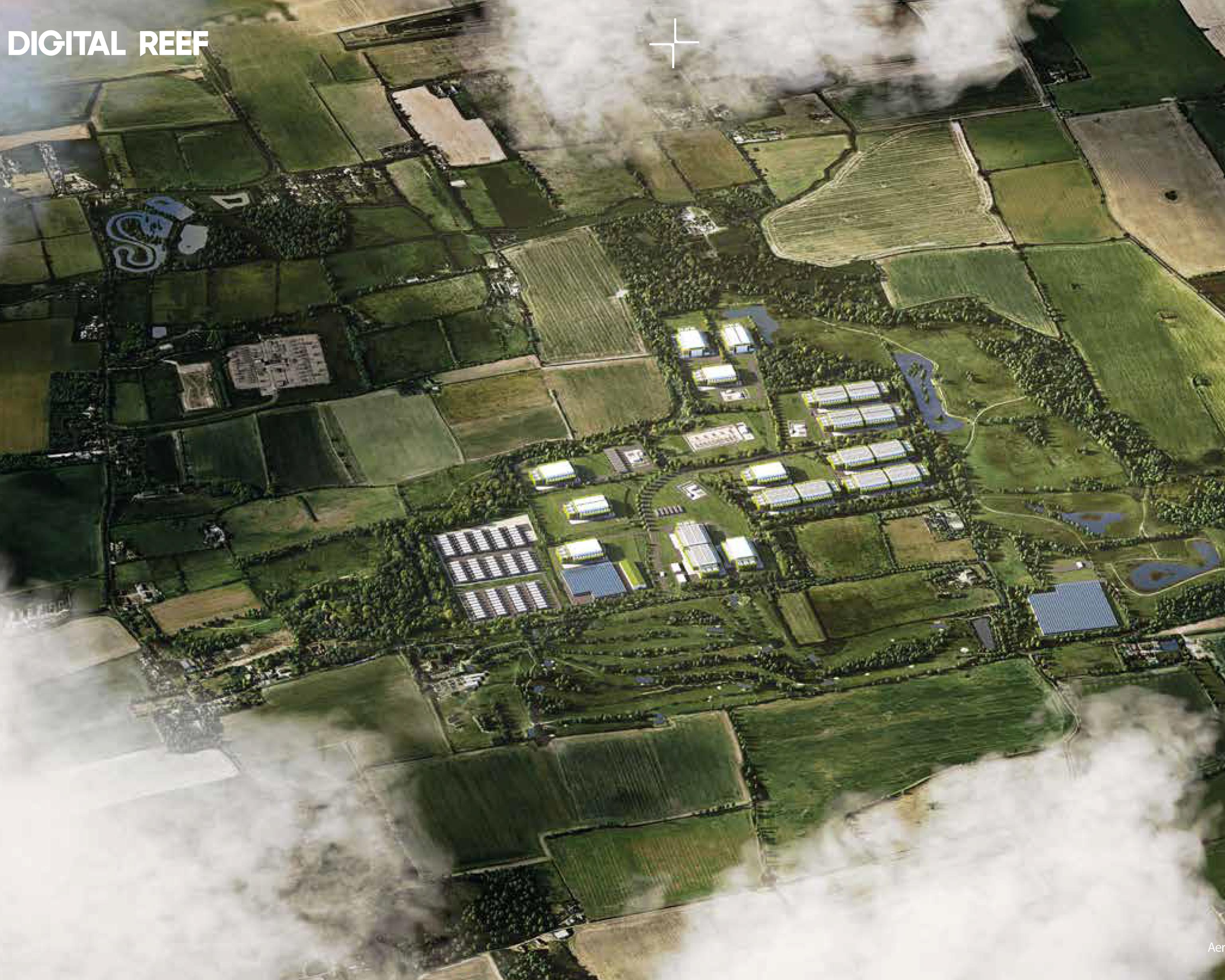
Planning documents for the proposed East Havering Data Centre Campus (EHDCC) in north Ockendon reveal that the facility would generate more than 1.2 million tonnes of carbon dioxide equivalent annually once fully operational. The £14.7bn hyperscale project, developed by Digital Reef, would utilise 218 hectares of green belt land to house servers and data storage systems for artificial intelligence and cloud computing. If approved, the development would become one of the largest datacentres in Europe.
The projected annual emissions are equivalent to the carbon footprint of 27,000 flights from London to New York, according to the UN’s International Civil Aviation Organization. Over the facility’s projected 60-year lifespan, the development is estimated to generate more than 72 million tonnes of CO2e. Guardian analysis of planning documents for dozens of proposed UK datacentres indicates that the EHDCC has the highest projected carbon emissions disclosed by a developer.
In its planning application, Digital Reef explicitly stated that the project “does not align with a science-based 1.5C compatible trajectory and achieving net zero by 2050.” The developer estimates that at a likely 50% load, the campus would consume 2.65 billion kWh of electricity per year. This consumption is equivalent to the demand of more than one million UK households, based on Ofgem data indicating an average household consumption of 2,500 kWh per year.
To support this demand, the campus requires a 600MVA connection to the National Grid via the nearby Warley substation. Significant upgrades are planned, including a new 400kV National Grid substation and a new 132kV UK Power Networks facility on adjacent land. The full grid connection is expected to be completed by 2033.
The development has raised concerns regarding the impact on local green belt land and the UK’s climate targets. North Ockendon Residents Association described the project as a “massacre” of green belt land, citing the loss of crop-producing farmland and wildlife habitats. Donald Campbell, advocacy director at the tech justice nonprofit Foxglove, described the projected emissions as “staggering” and a significant threat to the UK’s ability to decarbonise.
By 2038, the EHDCC’s operational emissions are projected to consume nearly 20 times the entire carbon budget of the borough of Havering. The planning documents state that any shortfall in meeting the zero-carbon target on site would be covered by a “cash in lieu” contribution to the borough’s carbon offset fund, estimated by the developer at approximately £77.6 million.
The first round of public consultation on the EHDCC closed in April. A revised proposal reflecting accepted changes is expected to be published for further public consultation in the autumn. Councillor Keith Prince, Reform UK leader of Havering council, said it would be “wrong” to comment until the local planning authority made a decision. Digital Reef did not respond to a request for comment.