Global defence sector pivots to software as military-tech sector consolidates
Billions in investment are reshaping the military-industrial complex, with major contracts awarded to neoprimes and cloud providers as governments pursue AI-first capabilities.
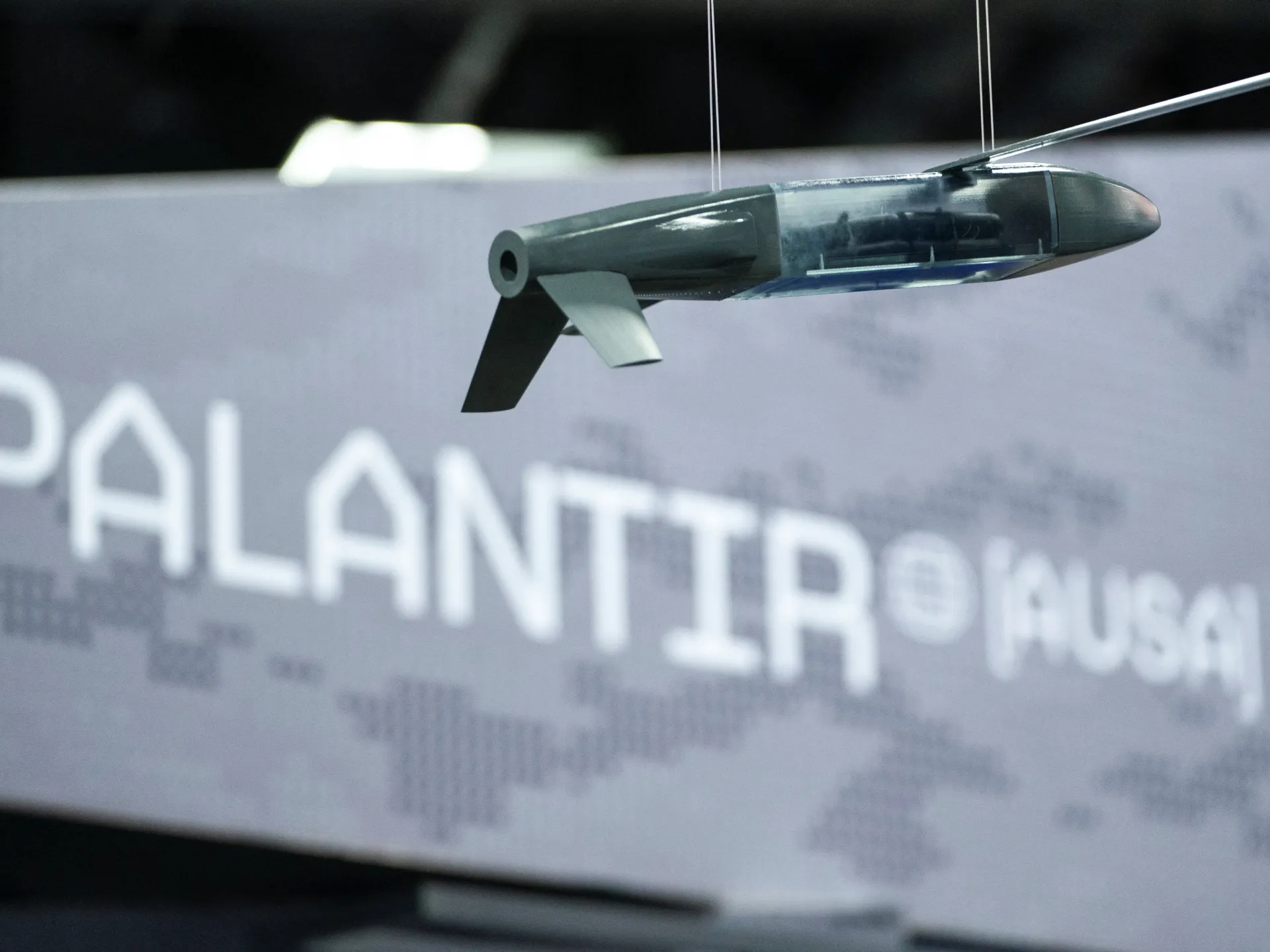
A structural transformation is underway within the global defence industry, as billions of dollars flow into a select group of technology firms leading the artificial intelligence integration into military operations. According to an analysis by Al Jazeera, which utilised data from the Stockholm International Peace Research Institute (SIPRI), the traditional military-industrial complex is being reshaped into a military-tech sector where software is becoming central to warfare.
The shift marks a departure from the historical reliance on hardware such as tanks and aircraft, a paradigm that began evolving with the US drone programmes of the 2000s and 2010s. With global military expenditure reaching $2.88 trillion in 2025, governments are pouring record sums into defence budgets, accelerating the adoption of AI across cloud computing, autonomous drones, and decision-making software.
SIPRI research categorises the companies driving this change into four distinct groups. The first comprises established arms manufacturers, including Lockheed Martin, RTX, Northrop Grumman, BAE Systems, and General Dynamics, which are layering AI onto existing hardware systems. Lockheed Martin, for instance, has been flight-testing AI tools for its F-35 fighter jets to assist pilots in identifying hostile aircraft, while L3Harris has integrated AI into camera systems for real-time targeting.
The second category consists of software-first "neoprimes" such as Palantir and Anduril. Palantir is well-known for its role in Project Maven, a Pentagon programme designed to speed up battle decision-making by sifting through satellite imagery and drone video. Anduril’s Lattice platform similarly ties hardware like drones and sensor towers into a single command network, a system heavily utilised by the US Army and recently awarded contracts by NATO for its Enhanced Air Command and Control Data Platform.
Significant recent contracts underscore this consolidation. In July, the UK Ministry of Defence signed a £2bn ($2.7bn), 15-year agreement with Omnia Training, a consortium led by Raytheon UK, to train 60,000 soldiers annually on using AI to maintain a combat-ready force. Concurrently, NATO awarded contracts to Anduril, Palantir, and the French joint venture Athea SAS to run its enhanced air command and control data platform.
The third category includes cloud infrastructure providers such as Google, Amazon Web Services, and Microsoft, which control a significant portion of the global cloud market. In May, the US Department of Defense announced agreements with eight major tech firms, including Google, AWS, OpenAI, and NVIDIA, to deploy AI across classified networks. These agreements cleared the firms for IL6 and IL7 networks, the most sensitive computing environments operated by the Department of Defense, in a bid to establish an "AI-first" military capability.
The final group comprises foundational AI model developers like OpenAI, Anthropic, and Mistral AI, whose underlying models are integrated into military tools by other firms. This trend extends globally, with Chinese researchers developing AI models for military use since the early 2020s. The Pentagon has identified several Chinese firms, including Alibaba, Baidu, and BYD, as assisting the People’s Liberation Army, with estimated annual spending comparable to US figures.