Generational Shift Threatens Legacy of Safety Lessons at JR West on Derailment Anniversary
On the 21st anniversary of the disaster, JR West Japan confronts the difficulty of transmitting safety protocols and historical context to a staff largely unfamiliar with the event.
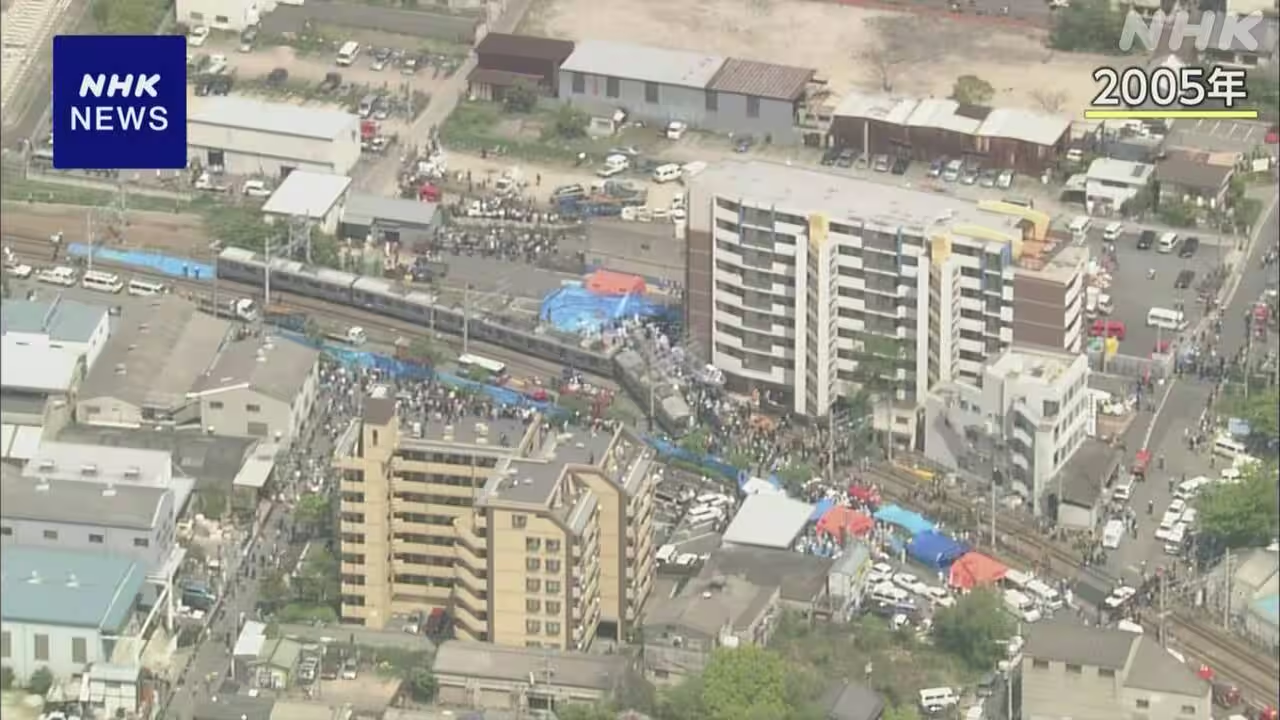
The 21st anniversary of the JR Fukuchiyama Line derailment, which claimed 107 lives, has arrived on 25 April 2026, marking a significant moment for JR West Japan to re-evaluate its approach to railway safety. While the incident remains a pivotal event in Japanese railway history, the institution now faces substantial hurdles in ensuring that the lessons learned from the tragedy are not lost to a widening generational gap.
A primary concern for the operator is the demographic composition of its current workforce. JR West reports that more than 70 per cent of its employees were recruited after the 2005 accident, meaning the majority of the staff did not witness the event firsthand. This shift in personnel creates an institutional risk where the hard-won safety protocols and cultural shifts resulting from the disaster may lack the deep-seated context that previous generations possessed.
Compounding this workforce issue is the changing status of the victims' families. The families of the deceased are now ageing, which presents a critical factor in the challenge of legacy transmission. As these individuals grow older, there is an urgent need to ensure that the personal memories and emotional weight of the tragedy are preserved, serving as a vital reminder for the younger workforce to maintain rigorous safety standards.
The anniversary serves as a focal point for JR West to consider how it can effectively bridge this divide. The organisation must find ways to convey the gravity of the 2005 incident, where a train speeding through a curve resulted in the deaths of 107 people, to a staff that is predominantly new to the company. Without a deliberate strategy to integrate these historical lessons into the corporate culture, the risk of complacency increases.
NHK News Japan highlights the urgency of this situation, noting that the convergence of a largely inexperienced workforce and an ageing cohort of bereaved families creates a unique policy challenge. The focus remains on ensuring that the safety legacy established after the derailment continues to inform operational decisions and safety protocols in the coming years.
As the industry looks toward the future, the preservation of this memory becomes as important as the technical implementation of safety measures. For JR West, the anniversary is not merely a commemoration of the past but a necessary examination of how an institution sustains its safety culture across generations.