Framework’s Laptop 13 Pro delivers battery gains but faces steep pricing amid component shortages
The new model features Intel Core Ultra Series 3 processors and LPCAMM2 memory, achieving over 18 hours of runtime, though prices for components like RAM have doubled.
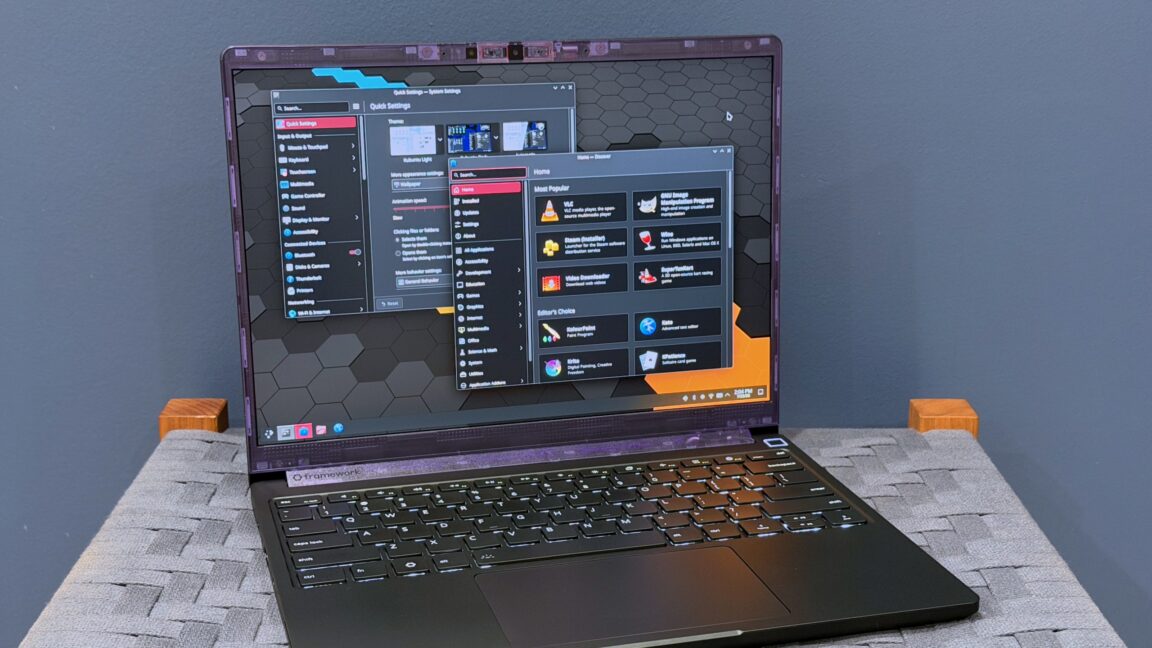
Framework has released the Laptop 13 Pro, a significant revision of its modular laptop line that addresses previous criticisms regarding battery life. The device features a larger 74 WHr battery, an Intel Core Ultra Series 3 processor, and LPCAMM2 memory, achieving over 18 hours in PCMark 10 Modern Office tests. While the base price starts at $1,500, the reviewed configuration costs nearly $3,000 due to component shortages and supplier price hikes, particularly for LPCAMM2 RAM. The update introduces a haptic trackpad, touchscreen display, and graphite finish. Although motherboards and expansion modules remain backward compatible, the bottom case, keyboard, trackpad, and battery designs are new, requiring existing users to purchase a specific upgrade kit. Framework positions the device as a viable alternative for Linux users, with official support for Ubuntu 24.04 LTS and community support for other distributions.
The shift to LPCAMM2 memory is driven by necessity for Core Ultra Series 3 chips and Intel Arc integrated GPUs, as regular DDR5 is not supported. Framework’s supplier doubled the price of LPCAMM2 modules, contributing to the high retail price. A 32GB stick of LPCAMM2 RAM costs $800 from Framework, with aftermarket options at $700. The review unit used a Core Ultra X7 358H processor, which has a sustained power limit of 30 W in Best Performance mode. Testing showed that the Core Ultra Series 3 board paired with the older 61 WHr battery lasted around 15 hours and 45 minutes, indicating the chip is a major factor in battery efficiency.
The Laptop 13 Pro breaks backward compatibility for some components, specifically the bottom case, keyboard, trackpad, and original battery designs. Existing Laptop 13 users can retrofit new parts, but must purchase the battery, input cover, and bottom case as a single upgrade kit; motherboards, displays, and expansion cards remain interchangeable. The new model introduces a haptic trackpad, a touchscreen display, and a graphite finish, while maintaining backward compatibility for motherboards and expansion modules. Existing users can retrofit parts, though prices for components like LPCAMM2 RAM have risen sharply.
Ubuntu 26.04 LTS and Fedora 44 are officially supported, while CachyOS, Bazzite, Arch, and NixOS 26.05 are community-supported. Linux kernel version 6.19 is required for support, with 7.0 or higher recommended. Framework is offering Laptop 13 Pro parts in the original aluminum finish, but they are primarily intended for original Framework Laptop owners who are buying upgrades. The company says that the Laptop 13 Pro is its first to be “fully machined out of extruded blocks of 6063 aluminum,” and as a result, the device’s body feels slightly more solid and substantial than the original version.
Framework has been unusually public about its component struggles this year, partly because the company has always been a bit more transparent about its operations than other PC makers and partly to try to defuse criticism of its steady drumbeat of price increases. The unfortunate truth is that this is simultaneously Framework’s best, most interesting board upgrade ever and also one that’s priced so high because of the RAM crisis and other component shortages that it’s often difficult to make any kind of purchase make sense. For anyone else, the situation is murkier, with good laptops available for less, including the actual MacBook Pro.