FLA and JNIM alliance reshapes northern Mali conflict
Three months into a coordinated offensive, the Azawad Liberation Front and Jama’at Nusrat al-Islam wal-Muslimin have intensified fighting against Malian and Russian forces, though divergent political goals make a settlement unlikely.
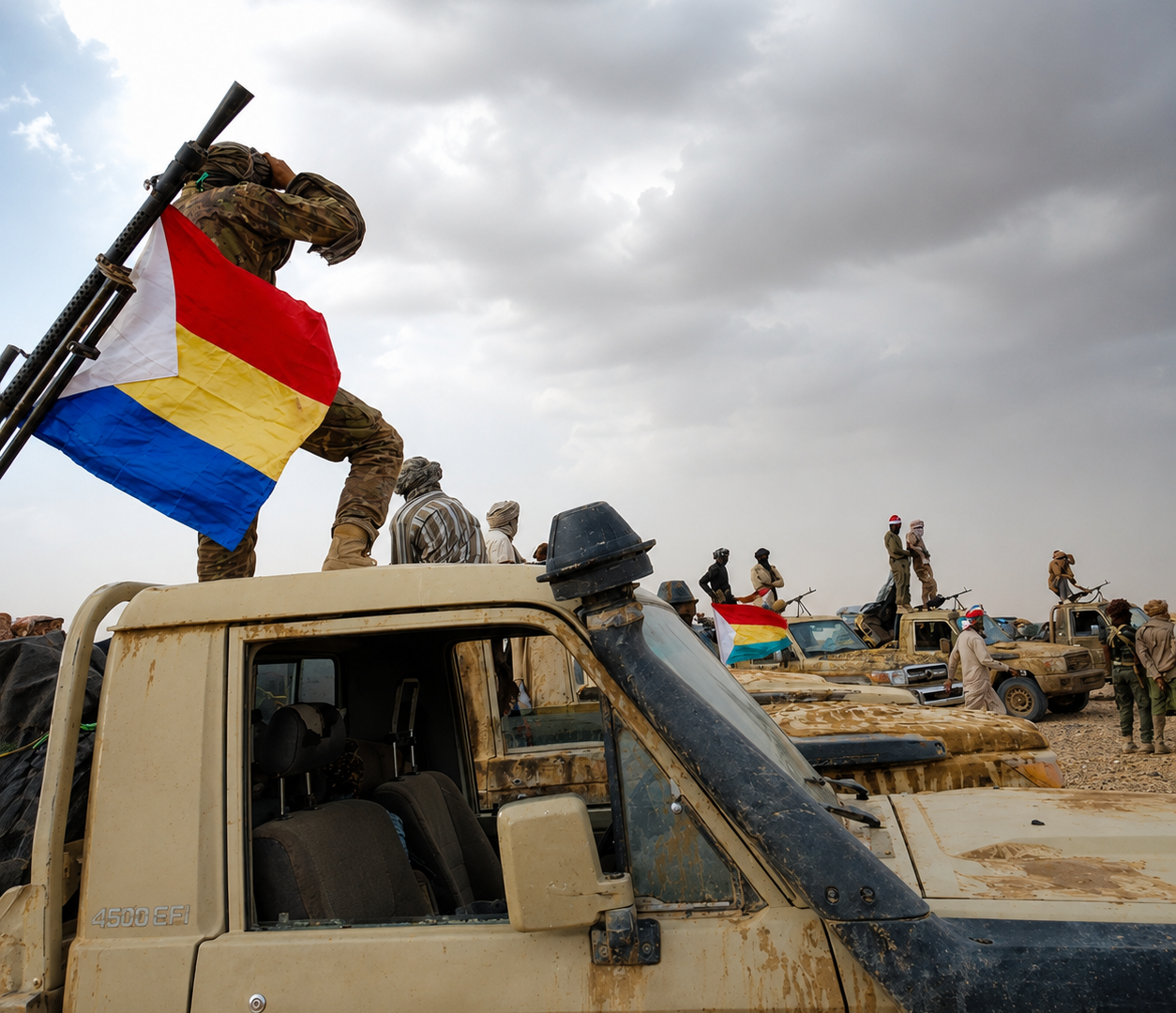
An unprecedented military alliance between the Azawad Liberation Front (FLA) and Jama’at Nusrat al-Islam wal-Muslimin (JNIM) has fundamentally altered the security landscape in northern Mali. Since launching a coordinated offensive on 25 April 2026, the joint forces have targeted Malian army positions and Russia’s Africa Corps across Kidal, Gao, Anefis, Tilemsi, and Sevare. The partnership, driven by shared opposition to the Bamako government and Russian forces, has complicated efforts to end the war, with both sides utilising drones, ambushes, and captured weapons to challenge state authority.
The conflict has evolved beyond previous phases, with engagements lasting several days and ambushes specifically targeting reinforcements before they reach front lines. Drones have assumed an increasingly prominent role, serving not only as reconnaissance platforms but increasingly as strike weapons against vehicles and military positions. While the Malian government, backed by Russia’s Africa Corps, insists its forces retain the initiative and has described the alliance as a “terrorist alliance” threatening national sovereignty, neither side has secured a decisive advantage three months into the campaign.
Political objectives remain divergent, making a negotiated settlement unlikely. The FLA seeks independence for Azawad, the name separatists use for northern Mali, while JNIM aims to overthrow the government and establish governance based on its interpretation of Islamic law. Senior FLA officials have rejected suggestions of an ideological alliance, describing the relationship as a battlefield arrangement against a common enemy. Colonel Mohamed Issa, a senior FLA officer, stated that JNIM-affiliated fighters operating alongside the FLA were exclusively Azawadis motivated by community defence, rather than members of the group’s wider regional network.
Conversely, JNIM field commanders have portrayed the cooperation in broader terms, claiming the FLA has accepted Islamic legal arbitration by local religious scholars. Suleiman, a senior JNIM commander, said the group approved operational coordination after internal consultations because fighters on both sides largely came from “one people” caught up in the same conflict. However, the FLA has not publicly acknowledged this claim of religious arbitration, highlighting the fragility of the arrangement despite current shared battlefield interests.
The partnership has also altered the logistical and financial dimensions of the war. Both groups are utilising captured weapons and military vehicles from Malian forces, supplementing existing financing from regional commercial networks, zakat collections, and tribal donations. Long-established trafficking networks continue to sustain both sides, with weapons flowing across the Sahel since the collapse of Libya in 2011. Despite the Malian army’s advantage in air power, the sustained fighting suggests that the political deadlock persists, with Bamako, the FLA, and JNIM maintaining their core demands without shift.