Everest route cleared as authorities brace for record overcrowding
Elite climbers have removed a major ice obstruction on Mount Everest, but nearly 1,000 mountaineers are expected to attempt the summit in the coming weeks, raising fears of dangerous bottlenecks on the world’s highest peak.
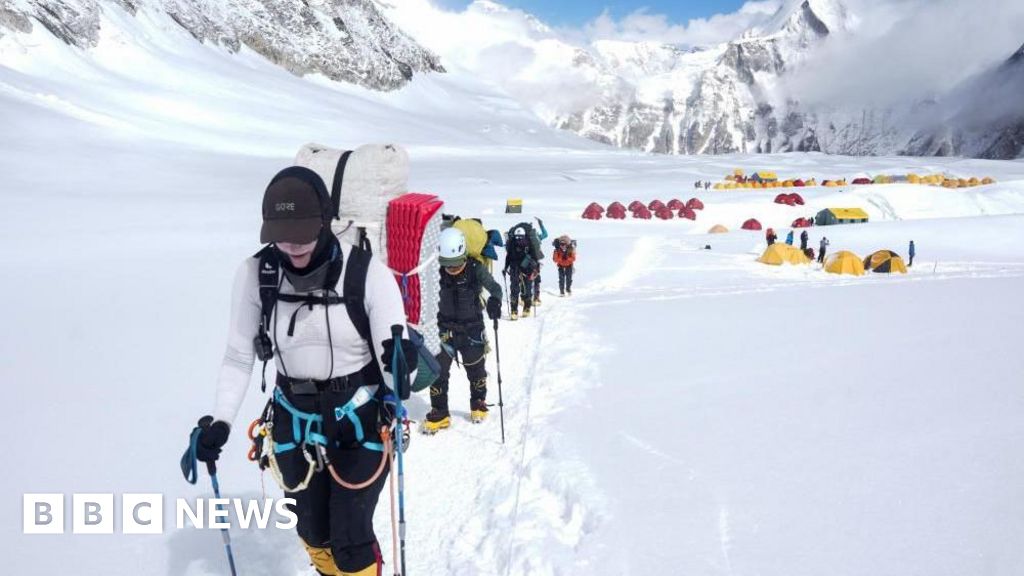
An elite team of Nepali climbers has cleared a route past a large, unstable serac blocking the ascent of Mount Everest, allowing the climbing season to resume after weeks of delay. The obstacle, described as a huge chunk of ice, had stranded hundreds of mountaineers and their guides at Everest Base Camp in Nepal. The team fixed ropes and ladders past the obstruction on Wednesday morning, enabling other climbers to begin their ascent, although bad weather earlier in the week had disrupted attempts to secure lines from Camp Four to the summit.
The delay in opening the route has intensified safety concerns regarding overcrowding, with nearly 1,000 climbers expected to attempt the summit in the coming weeks. Almost 500 foreign climbers have been granted permits for this season, and most are accompanied by Nepali guides who do not require permits. This results in an estimated total of 1,000 climbers attempting the ascent, a figure that has prompted warnings from prominent mountaineers about potential "traffic jams" on the 8,849m peak.
Authorities and expedition operators are coordinating to space out ascents to manage the crowd. Rishi Ram Bhandari, Secretary-General of the Expedition Operators Association of Nepal, stated that his organisation is working with various teams to avoid more climbers trying to scale the summit simultaneously. Khim Lal Gautam, a tourism department official at Base Camp, confirmed that a team of five officials has been deployed to coordinate with commercial expedition teams to create a plan to avoid queues near the summit, where he estimates there are nearly 2,000 people.
Pressure on the southern route has likely increased after China closed the northern route on the Tibetan side to foreign climbers this season. Peak climbing season typically runs from late April until the end of May, but climbers had been hindered by the serac and bad weather, forcing them to complete fewer acclimatisation treks between the four main camps above Base Camp. Prominent climber Purnima Shrestha, attempting her sixth summit, noted that the limited window for ascent could lead to intense traffic and trouble for many climbers.
Three deaths have been reported on the mountain this season while preparing for the climbing season. The casualties include Bijay Ghimere, 35, who died from altitude sickness; Phura Gyaljen Sherpa, 21, who fell into a crevasse near Camp 3; and Lakpa Dendi Sherpa, 51, who died en route to Base Camp on 3 May. Despite these fatalities and ongoing concerns, tourism to the mountain continues to surge, with permit fees having increased to $15,000 from $11,000 since September, marking the first rise in nearly a decade.