Curiosity rover traverses Gale crater en route to Yardang unit
During Sols 4913-4919, the Curiosity rover examined sedimentary structures and dust levels while moving south across Gale crater, preparing for its next major stop at the wind-sculpted Yardang unit.
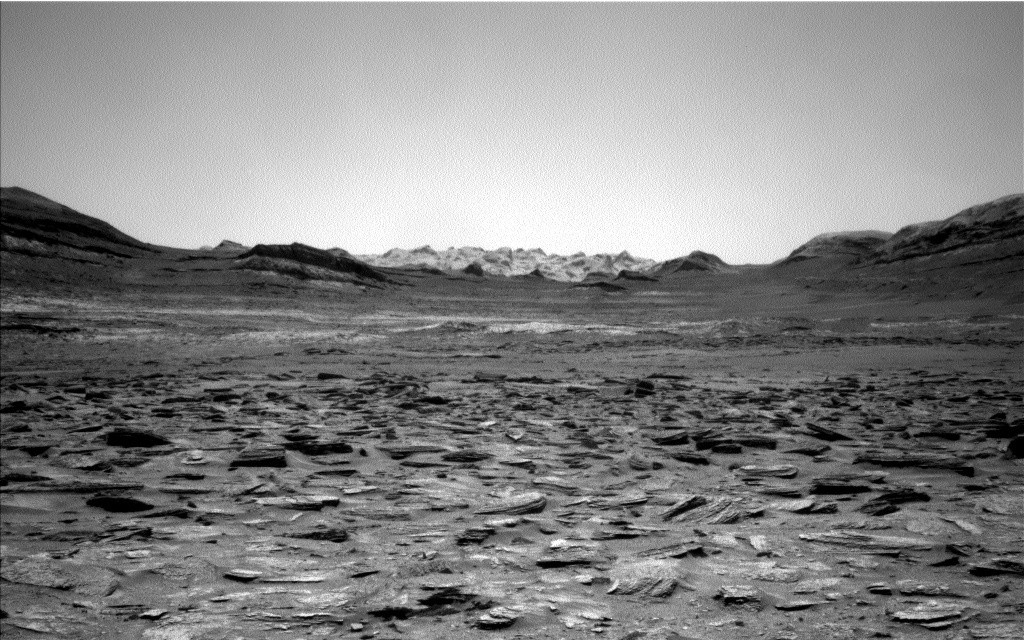
NASA’s Curiosity rover is currently undertaking a transit phase across Gale crater, moving south towards the Yardang unit, a series of wind-sculpted, pale-coloured hills visible in the distance. This movement follows the conclusion of the recent "boxwork" science campaign, marking a shift in operational focus from a tightly choreographed series of scientific activities to a broader drive towards the next major destination.
During Sols 4913-4919, the rover traversed laminated bedrock featuring varying dark and pale layers. Instruments including the Alpha Particle X-ray Spectrometer (APXS), the Mars Hand Lens Imager (MAHLI), and the ChemCam laser instrument analysed rock samples at specific sites. These included "Rio Bio Bio" and "Placilla de Caracoles" for darker material, as well as brushed targets such as "La Primavera" and "Los Quemados" for paler material.
The landscape has presented distinct geological features for analysis. The rover imaged "Mira Flores," an erosional outlier, and the "Kimsa Chata" trough, which displays sedimentary structures that may indicate a desert, a lake, or a transitional environment with moving water. The wide-open terrain has allowed the mission team to capture images of these features from multiple angles and distances.
Environmental monitoring remains a consistent component of the mission plan. The Environmental Theme Group has populated recent operations with activities including dust devil observations and measurements of sky dust levels. These efforts continue alongside the primary objective of navigating the rover to its next significant scientific stop.
The Earth planning day for this update was Friday, June 5th, 2026. The mission team, led by APXS Strategic Planner Catherine O’Connell-Cooper of the University of New Brunswick, Canada, has planned a drive for the upcoming weekend to reach an area with more pronounced contrast between dark and light bedrock. Beyond this area lies a smoother terrain with no jutting blocks, the exact nature of which remains unknown.