Coordinated assaults kill Mali Defence Minister as junta security apparatus fractures
The death of General Sadio Camara marks a severe escalation in the ongoing crisis under the Assimi Goita-led military government, with analysts citing a breakdown in state control and unprecedented panic within the ranks.
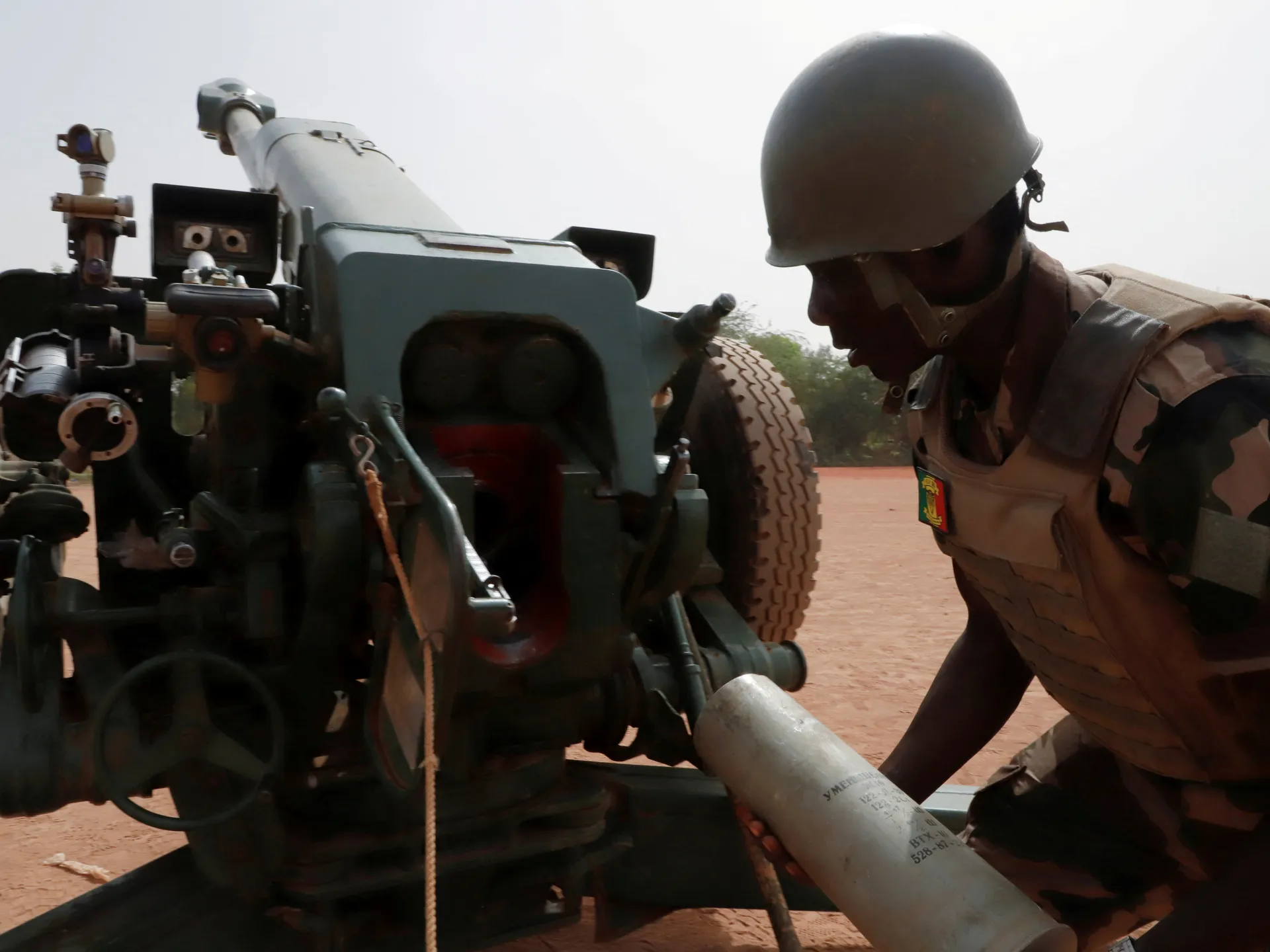
On Saturday, 25 April 2026, a series of coordinated armed attacks were launched by unidentified groups against military positions across Mali, resulting in the confirmed death of Defence Minister General Sadio Camara. The assaults targeted the capital Bamako, the northern garrison town of Kati, and locations near Modibo Keïta International Airport where Russian mercenaries are based. While the Malian military claims to have repelled the offensive and killed several hundred assailants, independent verification of this casualty figure remains unavailable.
The violence centred on Camara's residence in Kati, where a car bomb attack killed the General and at least three family members, leaving the building largely destroyed. Simultaneous heavy weapons fire and explosions were reported in Bamako, Sevare, Gao, and Kidal. Residents in Kati described being holed up in destroyed homes, indicating a severe impact on civilian populations. The Malian General Staff issued a statement confirming that unidentified armed terrorist groups targeted barracks in the capital and the interior early on 25 April, noting that fighting was ongoing at the time of the report.
Responsibility for the offensive has been claimed by the Al-Qaeda-linked group Jama'at Nusrat al-Islam wal-Muslimin (JNIM) and Tuareg rebels, specifically the Azawad Liberation Front. JNIM stated it conducted attacks in Kati, Bamako, and northern localities including Mopti, Sevare, and Gao. The Azawad Liberation Front spokesperson confirmed taking control of multiple positions in Kidal and Gao, a development analysts describe as significant given the town's symbolic importance in controlling the north. Al Jazeera could not independently verify the claim regarding the capture of Kidal.
The attacks have exposed critical vulnerabilities in the security architecture established by the ruling junta. Reports indicate that Russian mercenaries, previously active under the Africa Corps banner, may have surrendered weapons or withdrawn from Kidal following pressure from Tuareg rebels. This withdrawal follows a broader trend of Russian forces being pulled out of Mali due to the ongoing Russia-Ukraine conflict, leaving a security vacuum that the Malian military has struggled to fill since expelling French troops in 2021.
Analysts describe the situation as unprecedented and dire, noting a breakdown in security that has not been seen since the crisis began in 2012. Ulf Laessing, a Sahel analyst at the Konrad Adenauer Stiftung, stated that the scale and coordination of the attack signal a very dangerous development, with armed groups entrenched in the countryside beyond military reach. The International Crisis Group noted that Malian authorities appear to have been caught off-guard by the latest wave of spectacular attacks, fitting a pattern of escalating violence witnessed in recent years.
The event occurs against a backdrop of deteriorating governance and legitimacy for the Assimi Goita-led military government. Since seizing power in a second coup in May 2021, the junta has failed to return to civilian rule despite earlier pledges to do so. The termination of the 2015 peace deal with Tuareg rebels in January 2024 and the imposition of a fuel blockade by JNIM in September 2025 have further crippled daily life and economic stability in Bamako.