Colombia elects far-right Abelardo de la Espriella as president
Abelardo de la Espriella defeats Ivan Cepeda by 250,000 votes, promising militaristic security and fossil fuel expansion in a polarised nation.
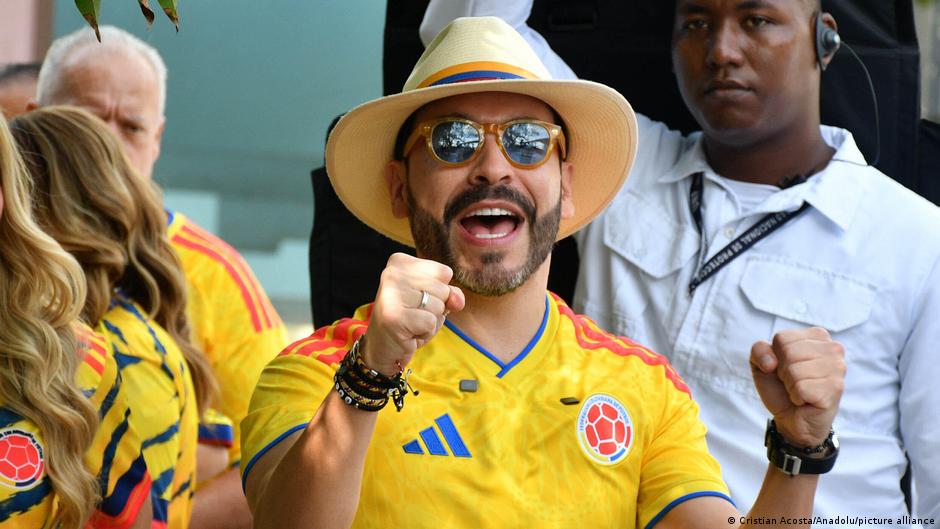
Colombia has elected far-right lawyer Abelardo de la Espriella as its new president, marking the country’s first victory for an ultra-right-wing outsider in a presidential runoff. De la Espriella, known as 'El Tigre', secured 49.66% of the vote, narrowly defeating left-wing candidate Ivan Cepeda by approximately 250,000 votes. The margin of 49.66% to 48.7% represents the narrowest result in the history of Colombian presidential elections, underscoring a deeply polarised electorate.
De la Espriella will succeed Gustavo Petro, the nation’s first left-wing president, signalling a decisive shift in national policy. His victory is largely attributed to voter demand for a harder line on security, with de la Espriella promising to replace Petro’s 'Total Peace' negotiation strategy with a militaristic approach. This includes aerial spraying of coca crops, the construction of mega-prisons, and closer security cooperation with the United States.
The incoming administration also plans to reverse Petro’s energy transition policies, promoting fossil fuels and fracking while proposing a 40% reduction in the government workforce. De la Espriella, a 47-year-old entrepreneur and former criminal defence attorney, has aligned himself politically with figures such as Donald Trump, El Salvador’s Nayib Bukele, and Argentina’s Javier Milei. He has already received open support from the US Republican party.
Political experts warn that the narrow result highlights a country split almost evenly between two competing social models. Kristin Wesemann of the Konrad Adenauer Foundation noted that the real challenge lies in governing a divided nation, while Sabine Kurtenbach of GIGA emphasised the need for a president who builds bridges rather than fueling polarization. Yann Basset of the Universidad del Rosario added that de la Espriella lacks a parliamentary majority, necessitating the formation of a stable coalition.
Tensions erupted on election night as supporters of the defeated left-wing camp clashed with police in Bogota and Cali. Demonstrations resulted in barricades and burning tyres, reflecting the opposition to an exclusively military strategy in regions most affected by violence. Elizabeth Dickinson of the International Crisis Group warned that whoever governs must win the trust of the other half of the population to avoid further exacerbating social divisions.