Chinese AI models Kimi K3 and Qwen3.8 challenge US dominance
New launches from Chinese firms offer performance rivaling US leaders, raising questions about infrastructure spending and national security as global markets react to the shifting competitive landscape.
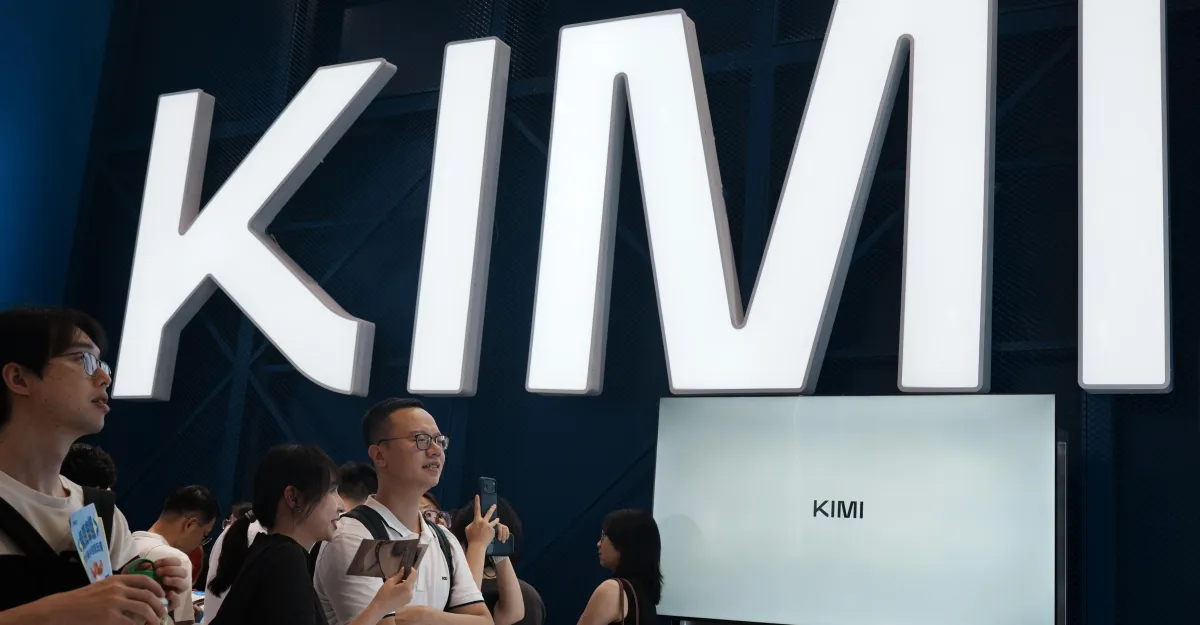
Two Chinese artificial intelligence companies, Moonshot AI and Alibaba, have unveiled new large language models, Kimi K3 and Qwen3.8, claiming performance comparable to leading US systems from OpenAI and Anthropic. The launches triggered immediate market volatility, with global tech stocks tumbling and commentators describing the event as an "AI Sputnik moment." However, experts note that the narrowing performance gap and cost advantages of Chinese models have been evident for years, suggesting the market reaction may be overstated.
Moonshot AI claims Kimi K3 outperforms nearly all US models, trailing only OpenAI’s GPT-5.6 Sol and Anthropic’s Claude Fable 5. Alibaba describes Qwen3.8 as “one of the most powerful models available today,” ranking second only to Claude Fable 5. Both companies are releasing their models as open-weight, allowing developers to download, use, and modify the core training values. This contrasts sharply with the proprietary approach of US labs, potentially providing accessible, capable alternatives to restricted US tools.
The economics of the new models are drawing significant scrutiny. Kimi K3 is priced at $15 per million output tokens, significantly cheaper than GPT-5.6 Sol ($30) and Claude Fable 5 ($50). Demand was so strong after the launch that Moonshot temporarily paused new subscriptions due to overwhelming usage. Reports indicate that six of the top 10 AI tools on OpenRouter’s leaderboard are Chinese, and US companies are increasingly turning to Chinese tools as the cost of using domestic providers surges.
The development poses potential risks to US tech valuations, infrastructure investments, and national security. Anthropic and OpenAI are gearing up for potentially trillion-dollar IPOs, valuations that depend on the expectation of global market dominance. Capable Chinese models challenge that assumption, potentially drawing away customers and squeezing margins. Given the hundreds of billions of dollars invested in data centres and chips, any reassessment by investors could have ripple effects throughout the industry.
Security considerations also loom large. Highly capable open Chinese models could make advanced AI systems available to a wider range of users, particularly where US companies impose stricter safeguards. Reports suggest Kimi K3 identified and fixed cyber vulnerabilities that OpenAI’s Codex and Anthropic’s Fable refused to address due to safety guardrails. While benchmark claims should be treated with caution, the broader conclusion remains that China’s leading AI companies are producing systems that could plausibly rival those from top US labs.