BJP secures historic legislative victory in West Bengal amid concerns over electoral integrity
Observers warn the outcome signals a potential shift in India's democratic landscape as the ruling party consolidates power across the nation.
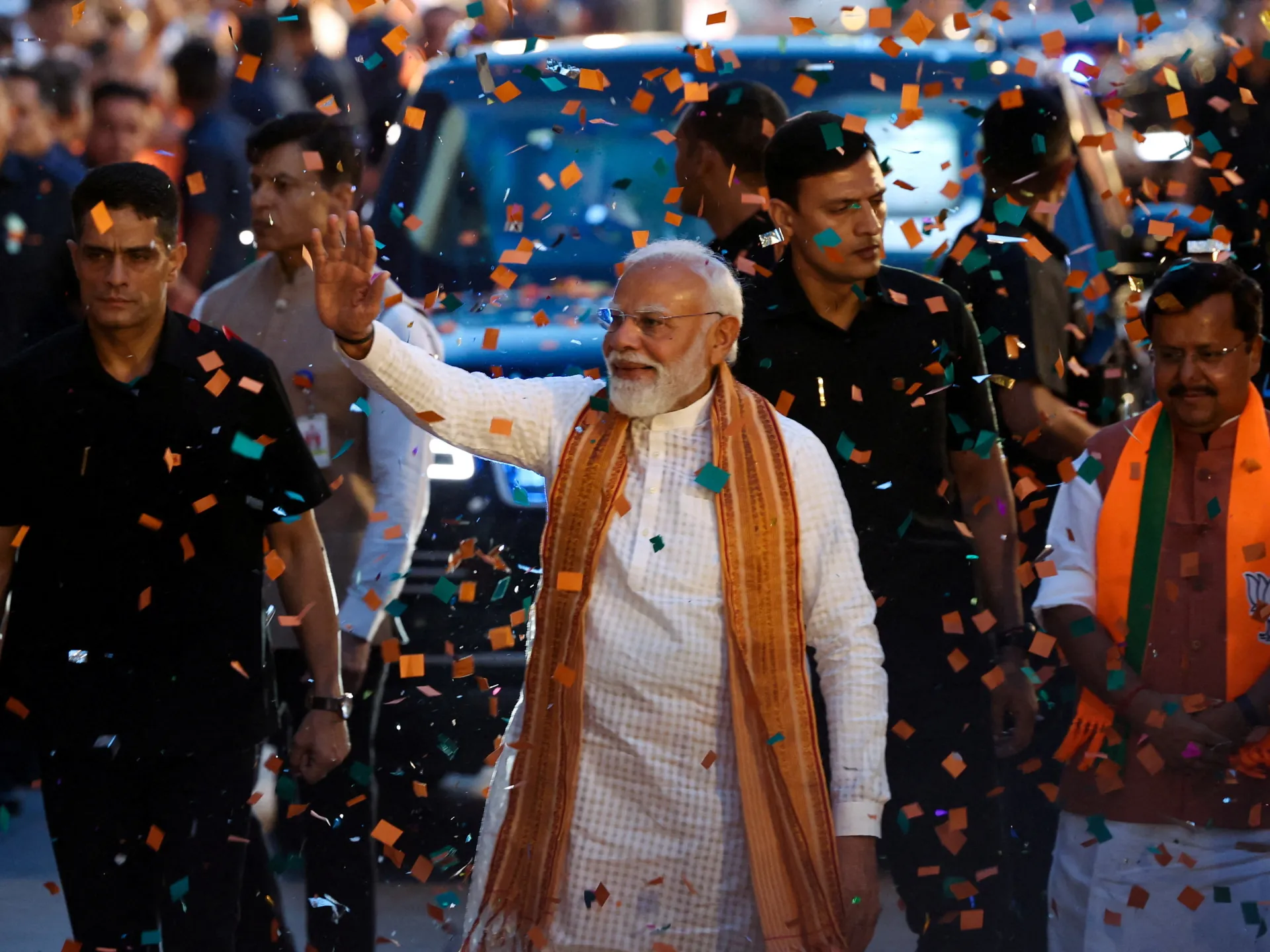
For the first time in its 46-year history, the Bharatiya Janata Party has secured a legislative majority in West Bengal, marking a profound political realignment in a state previously dominated by the Trinamool Congress and earlier by communist governments. The Bharatiya Janata Party won 207 of the 294 seats in the assembly, reducing the incumbent Trinamool Congress to just 80 legislators. This result represents the party's most consequential state victory since 2014, the year Prime Minister Narendra Modi first assumed national office.
The victory follows a campaign strategy that relied heavily on anti-Muslim rhetoric and allegations of voter suppression by the Election Commission of India. While the Bharatiya Janata Party now governs or participates in coalitions in 21 states, the win in West Bengal has raised significant concerns among observers regarding democratic integrity and the potential for authoritarian shifts within the country. The party's leadership described the outcome as a historic victory that would bring peace to the soul of Shyama Prasad Mukherjee, a founder of the party's precursor organisation.
Controversy surrounds the electoral process, with the Election Commission of India facing severe scrutiny since 2014. Opposition parties and electoral watchdogs have accused the commission of vote theft and manipulation, specifically citing a controversial revision of electoral rolls that denied approximately 2.7 million people their voting rights in West Bengal. An analysis by the SABAR Institute, a Kolkata-based independent research organisation, indicated that Muslims were disproportionately affected by these deletions, primarily in districts where they constitute a high percentage of the population.
Political commentator Yogendra Yadav highlighted the implications of these exclusions, noting that the deleted votes amounted to 4.3 percent of the total cast, a figure that exceeds the Bharatiya Janata Party's lead over the Trinamool Congress. The outgoing Chief Minister, Mamata Banerjee, alleged that the Bharatiya Janata Party had "looted more than 100 seats" and accused the Election Commission of being biased towards the ruling party. She has promised to bounce back in future contests, asserting that the current results raise questions about the fairness of the electoral process.
The campaign was characterised by the Bharatiya Janata Party accusing Muslims of being "Bangladeshi infiltrators" and calling for a Hindu consolidation to drive out what it termed illegal immigrants. As the party prepares to govern, fears of a crackdown on allegedly illegal Muslim residents are expected to become more pervasive. The Bharatiya Janata Party has previously attempted to enforce rules around the sale and consumption of meat in other states, a move that could face resistance in West Bengal where beef and fish are integral to local culture and religious rituals.
In a broader context of consolidation, the Bharatiya Janata Party now controls or is part of a governing coalition in nearly 80 percent of India's population across 21 states. Critics argue this centralisation of power strengthens Prime Minister Modi midway through his third term but also prompts serious questions about whether India is moving towards one-party dominance. The party, described by some as the world's richest political organisation with an income of $712 million, continues to face accusations of backing crony capitalism, though it denies such claims.