Beijing hosts Putin days after Trump, underscoring China’s diplomatic centrality
The sequential visits of US and Russian presidents to China highlight Beijing’s growing role as a central diplomatic power, though the economic relationship between Moscow and Beijing remains structurally uneven.
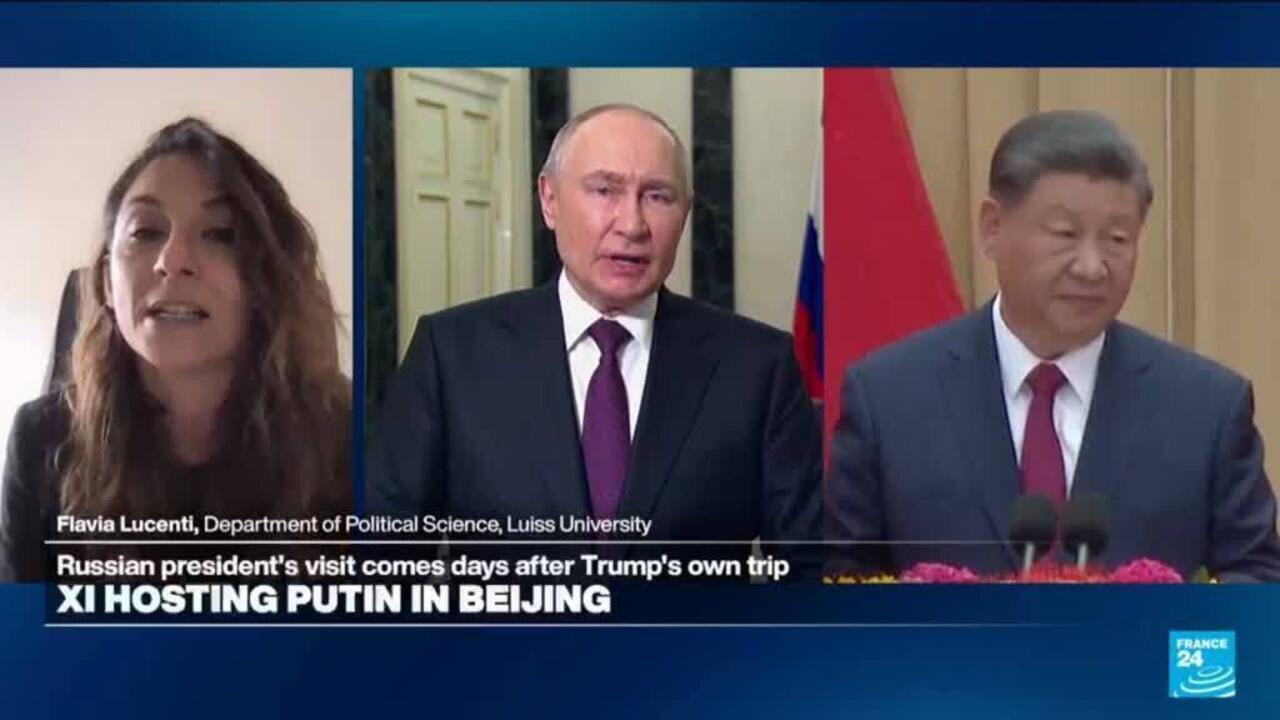
Russian President Vladimir Putin arrived in Beijing less than a week after US President Donald Trump’s visit to China, a sequence that Chinese President Xi Jinping hosted at the Great Hall of the People. The timing and visual reception for Putin, which mirrored the protocol afforded to Trump with cheering children and a military honour guard, were designed to project an image of China as a central and independent diplomatic power.
Dr Flavia Lucenti, a Postdoctoral Researcher at LUISS University for the EU Horizon Project REMIT, described the sequencing of these high-level visits as historically significant. She noted that the events underscore China’s increasingly central role in global diplomacy, particularly as the country positions itself as a key interlocutor for major powers engaged in separate conflicts.
The diplomatic engagements occurred against the backdrop of ongoing wars in Ukraine and Iran, which are actively reshaping the Sino-Russian partnership. During his visit, Xi and Putin signed new trade deals, although their silence regarding the war in Ukraine raised concerns among European observers about the implications of deeper economic integration between the two nations.
Despite the political closeness, Dr Lucenti highlighted a significant structural asymmetry in the bilateral relationship. While China purchases a substantial share of Russian exports, Russia accounts for only 4% of China’s international trade. This disparity suggests that while Moscow relies heavily on Beijing for economic stability, the relationship is not characterised by equal mutual dependence.
The visits serve to consolidate China’s status as a pivotal node in international relations, leveraging its position to engage with both Western and Eastern blocs simultaneously. By hosting both leaders in close succession, Beijing has reinforced its narrative of being an essential partner for global stability, even as it navigates the complexities of supporting a Russian economy under international scrutiny.