Banker appointed as Iraq’s PM amid US financial pressure and militia disarmament deadline
Ali al-Zaidi’s rapid selection by the Shia Coordination Framework follows Washington’s veto of Nouri al-Maliki and the freezing of dollar shipments to the Central Bank of Iraq.
Iraq’s Shia Coordination Framework has appointed banker Ali al-Zaidi as prime minister, a decision reached in just 25 minutes following intense pressure from the United States. The appointment comes after Washington vetoed former prime minister Nouri al-Maliki and froze dollar shipments to the Central Bank of Iraq, effectively cutting off the cash lifeline flown from New Jersey. Al-Zaidi, a 40-year-old banker with no established political base, was selected as the candidate who could satisfy US demands, a move that underscores the shift in power dynamics within Baghdad.
US envoy Tom Barrack is currently leveraging financial control over Iraq’s oil revenues, which are held in an account at the Federal Reserve Bank of New York, to enforce policy changes. Barrack, who holds titles as ambassador to Turkiye and envoy to Syria, is demanding the disarmament of Iranian-backed militias by 30 September. This deadline coincides with the expected departure of remaining US forces from Iraq. Washington has already demonstrated its leverage by blocking a nearly $500 million cash shipment in April and suspending parts of its security cooperation, targeting the oil funds that support roughly 90 percent of Iraq’s budget.
The push for disarmament has seen mixed results across Iraq’s armed factions. Shia cleric Muqtada al-Sadr dissolved his Saraya al-Salam militia in late May, and groups such as Asa’ib Ahl al-Haq and Kataib Imam Ali have announced steps towards handing over weapons or placing them under state control. However, Kataib Hezbollah and Harakat al-Nujaba, factions tightly bound to Tehran, have rejected full disarmament, stating their weapons are not for bargaining. In response, US strikes have killed dozens of Iranian-backed Popular Mobilization Forces fighters this spring, and the Treasury has sanctioned seven militia commanders.
Beyond security, Washington is seeking to secure expanded contracts for US energy firms, including Chevron, in Iraq’s oil sector. Baghdad aims to increase production from 4.5 million to 7 million barrels a day within three years, a goal that requires a larger OPEC quota and the development of untapped gas reserves in western Iraq. Al-Zaidi’s own financial history adds another layer of complexity; his institution, Al-Janoob Islamic Bank, was barred from US-dollar transactions in 2024 as part of a crackdown on illicit flows to Iran, though he was never charged or sanctioned.
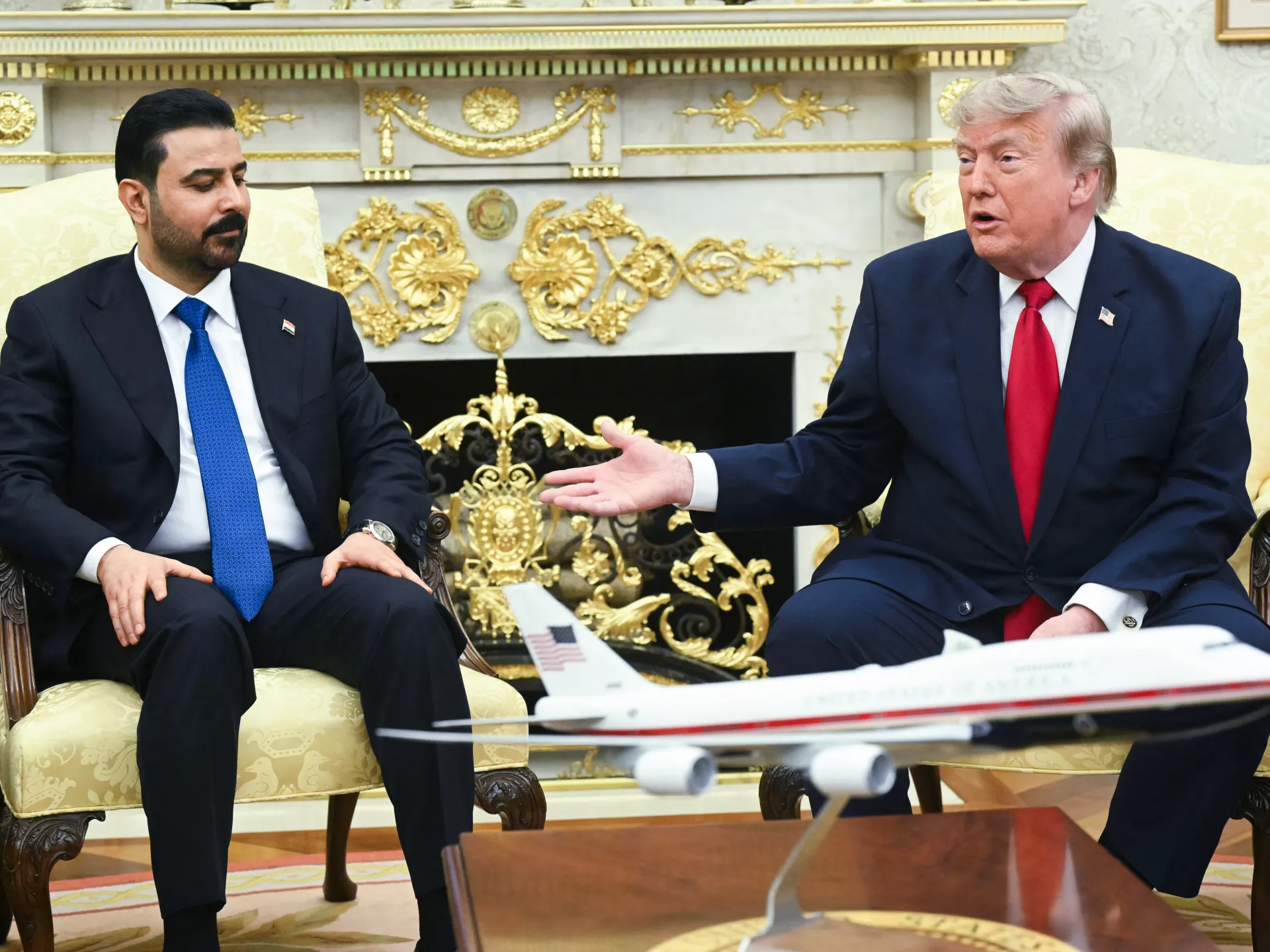
The appointment signals a broader restructuring of Iraq’s political and economic landscape, with Washington seeking a state that operates without Iranian veto power and with Western economic orientation. Al-Zaidi’s visit to the Oval Office with President Donald Trump highlighted the extent of US influence, as the new prime minister is expected to deliver on security and economic reforms within a compressed timeframe. Whether the hardest militia factions will bend by the September deadline remains an open question, as does the long-term stability of a government chosen under such significant external pressure.