US-led crackdown exposes evolution of Indian transnational crime syndicate
The FBI’s international operation results in 24 arrests and 37 indictments, highlighting how Indian organised crime has adapted to global policing through encrypted communications and cross-border extortion.
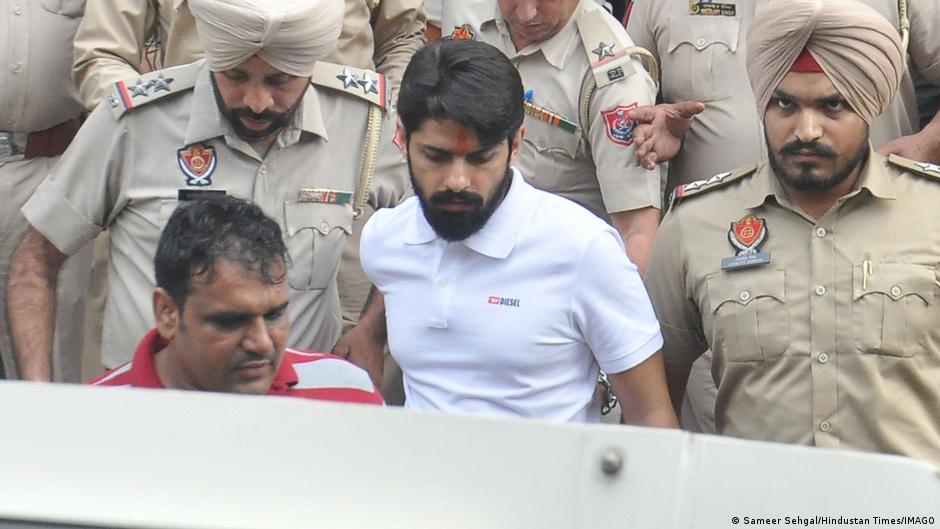
The US Federal Bureau of Investigation has led 'Operation Hard Ball', the largest international law enforcement action to date targeting India-based organised crime syndicates. The operation resulted in the arrest of 24 suspects and the indictment of 37 defendants across the United States, Canada, and Spain. At the centre of the indictment is Lawrence Bishnoi, a jailed Indian gangster accused of directing murders, extortion, and international drug trafficking from a prison in Gujarat state using smuggled mobile phones.
The charging documents link the Bishnoi network to the 2023 killing of Sikh separatist leader Hardeep Singh Nijjar in Surrey, British Columbia. The indictment accuses Bishnoi and his alleged deputy, Goldy Brar, of directing the murder outside a gurdwara, an act that previously caused significant diplomatic friction between India and Canada. The documents do not allege any involvement by the Indian government in the killing. Brar remains a fugitive with a US$50,000 reward offered by the FBI for his capture.
India has welcomed the US action, with External Affairs Ministry spokesperson Randhir Jaiswal citing a "strong and growing" partnership between the two nations in combating transnational organised crime and terrorism. The government’s response underscores the increasing diplomatic priority placed on dismantling criminal networks that operate across borders, leveraging the shared interest in stabilising bilateral relations and securing diaspora communities.
Experts describe the Bishnoi network as a distinct evolution from previous Indian crime syndicates such as Dawood Ibrahim’s D-Company or Chhota Rajan’s network. Unlike earlier groups that relied on geographical safe havens and political protection in places like Dubai, the Bishnoi gang operates without foreign government protection. Instead, it utilises diaspora networks, digital communications, and encrypted messaging apps to coordinate activities across continents, reflecting a shift from rigid hierarchies to more decentralized, technologically enabled structures.
The operational model of the Bishnoi organisation involves demanding millions of dollars from business owners in North America and ordering violence against those who refuse to pay. This expansion into the North American market highlights how the growing Indian diaspora has created new opportunities for criminal enterprises. Investigators note that the gang combines local criminal networks in India with overseas associates who identify targets, collect extortion payments, and procure weapons, facilitated by cheap international travel and digital tools.
While the core revenue streams of extortion, narcotics, and contract killings remain similar to older syndicates, the speed and reach of the Bishnoi network have increased significantly due to technology. Ajay Sahni of the Institute for Conflict Management noted that the case marks the point at which international law enforcement has caught up with a threat that has been evolving for decades. The operation involved coordination between agencies in the US, Canada, Spain, and India, reflecting the necessity for intelligence-sharing and coordinated arrests in an era where criminal networks exploit jurisdictional fragmentation.
Former senior Indian intelligence officer Avinash Mohananey suggested that sustained international cooperation is the key to disrupting such networks, drawing parallels to the eventual weakening of previous syndicates. The success of Operation Hard Ball demonstrates the potential for cross-border law enforcement to make a significant dent in transnational organised crime, provided that investigators can navigate the legal and diplomatic barriers inherent in tracing encrypted communications and financial flows across multiple jurisdictions.