Yen hits 39.5-year low as Iran tensions drive safe-haven flows
The Japanese yen depreciated to the 163 yen per dollar range on July 22, driven by investor flight to the US dollar amid escalating tensions in Iran and rising crude oil futures, according to NHK News Japan.
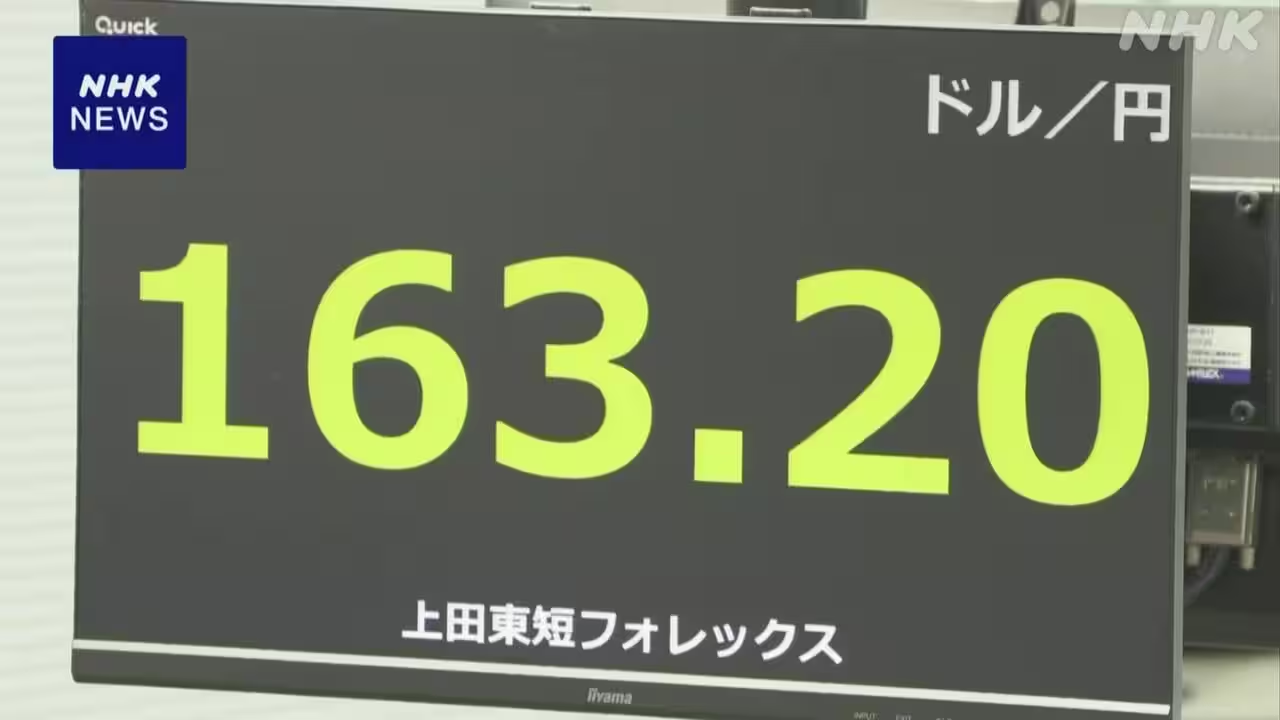
The Japanese yen weakened significantly in the Tokyo foreign exchange market on July 22, trading in the 163 yen per US dollar range during morning sessions. This depreciation marks a level near a 39.5-year low for yen weakness, reflecting intense market pressure as investors sought safety in the US dollar.
According to reporting by NHK News Japan, the currency movement was driven by a sell-off of the yen and increased buying of the dollar, which is viewed as a safe-haven asset. This shift in capital flows occurred against a backdrop of escalating geopolitical tensions in Iran and a rising trend in crude oil futures prices.
The volatility in currency markets was influenced by recent developments in the Middle East. Iran’s military command, Khatam al-Anbiya, declared the Strait of Hormuz closed to all traffic and threatened to target vessels transiting the waterway. This declaration followed recent US airstrikes in southern Iran and strikes on two vessels in the region.
Although US Central Command denied the closure, stating that commercial ships continue to transit the route, the uncertainty contributed to rising oil futures. The threat to the strategic waterway has heightened concerns about global supply chains, further incentivising investors to move away from riskier assets like the yen.
Amid these market movements, Japan released data on July 22 showing that crude oil imports from the Middle East in June were 40.6 per cent lower than the same period last year. While this reduction in import volume may offer some insulation from immediate price shocks, the broader geopolitical instability continues to weigh on the yen’s value.
The current exchange rate dynamics highlight the interconnectedness of global energy markets and currency valuation. As tensions in Iran persist and oil prices remain volatile, the yen’s position near its lowest level in nearly four decades underscores the challenges facing Japanese financial stability in an increasingly uncertain global environment.