Xi Jinping arrives in Pyongyang for first visit in seven years to secure strategic buffer
Analysts say the visit aims to prevent regime collapse and maintain regional stability, with China remaining North Korea’s indispensable economic lifeline despite Moscow’s growing military support.
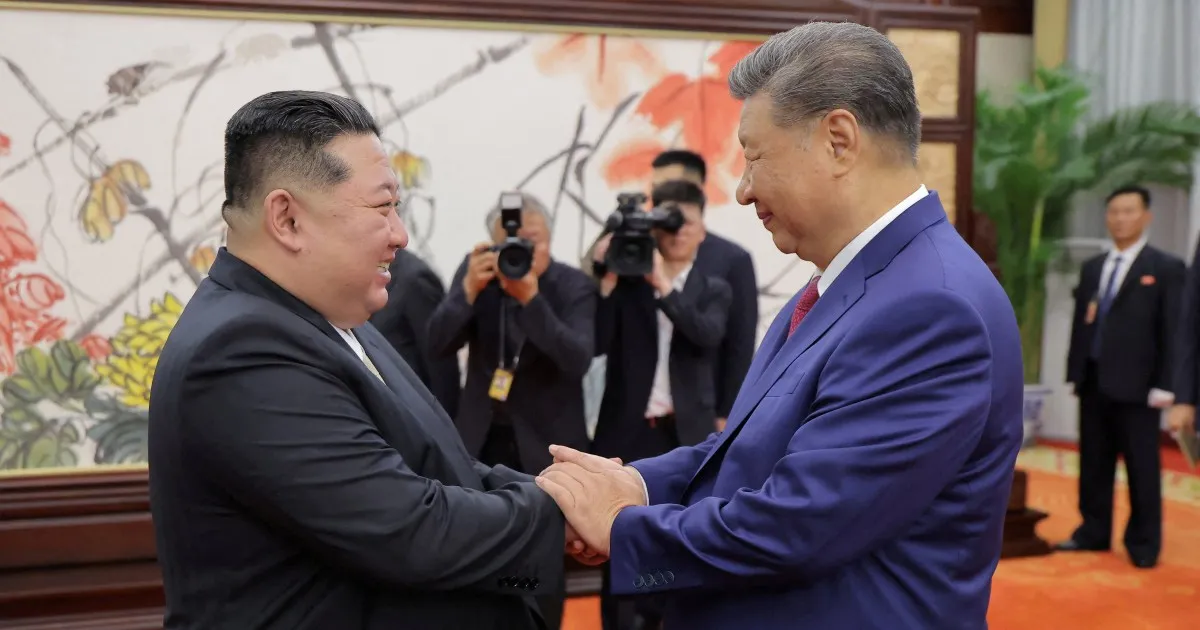
Chinese President Xi Jinping has arrived in Pyongyang for a two-day state visit, marking his first overseas trip of the year and his first visit to North Korea in seven years. The arrival was marked by a 21-gun salute and military band performances at the international airport, where Xi and his wife, Peng Liyuan, were welcomed by North Korean leader Kim Jong Un and his wife, Ri Sol Ju.
China’s Ministry of Foreign Affairs spokesperson Mao Ning stated that both sides would use the visit to promote greater development of China-North Korea relations in keeping with the times. The diplomatic engagement comes as Beijing seeks to reassert its influence over Pyongyang amid growing strategic and military ties between the North Korean and Russian governments.
Analysts indicate that while Russia provides military support, China remains North Korea’s indispensable economic lifeline and security guarantor. According to a 2022 estimate by the US-based National Committee on North Korea, Pyongyang relies on China for approximately 95 percent of its trade. Bilateral trade stood at $2.74bn, with China exporting petroleum, food, and machinery, while importing items such as iron, steel, and frozen fish.
For Beijing, the visit seeks to maintain regional stability, prevent regime collapse in the North, and preserve North Korea as a strategic buffer against US forces in South Korea. There are approximately 28,500 US soldiers stationed in South Korea under the Mutual Defense Treaty. Experts suggest that a chaotic collapse in the North could send millions of refugees into China and hand Washington more influence in the region.
The visit also occurs against a backdrop of shifting regional dynamics, including speculation regarding Singapore Foreign Minister Vivian Balakrishnan’s visit to Pyongyang. Analysts note that the US-Israel conflict in Iran may reinforce Kim’s preference for keeping communication channels open while avoiding becoming the primary focus of US strategic attention, prompting China to lock down its northeastern flank amid rising pressure.