WIRED Reviewer Finds Ecovacs Winbot W2S Omni ‘Unmitigated Disaster’ in Victorian Home Test
A comprehensive test of the Ecovacs Winbot W2S Omni reveals significant limitations in handling sash-and-case windows, prompting a WIRED reviewer to conclude the technology is generally unsuitable for average households.
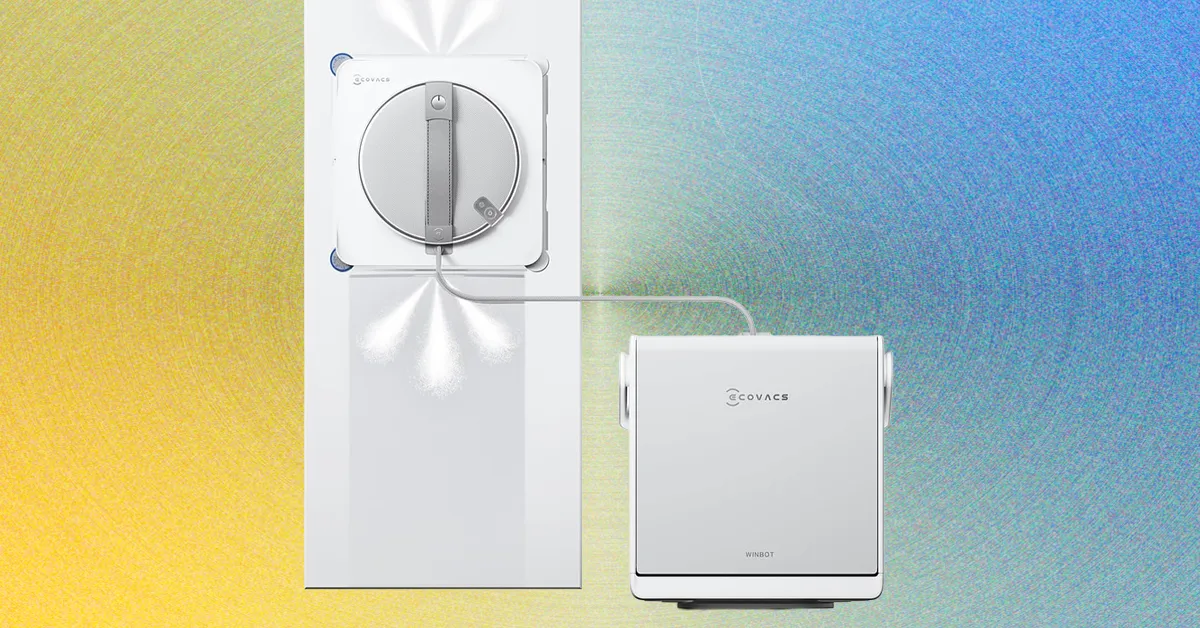
A WIRED reviewer has concluded that window-cleaning robots are largely a waste of time for average homes, following a negative test of the premium Ecovacs Winbot W2S Omni. The device, described as an "unmitigated disaster" during a trial at a Victorian property, performed adequately on large, modern flat windows but failed to navigate traditional fixtures, leading to paint damage and safety anxiety.
The test, conducted at a home featuring tall bay windows, highlighted the robot’s inability to handle traditional sash-and-case designs. While the device cleaned a modern ground-level window efficiently, it became stuck on metal loop fittings in a sash window and executed a "weird stuttering maneuver" that ripped paintwork off an astragal at the bottom of the frame. The reviewer noted that while the Ecovacs design is superior to cheaper alternatives like the Mova N1, the fundamental category remains problematic for complex architecture.
Safety concerns emerged prominently during the trial, particularly when the robot became stuck on an upstairs PVC bay window. After emitting alarms and flashing red lights, the device required the reviewer to lean out of the window to manually release the suction. The incident, which drew attention from passersby due to the robot’s noise level of 68 decibels, was described as anxiety-inducing and dangerous, underscoring the risks associated with upper-story usage.
Beyond physical limitations, the reviewer cited high ongoing maintenance costs and operational complexity. The provided 230-millilitre bottle of cleaning solution lasted only three full washes, with replacement solution costing $30 per litre. Spare cleaning pads were priced at $20 for two, and the reviewer estimated needing eight pads to clean all windows in a single session. The device also left dirty residue in corners and struggled with stubborn stains like bird droppings.
The reviewer, who owns robot vacuums and mowers, concluded that the time and effort required to set up, monitor, and retrieve the robot outweigh the benefits. They suggested the technology might only be viable for high-rise apartments with large, modern windows or specific accessibility needs, but for the typical home, manual cleaning remains faster, cheaper, and less stressful.