Wildfire smoke pushes Toronto air quality to global worst, disrupting World Cup preparations
Toronto ranks below Kinshasa and Delhi in global air quality metrics, prompting event cancellations and health warnings ahead of the FIFA World Cup final.
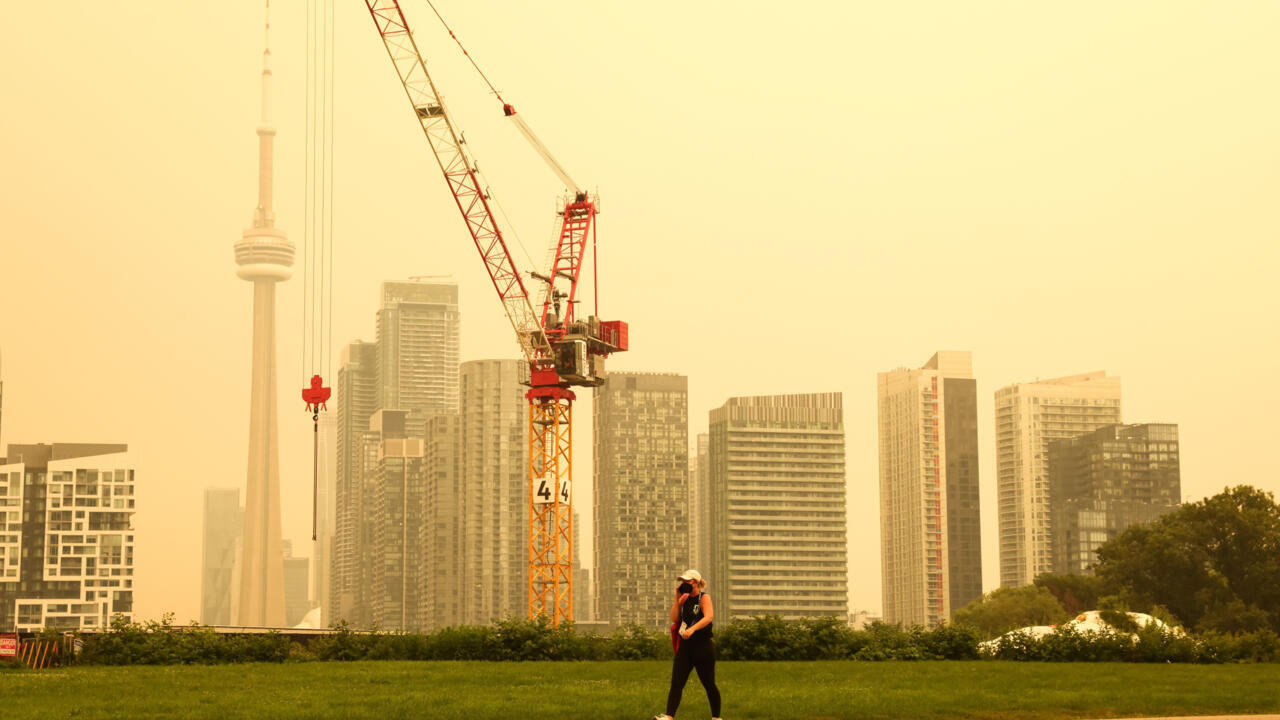
Toronto’s air quality deteriorated to the worst ranking among major cities worldwide on Wednesday, surpassing Kinshasa and New Delhi, according to data from IQAir. The Swiss air quality technology company attributed the spike in pollution primarily to thick smoke from wildfires in northwestern Ontario, with higher-than-average temperatures acting as a secondary contributor. Environment Canada reported an Air Quality Health Index of 10+, classified as a very high risk, with forecasts suggesting hazardous conditions could persist through Thursday night.
The smoke plume has drifted across the border into the northeastern United States, affecting air quality in New York, New Jersey, and other states. In New York, Governor Kathy Hochul issued alerts urging residents to reduce strenuous outdoor activity, particularly on Wednesday and Thursday. The National Weather Service indicated that smoke could linger into the end of the week, impacting areas ahead of the 2026 FIFA World Cup final scheduled for Sunday in New Jersey.
Local authorities in Toronto have responded to the deteriorating conditions by cancelling public events. The City of Toronto cancelled the FIFA Fan Festival and the England-Argentina World Cup watch party at Nathan Phillips Square due to poor air quality. Despite the cancellations, more than 80,000 people are still expected to attend the World Cup final at an open-air stadium in New Jersey, while another 50,000 plan to watch the game from Central Park in Manhattan, where skies appeared hazy.
The wildfire crisis has also disrupted transport and emergency services in Canada. Canadian National Railway suspended operations near Armstrong, Ontario, after a video showed a train surrounded by fire, leading to the evacuation of employees and residents. Additionally, two small groups of children from Minnesota, on a YMCA camping trip in the Canadian wilderness, were evacuated by helicopter in coordination with the Canadian military. Minnesota Governor Tim Walz confirmed that both groups had been rescued and were returning home.
Approximately 835 active fires were burning in Canada on Wednesday, with 112 considered out of control. So far, 1.9 million hectares have burned, with most fires located in the central provinces of Manitoba, Saskatchewan, and Ontario. Greg Evans, a professor at the University of Toronto, noted that the city is experiencing simultaneous severe heat and wildfire smoke, predicting that such events will become more frequent in the coming decades.