West Bank settlers divert Palestinian water source for recreational pool amid government backing
United Nations data records 160 attacks on water infrastructure this year as settlers assert control over 95 per cent of northern Jordan Valley springs.
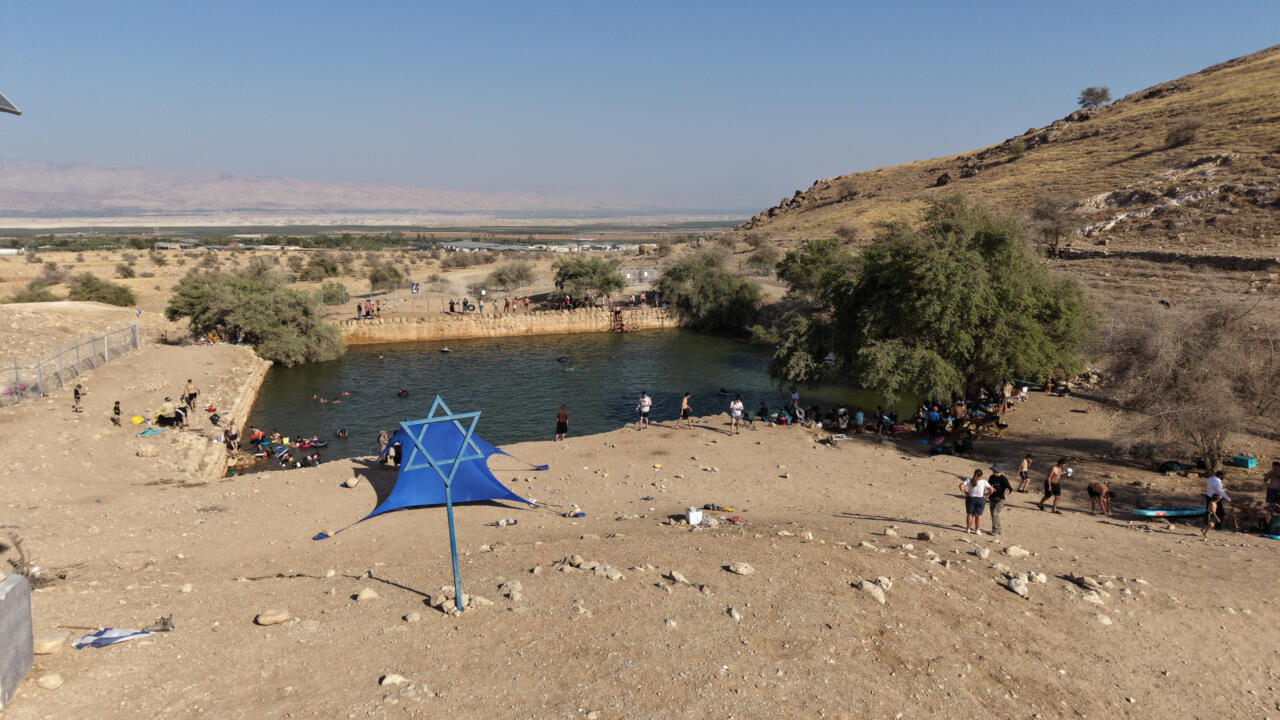
Israeli settlers have seized control of a freshwater spring in the occupied West Bank village of Fasayil, diverting the water to create a recreational pool at an archaeological site. The action has deprived Palestinian farmers of irrigation for crops and domestic water supplies, with the site now advertised as a tourist attraction backed by senior government officials.
The spring served as a critical resource for the nearby village of Fasayil in the fertile Jordan Valley, where Palestinians have relied on it for generations for food, employment, and to supplement irregular Israeli supplies to their domestic taps. Israeli settlers seized the irrigation pipeline in June, channeling the water to an ancient pool in an archaeological site. Soon after, settlers advertised it as an Israeli tourist attraction and Israel’s far-right finance minister pledged financial support.
“Now that they see this entire mass of people, all these large groups of Jews coming here to bathe, they are afraid to come here,” said Yishai Shreiber, 21, an Israeli settler who had come to swim in the pool near Fasayil on an August afternoon. Shreiber said the West Bank belonged to the Jewish people, and that if Palestinians don’t want to accept Jewish authority, they should leave.
Nemer said that an employee had been beaten up by settlers and he himself had faced threats for attempting to approach the spring as far back as two years ago. Nemer showed Reuters a 2025 land ownership document from COGAT, the Israeli military agency which enforces civilian policy in the occupied territories. He also presented a map drawn for the pre-occupation 1957 registration of his title deeds showing that his land included both the spring and the pool. COGAT and Finance Minister Bezalel Smotrich did not respond to requests for comment.
Israel’s far-right coalition government has overseen massive settlement construction that Smotrich says is aimed at burying the idea of a Palestinian state, which has been recognised by more than 150 of 193 UN member states as encompassing the Gaza Strip and West Bank, including East Jerusalem. The United Nations and most governments consider the settlements to be illegal under international law related to military occupation. Israel seized the West Bank in the 1967 war, but argues the territory is disputed rather than occupied.
Palestinians have experienced a sharp rise in settler violence, and Palestinian field researcher Fares Foqahaa estimated that settlers had now seized control of 95 per cent of the springs in the northern Jordan Valley, displacing communities. In another West Bank village, Qusra, settlers still besieging three homes on Thursday had also cut off their water and electricity. Adel Yassin, an official with the Palestinian Authority’s water authority, said that settlers target water resources as part of a systematic campaign to force Palestinians off their land.
Outside the pool, a billboard advertised a 3 million shekel ($1 million) investment from Smotrich, an architect of settler expansion, who said in a Telegram post the money was for the restoration and development of “Herod’s Pools”. The pool and the nearby spring were packed with Israeli families swimming and wading in the water. No Palestinians were present.