HSI Election Fraud Probe Yields Fewer Than 40 Charges Despite Massive Resource Allocation
An analysis of Justice Department data shows that fewer than 150 alleged noncitizen voters were referred for prosecution between January 2025 and May 2026, with only 41 charged, as career attorneys and agency insiders warned of privacy violations and methodological failures.
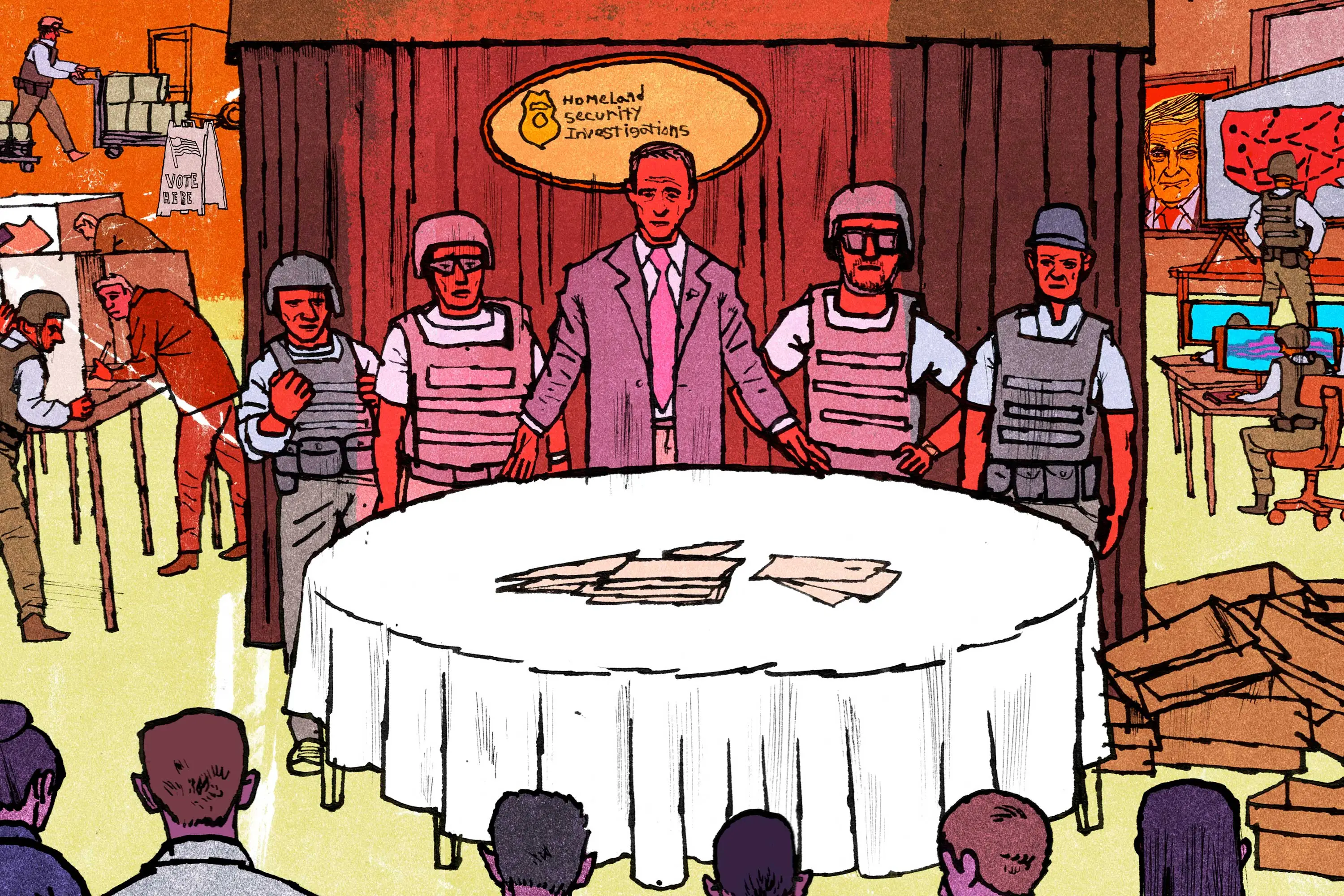
An investigation by ProPublica has revealed that the Trump administration’s campaign to prosecute noncitizen voting, led by Homeland Security Investigations (HSI), has produced meager results despite significant resource allocation. Between January 2025 and May 2026, fewer than 150 alleged noncitizen voters were referred for prosecution, with only 41 charged. The effort, driven by President Trump’s claims of widespread illegal voting, involved repurposing HSI agents and databases to cross-reference public voter rolls with immigration data.
Career Justice Department attorneys warned that the data sharing violated federal privacy laws, and HSI insiders cautioned that the methodology would yield false positives. Critics argue the initiative has distracted from HSI’s core missions, such as combating drug cartels and human trafficking, while state officials describe the federal investigations as chaotic and based on administrative errors rather than criminal intent.
The initiative traces back to summer 2025, when HSI supervisors embraced a proposal to use the agency’s powerful databases to identify noncitizens on publicly available voter lists. This approach was adopted after the administration faced roadblocks in obtaining unredacted voter rolls and using the Systematic Alien Verification for Entitlements (SAVE) system. HSI agents were dispatched across the country, including to Minnesota, where Joe Teirab, the second-in-command at the U.S. attorney’s office, described the task force as disjointed and dysfunctional.
Internal emails reviewed by ProPublica show that career attorneys at the Justice Department raised concerns that transferring voter rolls to HSI could violate the Privacy Act. Despite these warnings, the administration proceeded with data sharing, claiming a law enforcement exception allowed the transfer. HSI’s Innovation Lab developed software tools to cross-reference public voter data with sensitive government databases, a process insiders described as likely to produce an ungodly number of false positives.
The practical outcome of these efforts has been minimal. In states where DHS claimed to have found hundreds of thousands of noncitizens on voter rolls, prosecutors initiated only a handful of cases. In Ohio, for example, despite over 1,000 voters being referred as potential noncitizens, only two cases were referred for prosecution by May 2026. State officials noted that much of the federal information was inaccurate, often resulting from flawed data matching or administrative errors rather than criminal intent.
Critics argue that the repurposing of HSI has had profound consequences for other investigations. Current and former agents report that critical cases involving drug rings and human trafficking have languished as agents were diverted to voting fraud leads. Federal data indicates a sharp decline in wiretaps obtained by DHS, which the agency attributed to changes in enforcement priorities.
While administration officials insist the effort is producing meaningful results and that anyone breaking the law will be held accountable, the low number of charges stands in stark contrast to the scale of the operation. With more than 150 million people voting in the most recent presidential election, the prosecution of 41 individuals represents a tiny fraction of the electorate, raising questions about the efficacy and legal basis of the campaign.