Washington Skeptical of Tehran's New Ceasefire Bid as War Powers Deadline Looms
US media reports indicate President Trump holds a doubtful stance on the viability of the proposal, while an Iranian Army spokesperson has issued a statement regarding the ongoing hostilities.
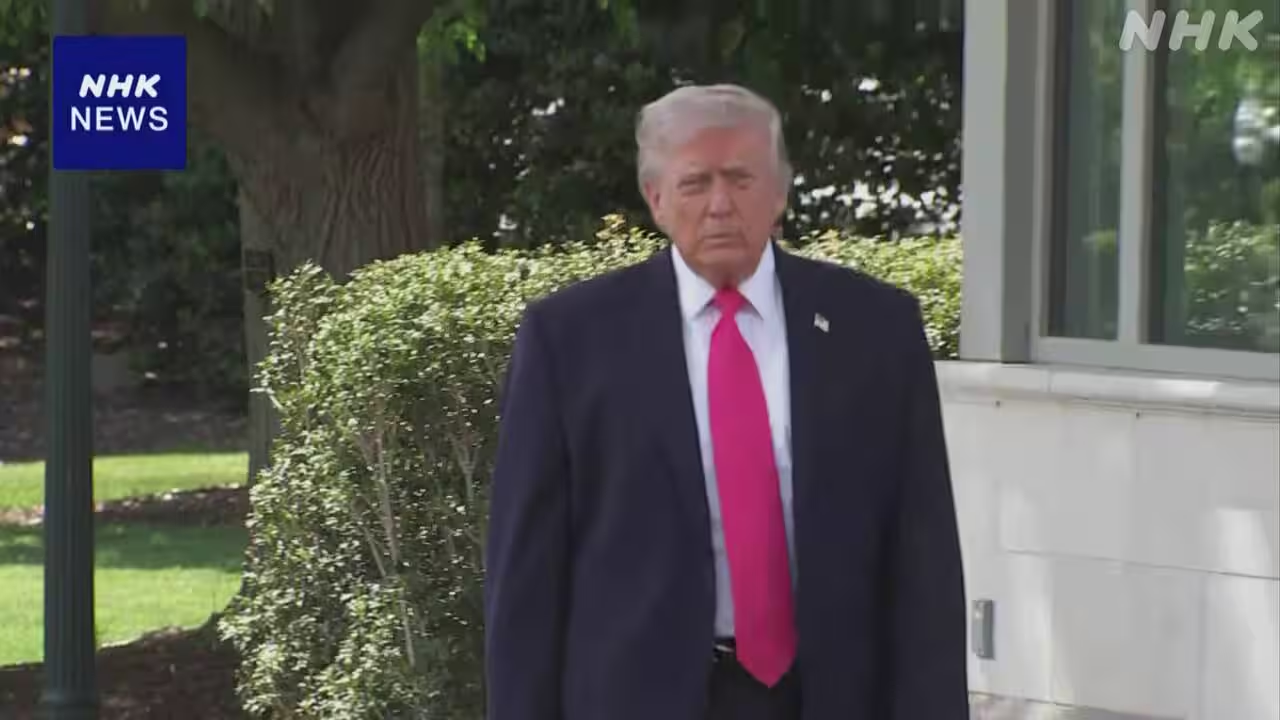
Reports from US media outlets indicate that President Donald Trump has adopted a sceptical stance towards a new proposal submitted by Iran to conclude the ongoing military conflict between the two nations. The administration's reaction suggests significant doubt regarding the viability or specific terms of the initiative, casting uncertainty over the immediate future of the diplomatic process.
This diplomatic friction emerges against the backdrop of a critical statutory deadline mandated by the War Powers Act of 1973. The conflict has reached the 60-day threshold, creating a legal requirement for President Trump to secure explicit congressional authorisation or cease hostilities by 1 May. The pressure on the executive branch is compounded by the fact that while a temporary pause in direct combat began on 8 April, the US administration has not ruled out the resumption of ground operations.
Concurrently, Iranian media has cited a statement from an Iranian Army spokesperson concerning the current situation. While the specific content of the spokesperson's remarks addresses the conflict, available reports indicate the full text of the comments was truncated, limiting the ability to verify the complete context of Tehran's position. This lack of detailed information adds another layer of ambiguity to the unfolding negotiations.
The current impasse follows a period of mutual recriminations between Washington and Tehran at the NPT review conference, where previous diplomatic efforts have largely stalled. The new proposal represents a potential shift in strategy, yet the US response highlights the deep-seated mistrust that continues to characterise the relationship between the two governments.
As the statutory deadline approaches, the focus remains on whether the US scepticism will lead to a outright rejection of the proposal or merely a demand for further negotiation. Until official details are released by either government, the specific content of Iran's new offer remains unverified, leaving policymakers to speculate on the terms required to end the fighting.
The situation underscores the complexities of modern geopolitical conflict, where legal frameworks and diplomatic overtures often collide with entrenched strategic interests. With the War Powers Act clock ticking, the coming days will be crucial in determining whether the new proposal can bridge the widening gap between the two sides.