Volkmann frames Ukraine aid as strategic investment for European security
A CDU Bundestag member argues that German support is no longer charity but a vital security asset, citing Ukraine’s growing role in sharing modern battlefield tactics with European forces.
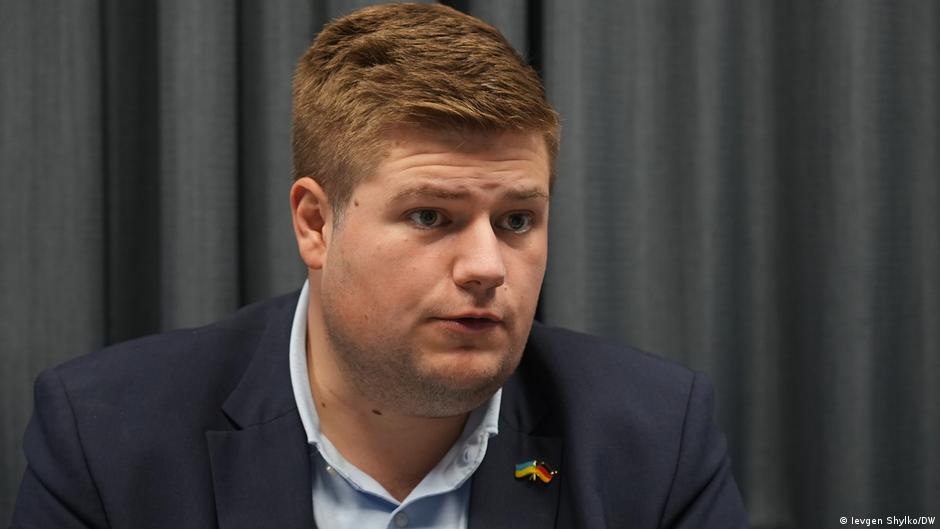
Johannes Volkmann, a 29-year-old member of Germany’s Bundestag and grandson of former Chancellor Helmut Kohl, has argued that German aid to Ukraine constitutes a strategic investment in European security rather than a charitable act. Speaking to Deutsche Welle, Volkmann, who serves on the Foreign Affairs Committee, stated that Ukraine is now effectively a provider of security in Europe. He noted that the country shares experience in modern technologies, drones, and tactics with European armies, suggesting that every euro invested is a return on Germany’s own security.
Volkmann highlighted that Germany is currently the largest bilateral donor to Ukraine in Europe. He addressed domestic political opposition, specifically from the Alternative for Germany (AfD), which currently leads the polls and has called for an end to German support. Volkmann identified the AfD’s stance on military aid as a primary reason his party, the CDU/CSU, has ruled out cooperation with them. He warned that if Russia’s war succeeds, the resulting refugee flows would place a greater financial burden on Germany than current aid packages.
Regarding the broader threat landscape, Volkmann described Russia’s hybrid attacks as aimed at destroying EU and NATO cohesion rather than purely military conquest. He suggested that Russia might test NATO’s Article 5 solidarity clause by occupying areas in the Baltic region. To counter this, he emphasised the need for vigilance and the development of defensive capacity to deter aggression, arguing that weakness would be interpreted as an invitation to attack.
The MP also revisited Germany’s historical approach to Russia, describing the reliance on trade and neutrality as a significant error. He pointed to the Nord Stream pipeline as an example of a failed hypothesis that mutual dependencies would prevent violence. Volkmann argued that Germany should have listened more closely to its eastern neighbours, who possess a deeper historical understanding of Moscow’s intentions.
While acknowledging Chancellor Friedrich Merz’s decision to rule out accelerated EU admission for Ukraine, Volkmann distinguished between NATO and EU membership. He maintained that while the EU requires strict adherence to rule of law and 35 negotiating chapters, Ukraine should be supported on its path to full membership once specific milestones are met.
Addressing corruption scandals within President Zelenskyy’s inner circle, Volkmann expressed personal concern but advocated for thorough investigation. He stated that exposing these cases is preferable to ignoring them, urging Ukrainian civil society and journalists to ensure that both Ukrainian and European funds are used appropriately.
Finally, Volkmann assessed the diplomatic outlook, noting a lack of serious signs that the Kremlin desires peace. He suggested that Putin will only recognise the futility of military conquest if support for Ukraine increases. He stressed the importance of sending a clear message that Europe will continue to support Ukraine beyond 2027 and 2028.